Search
for
Sort by
Research
720-750 / 1000+ resultsresearch Trichorrhexis Invaginata in Tinea Capitis: A Rare Occurence
Trichorrhexis invaginata can occur with tinea capitis, though it's rare.
research Fibrosing Alopecia in a Pattern Distribution Localized on Alopecia Androgenetica Areas and Unaffected Scalp
A man with hair loss developed a condition causing scarring and inflammation in both bald and non-bald areas of his scalp.

research SUCCESSFUL AYURVEDIC MANAGEMENT OF INDRALUPTA (ALOPECIA AREATA) - A SINGLE CASE STUDY
Ayurveda can effectively treat alopecia areata, leading to hair regrowth.

research INDRALUPTA- AN AYURVEDIC APPROACH- CASE REPORT
Ayurvedic treatments successfully regrew hair in a man with alopecia areata.

research INDRALUPTA- AN AYURVEDIC APPROACH- CASE REPORT
Ayurvedic treatments successfully regrew hair in a man with alopecia areata.
research Alopecia
research Referee report. For: Pathogenesis of Androgenetic alopecia [v1; indexed, http://f1000r.es/5ar]
Androgenetic alopecia may be irreversible due to the detachment of a muscle from hair follicles.

research Obliteration of alopecia by hair-lifting: a new concept and technique.
A new technique called hair-lifting was introduced to treat male-pattern baldness and can also give a partial face-lift.
research Androgenetic Alopecia

research Androgenetic Alopecia: How It Happens
Androgenetic alopecia causes hair loss by shrinking hair follicles due to androgens, with the connection between the muscle and hair follicle determining if the loss is reversible.
research Alopecie acquisite
Non-scarring alopecia can regrow hair, but scarring alopecia is often permanent and needs quick treatment.

research Histological Findings in Androgenetic Alopecia
Balding doesn't reduce the number of hair follicles, it just makes them smaller.

research Vellus-to-terminal Hair Follicle Reconversion Occurs in Male Pattern Balding and is Promoted by Minoxidil and Platelet-rich Plasma: In Vivo Evidence from a New Humanized Mouse Model of Androgenetic Alopecia
Minoxidil and platelet-rich plasma can help turn thin hair into thicker hair in male pattern baldness.
research Frontal fibrosing alopecia
Frontal fibrosing alopecia causes hair loss at the front hairline, and no effective treatment exists.
research Alopecia areata incognita
Alopecia Areata Incognita causes widespread hair thinning, and treatment with systemic corticosteroids and psychiatric support can lead to remission.
research Frontal fibrosing alopecia
Frontal fibrosing alopecia is a type of hair loss that usually happens after menopause.
research TYPICAL MORPHOLOGICAL CHARACTERISTICS OF THE SKIN STRUCTURE OF THE HAIR PART OF THE NORMAL HUMAN HEAD AND WITH HAIR LOSS
Androgenic alopecia causes hair follicle degradation and skin restructuring, but some hair elements remain.

research SUCCESSFUL AYURVEDIC MANAGEMENT OF INDRALUPTA (ALOPECIA AREATA) - A SINGLE CASE STUDY
Ayurvedic treatment successfully regrew hair in a case of alopecia areata.
research The Transverse Anatomy of Androgenic Alopecia
The study found that horizontal sections of scalp biopsies are better for analyzing hair loss, showing fewer hairs and more fine hairs in balding areas.
research Perinevoid Alopecia and Concentric Regrowth: Two Atypical Patterns of Alopecia Areata
Recognizing perinevoid alopecia and concentric regrowth is important for diagnosing and treating alopecia areata.
research Alopecia areata with lymphocytic mural folliculitis affecting the isthmus in a thoroughbred mare
The horse had a rare type of hair loss caused by immune cells attacking hair follicles.

research Triangular Temporal Alopecia - Two Case Reports, Dermoscopy and Review
Triangular temporal alopecia is a benign hair loss pattern best diagnosed with dermoscopy, with limited treatment options like surgery and hair transplantation.
research Alopecia developed in a transitional case from pemphigus foliaceus to pemphigus vulgaris
Hair loss can occur when pemphigus foliaceus changes to pemphigus vulgaris.
research Androgenetic Alopecia
research ALOPECIA CIRCUMSCRIPTA DUE TO VITAMIN A DEFICIENCY
Alopecia in the woman was likely caused by vitamin A deficiency, not a fungal infection.

research Introductory Chapter: Alopecia Management – An Update
Some types of hair loss can be reversed, others are permanent, and treatments vary by type.

research Alopecia Areata Incognita
Alopecia areata incognita causes sudden hair thinning, responds well to steroids, and is more common in those with genetic hair loss conditions.

research Telogen effluvium: a clinically useful concept, with traction alopecia as an example.
The study concludes that traction alopecia, caused by hair styling, can help understand telogen effluvium, a condition of excessive hair loss.
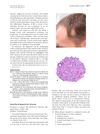
research Fixed focal alopecia for 20 years
The man has Temporal Triangular Alopecia, a stable, non-scarring hair loss condition best treated with hair transplantation.