 6 citations
,
January 2015 in “Journal of regenerative medicine & tissue engineering”
6 citations
,
January 2015 in “Journal of regenerative medicine & tissue engineering” The review concludes that innovations in regenerative medicine, tissue engineering, and developmental biology are essential for effective tissue repair and organ transplants.
 October 2025 in “Gene Expression”
 Exosome therapy could be a promising new way to treat hair loss.
February 2025 in “Biochemistry” Stem cell therapy shows promise for treating skin disorders.
 January 2023 in “Theranostics”
 Mechanical force is important for the first contact between skin cells and hair growth in mini-organs.
70 citations
,
April 2020 in “Journal of Molecular Cell Biology” Organoid technology helps create mini-organs for studying diseases and testing drugs.
4 citations
,
April 2025 in “Frontiers in Immunology” Extracellular vesicles could offer precise treatments for psychiatric conditions by targeting brain networks.
2 citations
,
November 2025 in “Pharmaceutics” Cell-mediated drug delivery systems improve skin disease treatment by using living cells for precise, prolonged, and less toxic therapy.
 February 2026 in “Applied Biosciences”
 The study found potential new DNA patterns in fertility genes, but further testing is needed.
January 2025 in “Stem Cells International” Epigenetic changes in skin cells contribute to aging, but targeting these changes may offer new antiaging treatments.
January 2025 in “Health engineering.” Combining stem cells and organoids could improve skin regeneration treatments.
4 citations
,
January 2014 in “Stem Cell Discovery” Stem cells can be reprogrammed for various treatments, but safety and expansion challenges remain.
13 citations
,
June 2014 in “Molecular therapy” The lentiviral array can monitor and predict gene activity during stem cell differentiation.
11 citations
,
September 2023 in “ACS Omega” 3D bioprinting is advancing rapidly, improving regenerative therapy and drug delivery.
4 citations
,
September 2024 in “Development” Researchers converted human embryonic stem cells into trophoblast stem cells using specific transcription factors.
 3 citations
,
June 2023 in “MedComm”
3 citations
,
June 2023 in “MedComm” Stem cells and their exosomes show promise for repairing tissues and healing wounds when delivered effectively, but more research is needed on their tracking and optimal use.
January 2013 in “eScholarship (California Digital Library)” Activating Wnt signaling improves the efficiency and safety of creating stem cells.
February 2026 in “Advanced Sensor Research” Advanced technologies can improve understanding and monitoring of skin-brain interactions.
 November 2023 in “International Journal of Medical Sciences”
 New regenerative medicine-based therapies for hair loss look promising but need more clinical validation.
 64 citations
,
August 2019 in “Circulation”
64 citations
,
August 2019 in “Circulation” ADT, especially enzalutamide, may increase the risk of heart rhythm problems and sudden death in men.
 February 2026 in “BMC Plastic and Reconstructive Surgery”
 Induced pluripotent stem cells could improve chronic wound healing but face safety and effectiveness challenges.
Human hair follicle cells can be turned into stem cells that may help clone hair for treating hair loss or burns.
 51 citations
,
November 2013 in “Drug Discovery Today”
51 citations
,
November 2013 in “Drug Discovery Today” Small molecule drugs show promise for advancing regenerative medicine but still face development challenges.
 26 citations
,
February 2012 in “Journal of Investigative Dermatology”
26 citations
,
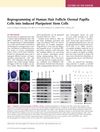
February 2012 in “Journal of Investigative Dermatology” Human hair follicle cells can be successfully transformed into different types of cells, but not more efficiently than other adult cells.
 9 citations
,
January 2010
9 citations
,
January 2010 The herbal hair dye is a safe and eco-friendly alternative to conventional dyes.
 30 citations
,
February 2022 in “Stem Cell Reviews and Reports”
30 citations
,
February 2022 in “Stem Cell Reviews and Reports” Stem cell treatments may improve burn wound healing.
 27 citations
,
June 2013 in “Genes & development”
27 citations
,
June 2013 in “Genes & development” Cav1.2 affects hair growth and could be a target for hair loss treatments.
 2 citations
,
January 2019 in “Medizinische Genetik”
2 citations
,
January 2019 in “Medizinische Genetik” The document reports findings on genetic research, including ethical concerns about genome editing, improved diagnosis of mitochondrial mutations, solving inherited eye diseases, confirming gene roles in epilepsy, linking a gene to aneurysms, and identifying genes associated with age-related macular degeneration.

Understanding hair follicle signaling can improve hair disorder treatments.
 December 2025 in “Italian Journal of Anatomy and Embryology”
 Understanding embryologic layers improves skin disorder diagnosis and supports developing targeted therapies.

A new microneedle patch helps repair spinal cord injuries by reducing scarring and promoting nerve growth.