 44 citations
,
October 2017 in “Scientific Reports”
44 citations
,
October 2017 in “Scientific Reports” Far-infrared radiation improves stem cell growth and movement, helping heart therapy.
3 citations
,
August 2000 in “Anatomia Histologia Embryologia” Prenatal retinoic acid exposure did not affect mouse vibrissal follicle development.
 November 2019 in “Neuro-oncology”
 Rind-based techniques can lower scalp radiation dose and reduce hair loss in brain cancer treatment.
August 2021 in “Journal of the American Academy of Dermatology” Oral baricitinib is effective and safe for treating alopecia areata.
April 2017 in “Leukemia research” Tofacitinib helped most teenagers in the study regrow hair with mild side effects.
 July 2022 in “Journal of Investigative Dermatology”
 IL-15 helps maintain hair growth and protects the immune status of hair follicles.
1 citations
,
November 2024 in “Saudi Pharmaceutical Journal” Adding baricitinib will increase costs but offers more treatment options for alopecia areata.
 September 2025 in “Australasian Journal of Dermatology”
 New medications could improve treatment for severe alopecia areata in Australia.
 October 2024 in “The Journal of Dermatology”
 Intravenous corticosteroid therapy is effective for long-term hair regrowth in alopecia areata, and a scoring system helps predict treatment success and relapse.
January 2024 in “Acta dermato-venereologica”  January 2025 in “Journal of Cutaneous Immunology and Allergy”
 Baricitinib is effective for treating severe alopecia areata in Japanese patients, but long-term safety needs more study.
July 2025 in “Journal of the European Academy of Dermatology and Venereology”  January 2024 in “Clinical and Experimental Dermatology”
 Baricitinib helps treat severe hair loss in people over 65.
1 citations
,
June 2022 in “Zenodo (CERN European Organization for Nuclear Research)” Low-level laser therapy can effectively regrow hair in alopecia areata.
Baricitinib may not always prevent relapse in alopecia areata.
 127 citations
,
July 2002 in “EMBO journal”
127 citations
,
July 2002 in “EMBO journal” Normal skin cell renewal doesn't need RAR signaling, but vitamin A-related skin thickening does.
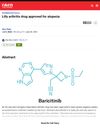 June 2022 in “C&EN global enterprise”
 The drug Olumiant is now approved to treat severe hair loss from alopecia and can also be used for some hospitalized COVID-19 patients.
 June 2024 in “Dermatology and Therapy”
 Baricitinib improves quality of life and reduces anxiety and depression in severe alopecia areata patients with hair regrowth.
December 2025 in “Experimental Dermatology” Improving blood vessel health and controlling uric acid may help manage alopecia areata.
 September 2023 in “bioRxiv (Cold Spring Harbor Laboratory)”
 Freezing gamma-irradiated amniotic fluid may help hair growth and speed up the growth phase.
June 2026 in “Morphology” Macrophages play a crucial role in skin wound healing, with their numbers and sizes changing over time.
 August 2018 in “Journal of the American Academy of Dermatology”
 Reflectance confocal microscopy helped diagnose and manage a woman's hair loss without needing a biopsy.
November 2025 in “Journal of Investigative Dermatology” Alopecia areata requires addressing both emotional and financial challenges for better patient care.
Oral tofacitinib effectively treats alopecia areata long-term with manageable side effects.
2 citations
,
December 2017 in “The journal of investigative dermatology. Symposium proceedings/The Journal of investigative dermatology symposium proceedings” The conclusion is that a new method could improve the identification of autoimmune targets in alopecia areata, despite some limitations.
 September 2014 in “SciBX”
 JAK inhibitors may help treat alopecia areata and promote hair regrowth.
 23 citations
,
September 2019 in “Dermatology practical & conceptual”
23 citations
,
September 2019 in “Dermatology practical & conceptual” The study concluded that AAI and DAA are forms of the same disease, with different symptoms in men and women, and that corticosteroid treatment is effective.
 March 2024 in “Journal of drugs in dermatology”
 HASHA is a safe and effective option for chin augmentation.
47 citations
,
February 2019 in “Asian Journal of Pharmaceutical and Clinical Research” Jarjeer has potential health benefits and may aid hair growth, but effects on humans are uncertain.