
A rare skin condition in a 17-year-old was diagnosed late, stressing the need for careful evaluation and genetic testing.
July 2025 in “Journal of Investigative Dermatology” July 2024 in “Journal of Investigative Dermatology” PH-762 shows promise in treating skin cancer by effectively targeting and silencing PD-1 in tumors with minimal side effects.
January 2025 in “Mansoura Medical Journal” TPO antibodies can help identify hypothyroid patients who still have symptoms despite normal TSH levels.
3 citations
,
September 2016 in “The Journal of Dermatology” A patient with leukemia/lymphoma also had multiple autoimmune diseases, suggesting a link between them.
 March 2019 in “Nasza Dermatologia Online”
 A rare scalp condition with hair loss was correctly diagnosed and treated, leading to hair regrowth.
December 2021 in “OPAL (Open@LaTrobe) (La Trobe University)” New therapies like JAK inhibitors and stem cells show promise in treating vitiligo.
 2 citations
,
May 2021 in “Stem Cells International”
2 citations
,
May 2021 in “Stem Cells International” Human pluripotent stem cells could be used to make platelets for medical use, but safety, effectiveness, and cost issues need to be resolved.
 April 2024 in “Rheumatology”
 A young woman with visual issues and other symptoms was diagnosed with lupus and antiphospholipid syndrome, and improved with treatment.
 August 2018 in “Journal of Investigative Dermatology”
 A woman with dermatomyositis improved after treatment for neck panniculitis, suggesting similar treatment for related conditions.
1 citations
,
January 2021 in “Menoufia Medical Journal” Alopecia areata may be linked to heart issues.
10 citations
,
October 2009 in “Photomedicine and laser surgery” IPL treatment can significantly reduce hair in faun tail but may need local anesthesia.
 33 citations
,
December 2013 in “Journal of cutaneous pathology”
33 citations
,
December 2013 in “Journal of cutaneous pathology” A fungal infection can look like a different scalp condition in teens, leading to wrong treatment until proper tests are done.
April 2026 in “Actas Dermo-Sifiliográficas” Scalp cooling and minoxidil can help manage hair loss after chemotherapy.
 134 citations
,
September 2008 in “Lasers in surgery and medicine”
134 citations
,
September 2008 in “Lasers in surgery and medicine” Low fluence photoepilation temporarily removes hair by targeting the hair follicle's pigmented area without severe damage.
52 citations
,
February 2012 in “PloS one” Lack of Ctip2 in skin cells delays wound healing and disrupts hair follicle stem cell markers in mice.
55 citations
,
January 1988 in “Dermatology” Diphencyprone treatment for alopecia areata can cause vitiligo in some patients.
May 2025 in “International Journal of Trichology” Topical tofacitinib may help regrow hair in children with alopecia totalis.
 34 citations
,
April 2008 in “Journal of the European Academy of Dermatology and Venereology”
34 citations
,
April 2008 in “Journal of the European Academy of Dermatology and Venereology” Skin problems like itching, dry skin, and hair loss are more common in hepatitis C patients after interferon treatment, but lichen planus is not linked to the infection.
128 citations
,
January 2023 in “Frontiers in Endocrinology” Individualized treatment and support can help most couples with recurrent implantation failure achieve pregnancy.
 December 2025 in “Frontiers in Medicine”
 Ritlecitinib successfully treated a child's alopecia universalis after baricitinib failed.
13 citations
,
July 2012 in “International Journal of Trichology” TTD symptoms vary widely, requiring thorough evaluations.
 November 2025 in “International Journal of Advanced Research”
 Platelet-rich plasma therapy effectively treated laser-induced skin lightening.
February 2025 in “Pediatric Dermatology”  December 2017 in “Springer eBooks”
 Transplant patients often get skin problems, with treatments varying by condition.
 88 citations
,
August 2019 in “Nature communications”
88 citations
,
August 2019 in “Nature communications” Researchers found a specific immune receptor in patients that causes severe skin reactions to a drug.
 14 citations
,
January 2006 in “Skinmed”
14 citations
,
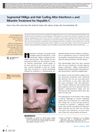
January 2006 in “Skinmed” A woman developed white patches on her skin and curly hair after hepatitis C treatment, likely due to the medication interferon alpha.
6 citations
,
June 2009 in “Clinical and Experimental Dermatology” Topical tacrolimus reduces certain growth factors in hair follicles.
 February 2025 in “PubMed”
 Switching JAK inhibitors can lead to significant hair regrowth in severe alopecia cases.
 January 2024 in “American journal of clinical dermatology”
 Ritlecitinib is safe and well-tolerated for treating alopecia areata in patients aged 12 and older.