 June 2001 in “Journal of The American Academy of Dermatology”
 The exam tested knowledge on various skin-related topics for CME credit.
April 2020 in “International Journal of Cosmetic Science” The study found that minor protein differences between curved and straight Japanese hair are unlikely to significantly affect hair structure.
 December 2023 in “Gugje bogeon mi-yong haghoeji”
 Scalp scaling with aroma oil improves scalp condition and user satisfaction.
 18 citations
,
October 2015 in “Journal of the European Academy of Dermatology and Venereology”
18 citations
,
October 2015 in “Journal of the European Academy of Dermatology and Venereology” European dermatological guidelines vary in quality, with some highly rated, but improvements are needed in applicability and consistency.
 6 citations
,
March 1998 in “Textile Research Journal”
6 citations
,
March 1998 in “Textile Research Journal” Chemical treatments can change the scale heights of wool and cashmere fibers, affecting their identification.
6 citations
,
December 2021 in “Journal of Clinical Medicine” LiPADI is a useful tool for monitoring the severity and treatment of lichen planus.
15 citations
,
May 2023 in “Aesthetic Surgery Journal” Researchers should follow the FACE-Q User's Guide for accurate results.
 3 citations
,
February 2019 in “Disease Markers”
3 citations
,
February 2019 in “Disease Markers” The index to ring finger ratio may indicate disease severity in female ankylosing spondylitis patients, but not in males.
 1 citations
,
February 2018 in “British Journal of Dermatology”
1 citations
,
February 2018 in “British Journal of Dermatology” The CWARTS tool is a promising method for assessing warts and could improve treatment and research.
179 citations
,
June 2000 in “The American journal of pathology” The absence of functional sebaceous glands causes hair follicle destruction and scarring alopecia.
32 citations
,
January 1966 in “Archives of Dermatology” The method accurately measures hair growth with minimal risk and is better than other techniques.
14 citations
,
June 2022 in “British Journal of Dermatology” A SALT score of ≤ 20 indicates meaningful improvement in alopecia areata treatment.
June 2025 in “British Journal of Dermatology” ALUDWIG can help standardize female hair loss assessment from a single image.
 April 2023 in “Journal of Investigative Dermatology”
 The improved EczemaNet more reliably and clearly identifies and assesses the severity of atopic dermatitis from photos.
 13 citations
,
September 2018 in “Journal of the American Academy of Dermatology”
13 citations
,
September 2018 in “Journal of the American Academy of Dermatology” The document concludes that a new system using the SALT score should replace the current alopecia areata classification for better accuracy in assessing severity and prognosis.
 1 citations
,
May 2016 in “Dermatologic Surgery”
1 citations
,
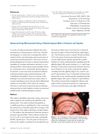
May 2016 in “Dermatologic Surgery” The document concludes that using a phototrichogram with a protractor and tapeline is a reliable and noninvasive way to measure hair loss.
 2 citations
,
December 2021
2 citations
,
December 2021 The research found that the properties of solid-state Electronic Circular Dichroism (ss-ECD) are influenced by the orientation of local crystals, which could help in examining and mapping chiral materials like pharmaceutical ingredients.
December 2022 in “JEADV Clinical Practice” Hair density and thickness decrease in specific scalp areas in people with androgenetic alopecia.
 9 citations
,
December 2011 in “Potravinarstvo Slovak Journal of Food Sciences”
9 citations
,
December 2011 in “Potravinarstvo Slovak Journal of Food Sciences” Different jujube genotypes have varying sizes, colors, and tastes, with potential for growth in Slovakia.
Centralized imaging provides more accurate and consistent hair loss measurements in alopecia areata.
22 citations
,
August 2020 in “Health and Quality of Life Outcomes” The DLQI is reliable but may not fully capture the impact of skin conditions on quality of life, especially in emotional and psychological areas.
 March 2024 in “Skin research and technology”
 New dermoscopic criteria accurately diagnose and grade the severity of hair loss in androgenetic alopecia.
January 2026 in “International Journal of Dermatology” The new tool helps measure the impact of alopecia areata on children's quality of life.
 24 citations
,
March 2007 in “International Journal of Dermatology”
24 citations
,
March 2007 in “International Journal of Dermatology” The Arabic Skindex-16 is a reliable and valid way to measure the impact of skin conditions on quality of life in Saudi patients.
 1 citations
,
January 2024 in “Archives of Endocrinology and Metabolism”
1 citations
,
January 2024 in “Archives of Endocrinology and Metabolism” Self-assessed hirsutism scores are not reliable for clinical diagnosis but may help in screening.
 March 2026 in “Scientific Journal”
 Early recognition and evaluation of nevus sebaceus are crucial to detect and manage potential cancerous changes.
1 citations
,
March 2020 in “Hair transplant forum international” The HairMeasure device is a cheap way to measure Hair Mass Index and find scalp areas for hair exams.
 5 citations
,
April 2006 in “Skin Research and Technology”
5 citations
,
April 2006 in “Skin Research and Technology” Scalp coverage scoring accurately measures hair loss and treatment effectiveness.
 5 citations
,
May 2019 in “Anais Brasileiros de Dermatologia”
5 citations
,
May 2019 in “Anais Brasileiros de Dermatologia” Finger length ratios might predict risk for skin condition in males.