October 2025 in “Journal of Investigative Dermatology” Iron balance is crucial for skin health, affecting conditions like psoriasis and hair loss.
 July 2025 in “World Journal of Stem Cells”
 Stem cell-derived exosomes could be a promising new treatment for hair regrowth.
 January 2024 in “Journal of Biosciences and Medicines”
 Future treatments for androgenic alopecia may focus on reactivating hair follicle stem cells and improving drug delivery.

Vitamin D3 helps treat mild to moderate alopecia areata, especially when combined with other treatments.
 August 2025 in “Journal of Pure and Applied Microbiology”
 Bee venom shows promise for treating cancer, infections, inflammation, and hair loss.
 December 2024 in “Journal of Cosmetic Dermatology”
 Exosomes from platelet-rich plasma may help heal wounds but need more research for hair growth and skin use.
38 citations
,
November 2020 in “International journal of biochemistry & cell biology” Keratin proteins are essential for keeping the cells in the human colon healthy and stable.
37 citations
,
November 2017 in “Medical Sciences” Melanoma's complexity requires personalized treatments due to key genetic mutations and tumor-initiating cells.
10 citations
,
June 2021 in “EMBO reports” When skin blisters, healing the wound is more important than growing hair, and certain stem cells mainly fix the blisters without helping hair growth.
5 citations
,
April 2024 in “Biology” Improving human hair follicle models is crucial for better hair loss treatments.
2 citations
,
July 2025 in “Frontiers in Veterinary Science” MicroRNAs and AI can improve cashmere goat hair quality and aid in hair disorder diagnosis.
 2 citations
,
November 2023 in “Acta dermato-venereologica”
2 citations
,
November 2023 in “Acta dermato-venereologica” Tofacitinib is effective and safe for treating alopecia areata with a good drug survival rate.
1 citations
,
May 2025 in “BMC Genomics” lncRNAs may help control cashmere goat hair growth by responding to light changes.
 1 citations
,
January 2022 in “Stem cell biology and regenerative medicine”
1 citations
,
January 2022 in “Stem cell biology and regenerative medicine” New methods to test hair growth treatments have been developed.
May 2026 in “Inflammopharmacology” 
Platelet-rich plasma improves skin flap survival by reducing tissue death.
March 2026 in “Stem Cell Reviews and Reports”  January 2026 in “Medicine”
 Hejie Shengfa Decoction may help treat alopecia areata by promoting hair growth and reducing inflammation, but more safety studies are needed.
January 2026 in “Journal of Investigative Dermatology” Special cells can help regrow hair in alopecia areata.
January 2026 in “Lab on a Chip” Organoids and hair-on-chip technologies show promise for hair regeneration but face clinical challenges.
 November 2025 in “BMC Genomics”
 Melatonin helps control hair growth in cashmere goats, which could improve cashmere production.
 October 2025 in “International Journal of Molecular Sciences”
 Early intervention in patch-type alopecia may prevent progression to more severe forms by targeting immune pathways and preserving keratin.
September 2025 in “Current Issues in Molecular Biology” IGF-1 can help regrow hair and may be a promising treatment for hair loss.
September 2025 in “Cell Reports” Skin stretching can improve vaccine delivery through hair follicles and boost immune response.

Polygonum multiflorum may help treat hair loss but can be toxic to the liver.
 May 2025 in “Frontiers in Pharmacology”
 New treatments are needed for non-scarring alopecia due to current limitations.

Advancements in diagnostics, treatments, and technology have improved hair loss detection and restoration, with some types being reversible.
March 2025 in “International Journal of Trichology” Janus kinase inhibitors may effectively treat resistant scalp conditions like folliculitis decalvans and dissecting cellulitis.
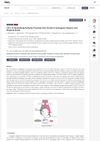 January 2024 in “International Journal of Molecular Sciences”
 Blocking the protein CXCL12 with a specific antibody can increase hair growth in common hair loss conditions.
6 citations
,
October 2021 in “Biomedical Research and Therapy” Alopecia areata patients have higher levels of IL-6 and TNF-α.