4 citations
,
June 2023 in “Frontiers in immunology” JAK inhibitors help hair regrowth in alopecia areata but have a high risk of side effects.
 3 citations
,
June 2025 in “Archives of Dermatological Research”
3 citations
,
June 2025 in “Archives of Dermatological Research” Biologics and JAK inhibitors may improve treatment for scarring alopecias.
 1 citations
,
December 2022 in “The Nishinihon Journal of Dermatology”
1 citations
,
December 2022 in “The Nishinihon Journal of Dermatology” Baricitinib is an effective treatment for severe alopecia areata.
 January 2025 in “Acta Dermatovenerologica Alpina Pannonica et Adriatica”
 JAK inhibitors can help regrow hair in alopecia areata but have potential long-term risks and require careful monitoring.
 April 2024 in “Frontiers in pharmacology”
 Brepocitinib 30mg is most effective for moderate-to-severe alopecia areata, but ritlecitinib 50mg may offer a better balance of safety and effectiveness.
 October 2023 in “Frontiers in medicine”
 Comprehensive screening for infections is crucial before starting JAK inhibitors in alopecia areata patients.
 11 citations
,
April 2015 in “EBioMedicine”
11 citations
,
April 2015 in “EBioMedicine” JAK inhibitors may help treat Alopecia Areata but need careful monitoring due to side effects.
 November 2020 in “Journal of The American Academy of Dermatology”
 Oral JAK inhibitors help regrow hair in alopecia patients.
 7 citations
,
April 2023 in “Frontiers in immunology”
7 citations
,
April 2023 in “Frontiers in immunology” Oral baricitinib and ruxolitinib are effective and safe for treating alopecia areata.
 3 citations
,
August 2025 in “Frontiers in Pharmacology”
3 citations
,
August 2025 in “Frontiers in Pharmacology” Oral JAK inhibitors are safe for alopecia areata, but baricitinib may cause more acne and infections.

Baricitinib shows promise for treating alopecia areata with mild side effects.
 222 citations
,
September 2016 in “JCI insight”
222 citations
,
September 2016 in “JCI insight” Tofacitinib is safe and effective for severe alopecia areata, but hair loss may return 2 months after stopping treatment.
 November 2017 in “Asian journal of pharmaceutical and clinical research”
 Three compounds from Dadap leaves may help treat hair loss.
 January 2023 in “Indian Dermatology Online Journal”
 No single ideal JAK inhibitor for alopecia areata has been determined; JAK3 inhibitors may be promising with fewer side effects.
355 citations
,
January 2017 in “Journal of the American Academy of Dermatology” JAK inhibitors show promise for treating skin conditions like eczema, hair loss, and psoriasis.
 1 citations
,
January 2023 in “Portuguese Journal of Dermatology and Venereology”
1 citations
,
January 2023 in “Portuguese Journal of Dermatology and Venereology” JAK inhibitors effectively treat skin conditions and topical forms are safer.
 2 citations
,
January 2023 in “Prague Medical Report”
2 citations
,
January 2023 in “Prague Medical Report” JAK inhibitors, like baricitinib, are effective and safe for treating alopecia areata.
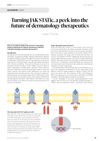 August 2024 in “New Zealand Medical Student Journal”
 JAK inhibitors show promise for treating skin diseases effectively and safely.
11 citations
,
September 2024 in “American Journal of Clinical Dermatology” Switching JAK inhibitors or using dupilumab may help some alopecia areata patients who don't respond well to initial treatments.
 4 citations
,
April 2020 in “JAAD case reports”
4 citations
,
April 2020 in “JAAD case reports” JAK inhibitors help hair regrowth but not fully effective for androgenetic alopecia.
 March 2026 in “JMIR Dermatology”
 Interest in JAK inhibitors for alopecia areata increased significantly after FDA approval, highlighting the need for patient education.
277 citations
,
December 2019 in “Frontiers in Immunology” JAK inhibitors show promise for treating skin disorders like alopecia, eczema, and psoriasis.
 116 citations
,
February 2017 in “Journal of the American Academy of Dermatology”
116 citations
,
February 2017 in “Journal of the American Academy of Dermatology” JAK inhibitors help with skin conditions but need more research on dosing and safety.
 63 citations
,
April 2018 in “Journal of the American Academy of Dermatology”
63 citations
,
April 2018 in “Journal of the American Academy of Dermatology” Topical JAK inhibitors may help treat some skin conditions but need more research.
14 citations
,
April 2021 in “International journal of molecular sciences” Mesenchymal stem cells may help treat hair loss by improving hair cell growth and reducing inflammation.

JAK inhibitors effectively regrow hair in alopecia areata but hair loss often returns after stopping treatment.
63 citations
,
July 2018 in “The journal of investigative dermatology/Journal of investigative dermatology” JAK inhibitors can effectively reverse hair loss in people with alopecia areata.
 49 citations
,
August 2018 in “International Journal of Dermatology”
49 citations
,
August 2018 in “International Journal of Dermatology” Topical JAK inhibitors may help treat alopecia universalis by promoting hair regrowth.
16 citations
,
June 2018 in “JAAD case reports” A JAK inhibitor improved both severe hair loss and chronic skin disease in one patient.
6 citations
,
October 2024 in “Journal of Family Medicine and Primary Care” Primary care doctors need to monitor JAK and TYK-2 inhibitors carefully for skin conditions.