 489 citations
,
November 2021 in “Signal Transduction and Targeted Therapy”
489 citations
,
November 2021 in “Signal Transduction and Targeted Therapy” The JAK/STAT pathway is important in cell processes and disease, and JAK inhibitors are promising for treating related conditions.
 7 citations
,
January 2020 in “Frontiers in Pharmacology”
7 citations
,
January 2020 in “Frontiers in Pharmacology” Jagged1 and Epidermal Growth Factor together significantly increased hair growth in mice with androgen-suppressed hair.
 January 2022 in “bioRxiv (Cold Spring Harbor Laboratory)”
 Skin lesions in Carney complex are likely caused by a specific group of skin cells that promote pigment production due to a genetic mutation.
26 citations
,
September 1999 in “Canadian Journal of Botany” The RHD4 gene is crucial for consistent root hair growth in Arabidopsis thaliana.
 March 2026 in “Scientific Journal”
 Early recognition and evaluation of nevus sebaceus are crucial to detect and manage potential cancerous changes.
 April 2019 in “Journal of Investigative Dermatology”
 Researchers fixed gene mutations causing a skin disease in stem cells, which then improved skin grafts in mice.
1 citations
,
July 2020 in “The Egyptian Journal of Hospital Medicine” The MDR1 C3435T polymorphism does not significantly affect methotrexate response in rheumatoid arthritis patients.
Suppressing ODC activity reduces tumor growth in hair follicles.
 1 citations
,
March 2004 in “Journal of the American Academy of Dermatology”
1 citations
,
March 2004 in “Journal of the American Academy of Dermatology” Certain genes are linked to the risk of developing Alopecia Areata.
3 citations
,
July 2023 in “Cells” MG53 helps reduce skin damage caused by nitrogen mustard.
March 2016 in “Journal of Pharmacological Sciences” Structure Guided Drug Development improved drug design but didn't increase success rates.
3 citations
,
March 2016 in “Experimental Dermatology” A mutation in the hairless gene speeds up severe itchy skin in mice on a special diet.
MFN2 mutations cause mitochondrial problems, leading to more upper body fat and lower leptin levels.
22 citations
,
August 2021 in “Frontiers in medicine” Immune cells in Hidradenitis suppurativa become more inflammatory and may be important for treatment targets.
87 citations
,
July 2009 in “Journal of Cell Science” Deleting the CDSN gene causes severe skin and hair problems, leading to death.
January 2018 in “bioRxiv (Cold Spring Harbor Laboratory)” The mutant HR bmh protein mis-localizes in cells, affecting skin and hair development.
 April 2023 in “The journal of investigative dermatology/Journal of investigative dermatology”
 DKK2 and SOSTDC1 together are necessary for the normal timing of the first regression phase in the hair growth cycle.
 April 2017 in “Journal of Investigative Dermatology”
 PRC1 influences skin stem cell development by both turning genes on and off, affecting hair growth and skin cell types.
16 citations
,
June 2018 in “JAAD case reports” A JAK inhibitor improved both severe hair loss and chronic skin disease in one patient.
 1 citations
,
September 2019 in “Journal of Investigative Dermatology”
1 citations
,
September 2019 in “Journal of Investigative Dermatology” The research showed that CRISPR/Cas9 can fix mutations causing a skin disease in stem cells, which then improved skin grafts in mice, but more work on safety and efficiency is needed.
13 citations
,
June 2012 in “European journal of medical genetics” Identical twins had different symptoms because one had more cells with an extra chromosome fragment in different tissues.
May 2024 in “International journal of medicine and psychology.” Monoclonal antibodies LT-1, LT-2, and LT-7 help diagnose certain blood cancers.
November 2020 in “Food Science and Technology” Ziziphus jujube Mill extract can naturally protect corn from fungi.
October 2024 in “The American Journal of Gastroenterology” Upadacitinib improved both Crohn's ileitis and alopecia universalis in a patient.

The document cannot be understood or processed.
August 2025 in “American Journal of Case Reports” Accurate diagnosis and early specialist referral are crucial for managing 46,XY Disorders of Sex Development.
1 citations
,
June 2016 in “FEBS open bio” Fish oil increased cell growth and macrophages in the skin but didn't affect COX-2 expression.
57 citations
,
July 2000 in “Toxicology Letters” K6/ODC transgenic mice are effective for quickly identifying cancer-causing chemicals.
11 citations
,
September 2021 in “American Journal of Medical Genetics Part A” Four new cases of Bachmann-Bupp syndrome suggest potential for targeted treatment.
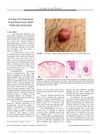 1 citations
,
February 2017 in “The American journal of dermatopathology/American journal of dermatopathology”
1 citations
,
February 2017 in “The American journal of dermatopathology/American journal of dermatopathology” A man with a skin nodule was diagnosed with a rare skin condition called cutaneous focal mucinosis, which can be confused with other skin cancers.