13 citations
,
August 2000 in “Blood” Measuring minimal residual disease on day 15 helps identify high-risk leukemia patients.
 July 2022 in “The journal of investigative dermatology/Journal of investigative dermatology”
 Particulate matter causes inflammation in hair cells, potentially harming hair growth.
 4 citations
,
February 2012 in “Chinese Science Bulletin”
4 citations
,
February 2012 in “Chinese Science Bulletin” The MtAnn3 gene affects root hair growth and is influenced by cytokinin.
 June 2026 in “Frontiers in Immunology”
 Upadacitinib effectively treated severe atopic dermatitis, vitiligo, and alopecia areata in one patient.
18 citations
,
November 2019 in “Journal of Physics Conference Series” Both methods effectively isolate high-quality stem cells from umbilical cords.
12 citations
,
April 2023 in “Molecular Pharmaceutics” A new patch can deliver stable antibodies over time for potential HIV treatment.
 April 2017 in “Journal of Investigative Dermatology”
 Deep phenotyping helps distinguish between xeroderma pigmentosum and trichothiodystrophy, aiding in diagnosis and treatment.
 15 citations
,
April 2007 in “Journal of child neurology”
15 citations
,
April 2007 in “Journal of child neurology” An 11-month-old boy with Menkes disease had severe brain shrinkage and abnormal blood vessels, and didn't respond well to treatment.
July 2026 in “Journal of Investigative Dermatology” 4 citations
,
September 2011 in “Journal of the American Academy of Dermatology” A man developed a skin cancer called folliculotropic mycosis fungoides after a kidney transplant.
 January 2026 in “Journal of Clinical and Investigative Dermatology”
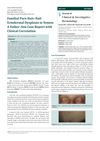
 A father and son in Yemen have a genetic condition causing hair loss and nail problems.
25 citations
,
June 1998 in “Journal of Investigative Dermatology” Murine cytomegalovirus does not cause alopecia areata in these mice.
 17 citations
,
October 2006 in “Molecular and Cellular Endocrinology”
17 citations
,
October 2006 in “Molecular and Cellular Endocrinology” The L457(3.43)R mutation in the human lutropin receptor causes increased activity and hormone insensitivity, leading to precocious puberty.
3 citations
,
January 2021 in “FEBS open bio” Camellia japonica extract may improve scalp health and promote hair growth.
 10 citations
,
September 2015 in “PLoS ONE”
10 citations
,
September 2015 in “PLoS ONE” New mutations in the VDR gene cause vitamin D-resistant rickets without hair loss.
 26 citations
,
June 2018 in “The journal of immunology/The Journal of immunology”
26 citations
,
June 2018 in “The journal of immunology/The Journal of immunology” AIRE-deficient rats developed severe autoimmune disease similar to APECED, useful for testing treatments.
13 citations
,
June 2014 in “Molecular therapy” The lentiviral array can monitor and predict gene activity during stem cell differentiation.
3 citations
,
October 2019 in “EMBO molecular medicine” Targeting NCoR1 can help treat heart enlargement and dysfunction.
September 2024 in “Clinical Case Reports” Early recognition and multidisciplinary management of Whitaker syndrome can improve patient outcomes.
 November 2020 in “Journal of The American Academy of Dermatology”
 Oral JAK inhibitors help regrow hair in alopecia patients.
 1 citations
,
November 2024 in “Diabetes Metabolic Syndrome and Obesity”
1 citations
,
November 2024 in “Diabetes Metabolic Syndrome and Obesity” A specific gene variant is linked to severe insulin resistance and hormone imbalance in a teenage girl.
 25 citations
,
August 2014 in “Endocrinology”
25 citations
,
August 2014 in “Endocrinology” Researchers created a mouse model of a type of rickets that does not cause hair loss.
 August 2024 in “New Zealand Medical Student Journal”
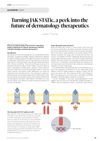
 JAK inhibitors show promise for treating skin diseases effectively and safely.
57 citations
,
January 1987 in “Journal of Biological Chemistry” Different keratins have unique expression patterns in mouse skin cells.
 December 2025 in “International Journal of Surgery”
 GBP1 is a key target for treating Epstein-Barr virus-related kidney cancer, and finasteride may help.
 2 citations
,
May 2017 in “International journal of pharmacy and pharmaceutical sciences/International Journal of Pharmacy and Pharmaceutical Sciences”
2 citations
,
May 2017 in “International journal of pharmacy and pharmaceutical sciences/International Journal of Pharmacy and Pharmaceutical Sciences” Hutchinson-Gilford Progeria Syndrome is a rare genetic disorder caused by a specific gene mutation, characterized by aging symptoms and managed by monitoring heart health and using low-dose aspirin.
 17 citations
,
June 2018 in “Frontiers in Physiology”
17 citations
,
June 2018 in “Frontiers in Physiology” ADM scaffolds help skin heal by promoting a healing-type immune response.
April 2025 in “The Journal of Dermatology” Janus kinase inhibitors may help treat cutaneous T-cell lymphoma, but more research is needed.
February 2024 in “Epigenomes” Epigenetic mechanisms control skin development by regulating gene expression.
39 citations
,
February 2024 in “Small” Microneedles are becoming essential tools in medicine for sensing, drug delivery, and communication.