Search
for
Sort by
Research
270-300 / 1000+ resultsresearch Frictional Alopecia in a Child: An Uncommon Presentation of Lower Limb Hair Loss
A 6-year-old boy's leg hair loss was due to friction from sitting cross-legged, and it usually resolves on its own.

research Natural Asymmetry in Hair Growth Direction: Implications for Hairline Design in Male Patients
Natural hairline asymmetry should be embraced for better-looking hair transplants.

research A rare cause of irrevocable childhood alopecia feigning alopecia universalis: Atrichia congenita with papular lesions
An 8-year-old girl has a rare genetic disorder causing complete, irreversible hair loss and skin bumps.

research Hairline Restoration: Difference in Men and Woman—Length and Shape
Men and women have different hairline restoration needs, with natural design being more complex for women, and hairline changes being important for transgender individuals' transitions.
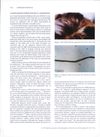
research Acquired progressive kinking of the hair in a prepubertal boy
A 10-year-old boy had the earliest reported case of hair that became progressively kinkier but eventually returned to normal on its own.
research Alteration in Hair Texture Following Regrowth in Alopecia Areata
Alopecia areata caused a boy's hair to regrow straight instead of curly, but the exact reason is unknown.
research Female Adolescent Hair Disorders
Quick treatment of hair disorders in teenage girls is important because of the emotional effects.
research Hairline Design in West Asians
Hairline design is crucial for lasting, natural-looking hair restoration in West Asians.

research Naturally Occurring Hairlines in Orientals of Southeast and East Asian Origin and Their Application in Hair Restoration Surgery
Southeast and East Asian men typically have straighter hairlines with less recession and lower hair density, which is important to consider in hair restoration surgery.
research Synchronous neonatal telogen effluvium in white and black.
Newborns can experience temporary hair loss in bands, unrelated to sleeping position.

research Ultrastructural Characteristics of Neonate Scalp Hair
Neonate scalp hair is thinner, lacks a medulla, and has smaller follicles compared to adult hair.

research The Shape and the Location of Forehead Hairline of Korean Males in Their 20s & 30s
Korean men in their 20s and 30s most commonly have an inverted U-shaped hairline.

research Alopecia in pediatric population- A clinico-epidemiological study
The study concludes that hair loss in children has specific patterns and causes.

research Papular atrichia
An 8-year-old girl has a rare, irreversible hair loss condition caused by a genetic mutation.
research Complete hair regrowth in childhood alopecia areata: A two-year case report
A 7-year-old girl with alopecia areata achieved nearly complete hair regrowth with homeopathic treatment.

research Adolescent hair loss
Hair loss in teenagers is hard to treat and lacks a cure, with some treatments available depending on the type of hair loss.

research Common genetic hair shaft abnormalities may be visualized by light and electron microscope
Genetic hair shaft abnormalities can be seen with microscopes and often affect scalp hair.
research Linear hair growth rates in preschool children
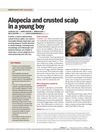
research Alopecia and crusted scalp in a young boy
Early treatment of scalp infections can prevent permanent hair loss.
research Alopécie frontale fibrosante : à propos de trois cas pédiatriques
Frontal fibrosing alopecia can occur in children, not just postmenopausal women.
research A tricky case of hair loss in a child: Trichoscopy saves the day
Trichoscopy helped diagnose and cure a child's hair loss caused by a fungal infection.
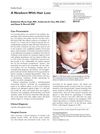
research A Newborn With Hair Loss
The baby’s hair loss was due to a rare genetic condition, not treatable by usual methods.
research Male pattern hair loss: Can developmental origins explain the pattern?
Male pattern hair loss may be linked to the developmental origins of hair follicles.

research Natural hairline density in men: findings of a pilot survey
Men generally have a certain thickness of hair at their hairline.
research Light Microscopic Hair Abnormalities in Children: Retrospective Review of 119 Cases in a 10-Year Period
Over half of the children had abnormal hair under a microscope, with many having genetic hair conditions.

research Alopecia: Kids are not just little people
Hair loss in children is diagnosed and treated differently than in adults, with different common causes and a focus on less invasive methods.
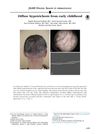
research Diffuse hypotrichosis from early childhood
The girl has a genetic hair condition causing thin hair since childhood.
research A clinical investigation of early‐onset alopecia areata in children: Onset earlier than 4 years of age might have a better short‐term prognosis
Children with alopecia areata before age 4 may have better short-term hair regrowth.
research An analysis of shapes and location of anterior hairline in Asian men
The study created a new system to classify Asian men's hairlines to help with hair loss treatment and cosmetic procedures.