 1 citations
,
July 2023 in “Journal of the European Academy of Dermatology and Venereology”
1 citations
,
July 2023 in “Journal of the European Academy of Dermatology and Venereology” Portraits show women's hairlines have moved forward over time, suggesting changes in the occurrence of frontal hair loss.
5 citations
,
November 2012 in “Journal of the American Academy of Dermatology” A 3-year-old girl has short anagen syndrome, causing her hair to stay short.
November 2012 in “Annales de Dermatologie et de Vénéréologie” Frontal fibrosing alopecia can occur in children, not just postmenopausal women.
September 1993 in “Archives of Disease in Childhood”  July 2018 in “IP Indian journal of clinical and experimental dermatology”
 Hair loss in rural Indian children is often due to malnutrition, poor grooming, stress, and infections.
2 citations
,
November 2023 in “Skin Research and Technology” RCM and dermoscopy help identify different types of hair loss in children.
Loose anagen hair syndrome in children may improve with age, but treatment results vary.
 1 citations
,
April 2016 in “Journal of The American Academy of Dermatology”
1 citations
,
April 2016 in “Journal of The American Academy of Dermatology” The study concludes that Loose Anagen Hair Syndrome is a benign condition that usually improves with age but can be hard to diagnose and stressful for the family.
 2 citations
,
March 2023 in “Skin research and technology”
2 citations
,
March 2023 in “Skin research and technology” Temporal triangular alopecia in infants is mostly seen in males at birth, with unique features that help with diagnosis.
 January 2019 in “International journal of dermatology, venereology and leprosy sciences”
 Hair loss in young adults is common and varies in pattern, cause, and type.
January 2023 in “Indian Dermatology Online Journal” A 23-year-old man has a benign, non-progressive hair loss patch that doesn't respond to treatment but can be cosmetically treated.
8 citations
,
July 2021 in “Journal of Pediatric Health Care” Early diagnosis and treatment of hair loss in children are crucial to prevent permanent damage.
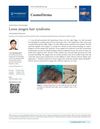 February 2023 in “Cosmoderma”
 Loose anagen hair syndrome causes easily shed hair but usually improves with time.
 8 citations
,
August 2019 in “Journal of The American Academy of Dermatology”
8 citations
,
August 2019 in “Journal of The American Academy of Dermatology” Early diagnosis and treatment, like topical minoxidil, can prevent hair loss in children.
May 2022 in “British Journal of Dermatology” The girl's hair condition improved on its own in 24 months.
February 2025 in “Pediatric Dermatology” 8 citations
,
April 2013 in “Der Hautarzt” Children's hair loss differs from adults, with alopecia areata being most common.
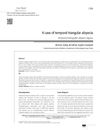 December 2020 in “TURKDERM”
 A 3-year-old boy was diagnosed with a rare, non-scarring hair loss condition called temporal triangular alopecia.
 December 2023 in “The Sri Lanka Journal of Dermatology”
 A 12-year-old girl's hair loss was linked to a rare genetic condition called ALX4-related frontonasal dysplasia.
 7 citations
,
April 2015 in “Plastic and Aesthetic Nursing”
7 citations
,
April 2015 in “Plastic and Aesthetic Nursing” Hair transplantation can effectively restore a natural-looking hairline when properly planned and executed.
 33 citations
,
June 2016 in “Pediatric Dermatology”
33 citations
,
June 2016 in “Pediatric Dermatology” Some congenital hair disorders improve in childhood or with treatments like minoxidil and retinoids, while others like Netherton syndrome and trichothiodystrophy have a poor prognosis.
20 citations
,
July 2005 in “Experimental dermatology” The fuzzy gene is crucial for controlling hair growth cycles.
 5 citations
,
September 2011 in “Pediatric Dermatology”
5 citations
,
September 2011 in “Pediatric Dermatology” Two young siblings experienced hair loss without hormone issues or other skin problems.
4 citations
,
April 2018 in “The journal of pediatrics/The Journal of pediatrics” A 6-year-old girl's inability to grow her hair long was due to Loose Anagen Hair Syndrome, which causes hair to shed easily and may improve with age.
April 2016 in “Journal of the American Academy of Dermatology” A 4-year-old girl had a rare hair disorder affecting only part of her scalp.
December 2025 in “ILDS-DEV” 
Iron supplements may reverse premature graying in iron-deficient individuals; ingrown nails are common in diabetics with certain risk factors; topical finasteride may reduce scalp DHT as effectively as oral finasteride; monilethrix treatment is challenging but some medications can help.
June 2001 in “European Journal of Dermatology” A 54-year-old woman experienced progressive hair loss starting in adolescence, leading to sparse scalp hair and almost no eyebrows or eyelashes.
 February 2011 in “Journal of the American Academy of Dermatology”
 A 60-year-old man with a long-term balding condition also developed a rare hair loss condition usually seen in postmenopausal women.
January 2016 in “Case reports in clinical medicine” A 6-year-old girl was diagnosed with a rare hair disorder called monilethrix.