 September 2023 in “bioRxiv (Cold Spring Harbor Laboratory)”
 The mTurq2-Col4a1 mouse model shows that cells can divide while attached to stable basement membranes during development.
19 citations
,
February 2013 in “Archives of Dermatological Research” 8 citations
,
October 2012 in “Transgenic Research” Overexpressing the human H-ferritin gene in mice causes mild growth delay and temporary hair loss.
April 2019 in “The journal of investigative dermatology/Journal of investigative dermatology” Disrupting the Tsc2 gene in certain cells leads to thicker skin, larger hair, and changes in hair growth signaling, which can be partly reversed with specific treatment.
 11 citations
,
June 2012 in “Acta histochemica”
11 citations
,
June 2012 in “Acta histochemica” Mice with a Gsdma3 gene mutation have thicker skin and longer hair follicle openings due to increased β-catenin levels.
 26 citations
,
June 2018 in “The journal of immunology/The Journal of immunology”
26 citations
,
June 2018 in “The journal of immunology/The Journal of immunology” AIRE-deficient rats developed severe autoimmune disease similar to APECED, useful for testing treatments.
 June 2024 in “British Journal of Dermatology”
 KRT14 gene variants cause dermatopathia pigmentosa reticularis, affecting nails, teeth, and hair.
 September 2022 in “Canadian journal of animal science”
 Certain gene variations are linked to the thickness of cashmere goat hair.

Key genes for mink fur have been identified, aiding conservation efforts.
9 citations
,
March 2017 in “Journal of Visualized Experiments” The assay effectively identifies compounds that affect immune cell activation.
14 citations
,
April 2016 in “PloS one” The KRTAP11-1 gene promoter is crucial for specific expression in sheep wool cortex.
 30 citations
,
March 2019 in “Archives animal breeding/Archiv für Tierzucht”
30 citations
,
March 2019 in “Archives animal breeding/Archiv für Tierzucht” The KRTAP15-1 gene affects cashmere fiber thickness in goats.
 7 citations
,
November 2010 in “Genesis”
7 citations
,
November 2010 in “Genesis” Mouse Scube3 affects teeth, tongue, vibrissae, and eye development, but not facial structure or limb growth.
1 citations
,
May 2024 in “Communications Biology” Dab2 protein is crucial for hair follicle stem cell renewal and preventing early aging.
14 citations
,
February 2022 in “The Journal of clinical investigation/The journal of clinical investigation” Scientists made a mouse model of a serious skin cancer by changing skin cells with a virus and a specific gene, which is similar to the disease in humans.
14 citations
,
April 2008 in “PROTEOMICS” Increased 14-3-3 proteins may block hair cycle regression, causing hair loss.
 May 2024 in “Animal genetics”
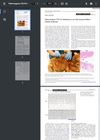
 A cat's poor wound healing was linked to a genetic deletion in the COL5A1 gene.
1 citations
,
April 2021 in “IntechOpen eBooks” The PCR technique can identify genetic differences in a wool-related gene among different sheep breeds, which may help improve wool and pelt quality.
 August 2024 in “Current Protocols”
 The C3H/HeJ mouse model is useful for studying and testing treatments for alopecia areata.
 27 citations
,
December 2013 in “Endocrinology”
27 citations
,
December 2013 in “Endocrinology” Researchers created a mouse model for Cushing's syndrome to study glucocorticoid excess and potential treatments.
March 2007 in “Journal of Cell Science” K10 may not prevent tumors as previously thought and might increase benign tumor risk.
 July 2022 in “Journal of Investigative Dermatology”
 Dkk4 is necessary for the initial development and arrangement of hair follicles.
 January 2024 in “Journal of Hard Tissue Biology”
 A high-fat diet may weaken tongue structure by reducing certain protein genes.
 October 2021 in “Journal of Investigative Dermatology”
 Dkk4 protein is necessary for the proper development and arrangement of hair follicles.
33 citations
,
March 1994 in “PubMed” High ODC and low K1 and K10 may indicate early skin tumors in mice.
December 2009 in “Cancer Research” Over-expression of Sp2 can lead to cancer by preventing proper stem cell differentiation.
 122 citations
,
June 2002 in “Genes & Development”
122 citations
,
June 2002 in “Genes & Development” Keratin 17 is crucial for early hair strength and cell survival.
3 citations
,
March 2016 in “Experimental Dermatology” A mutation in the hairless gene speeds up severe itchy skin in mice on a special diet.
 24 citations
,
January 2019 in “Theranostics”
24 citations
,
January 2019 in “Theranostics” Loss of Pten in certain hair follicle stem cells increases skin cancer risk.
27 citations
,
November 1991 in “Journal of Investigative Dermatology”