7 citations
,
July 2019 in “Animals” The KRTAP21-1 gene affects wool yield and can help improve wool production.
4 citations
,
May 1998 in “PubMed” The Bsk mutation doesn't involve keratin gene recombination and its cause is unknown.
 16 citations
,
January 2017 in “Physical chemistry chemical physics/PCCP. Physical chemistry chemical physics”
16 citations
,
January 2017 in “Physical chemistry chemical physics/PCCP. Physical chemistry chemical physics” The 3D structure of a key hair protein was modeled, revealing specific helical structures and stabilization features.
186 citations
,
December 2012 in “Current opinion in cell biology” Keratin proteins are increasingly recognized as important for cell health and are linked to many diseases.

mEphA1 receptor tyrosine kinase is important for skin and hair development and may play a role in certain diseases.
March 2026 in “Journal of Investigative Dermatology” 9 citations
,
August 2020 in “International Journal of Molecular Sciences” New compounds may help treat heart disease by activating specific potassium channels.
 April 2023 in “Journal of Investigative Dermatology”
 Dkk4 protein helps control how hair grows and its arrangement.
September 2025 in “OPAL (Open@LaTrobe) (La Trobe University)” SELP::KP improves hair strength, elasticity, and health, making it a promising hair cosmetic.
 5 citations
,
January 2017 in “Anais brasileiros de dermatologia/Anais Brasileiros de Dermatologia”
5 citations
,
January 2017 in “Anais brasileiros de dermatologia/Anais Brasileiros de Dermatologia” Porokeratotic eccrine and hair follicle nevus is a very rare skin disorder possibly caused by a GJB2 gene mutation.
 April 2023 in “The journal of investigative dermatology/Journal of investigative dermatology”
 DKK2 and SOSTDC1 together are necessary for the normal timing of the first regression phase in the hair growth cycle.
29 citations
,
June 2014 in “Experimental Cell Research” EGF–FGF2 helps mouse stem cells grow and become more like nerve cells.
60 citations
,
March 2006 in “Journal of Medical Genetics” A mutation in the KRTHB5 gene causes hair and nail issues.
 2 citations
,
August 2022 in “The journal of investigative dermatology/Journal of investigative dermatology”
2 citations
,
August 2022 in “The journal of investigative dermatology/Journal of investigative dermatology” A specific mutation in the K25 gene causes a rare genetic disorder with curly hair at birth and later hair loss, along with dental issues.
25 citations
,
September 1995 in “Biochemistry and Cell Biology” High levels of human keratin 16 in mice cause skin lesions and abnormal skin development.
 4 citations
,
January 2004 in “Biological and Pharmaceutical Bulletin”
4 citations
,
January 2004 in “Biological and Pharmaceutical Bulletin” AgK114 protein helps in hamster skin injury recovery.
1 citations
,
April 2025 in “Animals” The KRTAP13-3 gene affects wool fibre diameter variability in Chinese Tan sheep.
10 citations
,
August 2023 in “The EMBO Journal” Kdm6b is crucial for skin cell differentiation.
 3 citations
,
January 2019 in “Journal of Dermatology”
3 citations
,
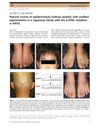
January 2019 in “Journal of Dermatology” The p.P25L mutation in the KRT5 gene causes a rare skin condition that worsens over time and may lead to hair loss starting in young adulthood.
56 citations
,
March 2003 in “Journal of Investigative Dermatology” 17β-estradiol can reduce inflammation in the skin.
141 citations
,
February 1988 in “Molecular and Cellular Biology” Only one K16 gene on chromosome 17 makes a functional keratin protein.
 5 citations
,
January 2021 in “iScience”
5 citations
,
January 2021 in “iScience” Using a combination of specific cell cycle regulators is better for safely keeping hair root cells alive indefinitely compared to cancer-related methods.
 56 citations
,
February 2010 in “PLOS ONE”
56 citations
,
February 2010 in “PLOS ONE” Blocking Wnt signaling in young mice causes thymus shrinkage and cell loss, but recovery is possible when the block is removed.
30 citations
,
October 1999 in “Differentiation” Mutant MK6a transgenes in mice cause blistering, hair loss, and potential human alopecia.
38 citations
,
November 2020 in “International journal of biochemistry & cell biology” Keratin proteins are essential for keeping the cells in the human colon healthy and stable.
18 citations
,
June 2018 in “Journal of Dental Research” Msx2 is essential for proper enamel formation by preventing abnormal cell transformation.
3 citations
,
January 2011 in “生物医学研究杂志:英文版” A new mutation in the KRT86 gene causes monilethrix in a Han family.
 May 2025 in “Journal of Developmental Biology”
 Jawless vertebrates have teeth proteins similar to those in mammalian hair and nails.
August 2016 in “Journal of Investigative Dermatology” EZH2 is essential for hair growth and skin cell development.