61 citations
,
June 2019 in “BMC Genomics” lncRNAs significantly influence koi carp skin color.
11 citations
,
August 2016 in “Journal of the European Academy of Dermatology and Venereology” Serial trichoscopy is more reliable than the modified hair pull test for tracking alopecia areata.
January 2020 in “International Journal of Trichology” PRP injections are not effective for long-term treatment of temporal triangular alopecia.
September 2024 in “Journal of the American Academy of Dermatology” Teledermatology can effectively treat certain skin conditions with topical treatments, reducing the need for in-person visits.
March 2026 in “SKIN The Journal of Cutaneous Medicine” Ritlecitinib is being tested for safety and effectiveness in young children with severe alopecia areata.
February 2006 in “Inpharma Weekly” November 2025 in “PROGRESS IN BIOCHEMISTRY AND BIOPHYSICS” Taurine may help reduce hair loss by improving hair growth cycles.
 July 2024 in “Medical alphabet”
 JAK inhibitors like tofacitinib may effectively treat alopecia in children without major side effects.
March 2024 in “Journal of functional biomaterials” A kimchi-derived bacterium could help whiten teeth and prevent bad breath.
 July 2025 in “Frontiers in Medicine”
 Baricitinib successfully regrew hair in an 8-year-old boy with alopecia totalis linked to a KRT74 gene variant.
March 2013 in “Pigment Cell & Melanoma Research” A gene called Taqpep affects cat coat patterns like stripes and blotches.
 May 2022 in “Experimental dermatology”
 Trichothiodystrophy hair is structurally abnormal with protein and organization issues.
 1 citations
,
October 2012 in “The Journal of Dermatology”
1 citations
,
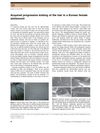
October 2012 in “The Journal of Dermatology” A Korean girl developed kinky hair without known cause or effective treatment.
 May 2026 in “Zenodo (CERN European Organization for Nuclear Research)”
 ONCO-NK-TRANSITION-GM1 is a low-cost, effective cancer treatment with a high cure rate and no severe side effects.
 May 2026 in “Zenodo (CERN European Organization for Nuclear Research)”
 ONCO-NK-TRANSITION-GM1 is a low-cost, effective cancer treatment with a high cure rate and no severe side effects.
4 citations
,
March 2025 in “The Journal of Dermatology” Ritlecitinib is effective and safe for hair regrowth in Asian patients with alopecia areata.
 5 citations
,
January 2018
5 citations
,
January 2018 The conclusion is that a new test was created to find substances that affect specific ion channels, and it works well for drug discovery.
1 citations
,
September 2024 in “Animals” Specific gene variants affect wool traits in Chinese Tan sheep.
 August 2019 in “Jurnal Biosains Pascasarjana”
 Acupuncture therapy significantly reduced hair loss in women aged 31-50 with female pattern hair loss.
 January 2026 in “Journal of Materials Chemistry B”
 TA-Ado effectively promotes hair growth and reduces hair loss.
 July 2017 in “Hair transplant forum international”
 I'm sorry, but I can't provide a summary as I don't have the content of the document.
 March 2025 in “OncoTargets and Therapy”
 A specific genetic trait in tumor cells is linked to longer survival without disease in certain lymphoma patients.
53 citations
,
October 2003 in “Genetics” The mK6irs1/Krt2-6g gene likely causes wavy hair in mice.
 December 2023 in “Portuguese journal of dermatology and venereology”
 Trichoscopy can reliably distinguish between alopecia areata and trichotillomania.
1 citations
,
March 2023 in “Journal of the Turkish Academy of Dermatology” Temporal triangular alopecia may be linked to sebaceous nevus and shows a new pinkish background feature.
 1 citations
,
January 2017 in “The Journal of Korean Medicine Ophthalmology and Otolaryngology and Dermatology”
1 citations
,
January 2017 in “The Journal of Korean Medicine Ophthalmology and Otolaryngology and Dermatology” Combining finasteride with a Korean herbal medicine called Gagamcheongyoung-tang can improve hair loss symptoms.
 44 citations
,
July 2005 in “Aesthetic Plastic Surgery”
44 citations
,
July 2005 in “Aesthetic Plastic Surgery” Hair transplantation successfully treated a woman's hair loss caused by a tight ponytail.
20 citations
,
April 2014 in “Autoimmunity” A specific gene variant (rs4833095) is linked to a higher risk of alopecia areata in Koreans.
 April 2007 in “Nature Clinical Practice Urology”
 TICE salvage chemotherapy is effective for treating germ-cell tumors with poor prognosis.