July 2016 in “Cancer research” Mutant cells in hair follicles are influenced by their location and interactions with surrounding cells.
 29 citations
,
July 2014 in “PloS one”
29 citations
,
July 2014 in “PloS one” Meis1 is crucial for skin health and tumor development.
22 citations
,
June 2020 in “iScience” Sox21 is crucial for tooth development and enamel formation by preventing cells from changing into a different type.
 November 2023 in “Advanced Science”
 A specific hair protein variant increases the spread of breast cancer and is linked to worse survival rates.
 9 citations
,
November 2021 in “Frontiers in Cell and Developmental Biology”
9 citations
,
November 2021 in “Frontiers in Cell and Developmental Biology” PBX1 helps reduce aging and cell death in hair follicle stem cells by decreasing DNA damage, not by improving DNA repair.
 15 citations
,
July 2016 in “Biochemical Journal”
15 citations
,
July 2016 in “Biochemical Journal” Wnt proteins from certain skin cells are crucial for normal hair growth and renewal.
30 citations
,
October 1999 in “Differentiation” Mutant MK6a transgenes in mice cause blistering, hair loss, and potential human alopecia.
 April 2017 in “Journal of Investigative Dermatology”
 A virus protein can activate a pathway that may lead to abnormal hair follicle development.
27 citations
,
December 1997 in “Archives of Dermatological Research” Rat dermal papilla cells have unique properties and interact differently with their environment compared to other skin cells.
 April 2010 in “The Journal of Urology”
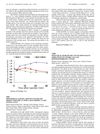
 Human prostate cells produce more WISP1/CCN4 when there's not enough oxygen.
29 citations
,
December 2004 in “Developmental biology” cDermo-1 causes dense skin, feathers, and scales in chickens.
25 citations
,
March 2022 in “International journal of biological macromolecules” miR-181a-5p helps hair growth by activating a specific signaling pathway.
318 citations
,
October 1998 in “The Journal of Cell Biology” Keratin 17 is important for skin development and may help define skin cell types.
March 2010 in “European Journal of Cancer Supplements”  January 2024 in “Authorea (Authorea)”
 STK11 gene polymorphism does not predict metformin response in PCOS.
119 citations
,
September 2000 in “Journal of Biological Chemistry” GKLF/KLF4 and Sp1 control Keratin 19 gene activity, influencing cancer-related changes.
8 citations
,
June 2023 in “Acta Biochimica et Biophysica Sinica” rRSPO1 protein boosts hair growth by activating a key signaling pathway.
13 citations
,
January 2002 in “Biological chemistry” Different conditions affect how hair proteins assemble, and certain mutations can change their structure.
 7 citations
,
March 2021 in “Molecular Medicine Reports”
7 citations
,
March 2021 in “Molecular Medicine Reports” A mix of specific inhibitors and a growth factor helps keep hair growth cells from losing their properties in the lab.
 42 citations
,
October 2009 in “The journal of investigative dermatology/Journal of investigative dermatology”
42 citations
,
October 2009 in “The journal of investigative dermatology/Journal of investigative dermatology” Mutations in the KRT85 gene cause hair and nail problems.
3 citations
,
September 2021 in “Bulletin of the Korean Chemical Society” Dimeric peptide derivatives could help hair growth and treat hair loss safely.
 9 citations
,
November 2019 in “Cell calcium”
9 citations
,
November 2019 in “Cell calcium” The STIM1 R304W mutation in mice leads to bone changes and teeth hair growth.
 1 citations
,
June 2022 in “Chinese medical journal/Chinese Medical Journal”
1 citations
,
June 2022 in “Chinese medical journal/Chinese Medical Journal” Two new mutations in the CDH3 gene cause hair loss and vision problems in a young girl.
 April 2018 in “The journal of investigative dermatology/Journal of investigative dermatology”
 The model can effectively test gene functions and drug responses in human skin.
 3 citations
,
January 2023 in “Journal of Hard Tissue Biology”
3 citations
,
January 2023 in “Journal of Hard Tissue Biology” Wnt10a may help regenerate dental pulp and form dentine.
5 citations
,
March 2017 in “Gene” CAP1 decreases the expression of a hair-related protein in young Tan sheep's skin.
April 2017 in “Journal of Investigative Dermatology” Deleting Crif1 in mouse skin disrupts skin balance and hair growth.
 February 2026 in “International Journal of Molecular Sciences”
 Silencing SFRP1 alone promotes hair growth, but adding DKK1 does not help.
Type XVII collagen may help prevent skin aging.
January 2013 in “프로그램북(구 초록집)”