 February 2010 in “Journal of The American Academy of Dermatology”
 The document concludes that using gadolinium-based contrast agents during MRI can be linked to Nephrogenic Systemic Fibrosis in patients with severe kidney disease.
21 citations
,
December 2006 in “Archives of dermatology” A kidney transplant patient developed pink skin bumps with spiny centers on her face and limbs.
35 citations
,
January 2008 in “American Journal of Clinical Dermatology” KFSD can be linked to acne keloidalis nuchae and tufted hair folliculitis.
3 citations
,
July 2024 in “Frontiers in Medicine” Mutations in the KLHL24 gene cause a skin disorder in some Russian families.
 31 citations
,
May 2021 in “Journal of endocrinological investigation”
31 citations
,
May 2021 in “Journal of endocrinological investigation” APS-1 in Italy shows diverse AIRE mutations and various autoimmune issues.
6 citations
,
June 2021 in “The journal of investigative dermatology/Journal of investigative dermatology” A mutation in the SREBF1 gene causes both hereditary mucoepithelial dysplasia and IFAP syndrome, which are related conditions.
July 2023 in “International Journal of Rheumatic Diseases” Ulcerative sarcoidosis in body folds is rare and improved with prednisone and hydroxychloroquine.
8 citations
,
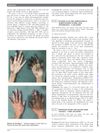
June 2016 in “Journal of Investigative Dermatology” A rare genetic deletion in the KRT1 gene causes unique skin symptoms in a family.
Psychosis can be an early sign of neuropsychiatric lupus, treatable with tailored medication.
14 citations
,
March 2018 in “The American journal of case reports” People with the same genetic mutation for Woodhouse-Sakati syndrome can have different symptoms.
November 2012 in “The Journal for Nurse Practitioners” Systemic lupus erythematosus is a complex autoimmune disease mainly affecting women, with varied symptoms and unknown exact cause.
22 citations
,
September 2014 in “JAMA dermatology” Ichthyosis with confetti is a genetic skin disorder with consistent ectodermal malformations and various KRT10 gene mutations.
3 citations
,
February 2021 in “Pediatric rheumatology online journal” A girl with lupus and trisomy X has a higher risk of bone problems like avascular necrosis and osteoporosis.
 September 2016 in “Journal of Dermatological Science”
 A specific mutation known for causing cancer is also found to cause a skin condition in a young girl.
10 citations
,
May 2017 in “Clinical and experimental dermatology”  22 citations
,
June 2004 in “Journal of The European Academy of Dermatology and Venereology”
22 citations
,
June 2004 in “Journal of The European Academy of Dermatology and Venereology” A woman had both Graham Little-Piccardi-Lassueur syndrome, causing hair loss, and complete androgen insensitivity syndrome, making her genetically male but physically female. This suggests androgens don't affect the hair loss condition.
 2 citations
,
December 2020 in “Endocrinology, diabetes & metabolism case reports”
2 citations
,
December 2020 in “Endocrinology, diabetes & metabolism case reports” A man with hypoparathyroidism had other health issues that led to a diagnosis of a rare autoimmune disorder, APS-1.
 January 2025 in “Turkish Journal of Cerebrovascular Diseases”
 CARASIL can cause different symptoms even with the same genetic mutation.
 July 2024 in “Journal of Rare Diseases”
 Woodhouse-Sakati syndrome shows varied symptoms and genetic differences within families.

A new syndrome, Teelwani Syndrome, combines features of two rare genetic disorders.
 1 citations
,
October 2024 in “Journal of Nepal Paediatric Society”
1 citations
,
October 2024 in “Journal of Nepal Paediatric Society” Stopping Cyclosporine A led to hair regrowth in a child with alopecia.
 January 2022 in “bioRxiv (Cold Spring Harbor Laboratory)”
 Skin lesions in Carney complex are likely caused by a specific group of skin cells that promote pigment production due to a genetic mutation.
January 2009 in “Epsilon: Revista de la Sociedad Andaluza de Educación Matemática "Thales"” A CCS patient with severe complications was successfully treated using combined therapies.
October 2017 in “The American Journal of Gastroenterology” Early diagnosis and nutritional support are crucial for managing Cronkhite-Canada Syndrome.
September 2008 in “Pediatric Rheumatology” Two children with lysinuric protein intolerance showed symptoms similar to lupus.
 2 citations
,
January 2021 in “Case reports in endocrinology”
2 citations
,
January 2021 in “Case reports in endocrinology” The girl's condition improved with treatment, showing no new autoimmune diseases and hair regrowth.
 2 citations
,
August 2022 in “Federal Practitioner”
2 citations
,
August 2022 in “Federal Practitioner” A severe medication reaction required long treatment and led to hair loss and thyroid issues.
45 citations
,
January 2007 in “Journal of Clinical Oncology” Sorafenib may cause hand-foot and stump syndrome, requiring early detection and management.
1 citations
,
September 2011 in “Journal of the American Geriatrics Society” A potential genetic link between Werner syndrome and kidney disease was suggested.
 13 citations
,
December 2010 in “Annales de Dermatologie et de Vénéréologie”
13 citations
,
December 2010 in “Annales de Dermatologie et de Vénéréologie” The conclusion is that skin, mucous, and eye problems after Stevens-Johnson syndrome and Lyell syndrome significantly affect patients' lives, highlighting the need for comprehensive care and eye check-ups.