 1 citations
,
July 2015 in “European Journal of Dermatology”
1 citations
,
July 2015 in “European Journal of Dermatology” CO₂ laser treatment is fast and effective for some benign skin tumors with minimal side effects.
 1 citations
,
April 2010 in “Expert Review of Dermatology”
1 citations
,
April 2010 in “Expert Review of Dermatology” The document concludes that early diagnosis and treatment are crucial for managing rare hair loss disorders and that more research is needed to improve treatment strategies.
 May 2026 in “Signal Transduction and Targeted Therapy”
 BMP signaling is essential for forming skin structures called rete ridges, aiding skin thickness and regeneration.
 April 2026 in “Journal of Pharmaceutical Investigation”
 Nanotechnology could improve treatment for scars and atopic dermatitis by targeting skin issues more effectively.
 January 2026 in “RSC Advances”
 The hydrogel helps heal wounds without scars by releasing two drugs gradually.
 September 2025 in “The health sciences AUS.”
 Intralesional triamcinolone acetonide effectively treats acne keloidalis nuchae with minimal side effects.
 January 2023 in “Journal of Cutaneous and Aesthetic Surgery”
 Follicular unit extraction can effectively treat a specific type of vitiligo.
 July 2021 in “British Journal of Dermatology”
 Laser treatment for skin conditions VEN and ILVEN is effective and liked by patients.
 June 2019 in “Asian Journal of Medical Research”
 The dermaroller caused less hyperpigmentation and no itching compared to the fractional CO2 laser.
 April 2018 in “The journal of investigative dermatology/Journal of investigative dermatology”
 Double-stranded RNA helps regenerate hair follicles by increasing retinoic acid production and signaling.
 January 2018 in “Stem cells in clinical applications”
 Exosomes show promise for tissue repair and regeneration with advantages over traditional cell therapies.
The combination therapy effectively improved acne keloidalis nuchae.
 July 2017 in “British Journal of Dermatology”
 The document concludes that scalp conditions have various causes and can present in many different ways.
 May 2017 in “InTech eBooks”
 Some hair loss disorders cause permanent loss due to scarring, and treatments like steroids don't always work well.
 August 2010 in “The Journal of Dermatology”
 The document concludes that low-dose acne treatment is most suitable for moderate acne, with high patient satisfaction and low relapse rates.
 April 2016 in “The journal of investigative dermatology/Journal of investigative dermatology”
 M2 macrophages help hair regrowth in wounds by making growth factors.
 October 1987 in “Clinics in Dermatology”
 Hair transplantation is beneficial if the right patients are chosen and the procedure is done carefully.
 March 2021 in “PARIPEX INDIAN JOURNAL OF RESEARCH”
 Microneedling combined with platelet-rich plasma therapy is more effective for hair regrowth in androgenic alopecia than microneedling alone, but it's more painful.
 August 2019 in “Journal of The American Academy of Dermatology”
 No link found between hair loss severity and PSA levels in men.
 71 citations
,
February 2006 in “Clinics in Dermatology”
71 citations
,
February 2006 in “Clinics in Dermatology” Pregnancy causes skin changes like darkening, hair thickening, nail changes, and increased risk of skin growths, most of which usually resolve after birth.
 68 citations
,
August 2012 in “Journal of the American Academy of Dermatology”
68 citations
,
August 2012 in “Journal of the American Academy of Dermatology” Dermatoscopy is a useful tool for diagnosing hair disorders and can help choose samples for more detailed analysis.

research ACNE
58 citations
,
January 1997 in “Dermatologic Clinics” Acne significantly affects mental health and quality of life, with research suggesting hormonal and genetic factors in its development and emphasizing early treatment to prevent scarring.
 49 citations
,
March 2019 in “Journal of Investigative Dermatology”
49 citations
,
March 2019 in “Journal of Investigative Dermatology” Skin fat plays a key role in immune defense and healing beyond just storing energy.
 23 citations
,
June 2018 in “Facial Plastic Surgery”
23 citations
,
June 2018 in “Facial Plastic Surgery” Platelet-Rich Plasma (PRP) is a low-risk treatment for Androgenic Alopecia (AGA) that generally improves hair count or density, but more research is needed for optimization.
 23 citations
,
April 2018 in “Journal der Deutschen Dermatologischen Gesellschaft”
23 citations
,
April 2018 in “Journal der Deutschen Dermatologischen Gesellschaft” Permanent hair loss from cicatricial alopecia is treated by reducing inflammation and managing symptoms, but regrowth in scarred areas is unlikely.
 22 citations
,
February 2013 in “Wound Repair and Regeneration”
22 citations
,
February 2013 in “Wound Repair and Regeneration” Mice genetically modified to produce more CD109 in their skin had less inflammation and better healing with less scarring.
 21 citations
,
May 1988 in “Journal of The American Academy of Dermatology”
21 citations
,
May 1988 in “Journal of The American Academy of Dermatology” The first in-prison dermatology clinic in the U.S. faced challenges and found certain skin conditions common among inmates, with rare cases of serious skin cancer.
 19 citations
,
October 2020 in “Biomedical Microdevices”
19 citations
,
October 2020 in “Biomedical Microdevices” Derma rollers show promise for skin improvement and drug delivery, but more research is needed on their safety and effectiveness.
 17 citations
,
September 2012 in “Dermatologic Clinics”
17 citations
,
September 2012 in “Dermatologic Clinics” The conclusion is that accurate diagnosis of different types of hair loss requires careful examination of tissue samples and understanding of clinical symptoms.
 13 citations
,
June 2010 in “Journal of The American Academy of Dermatology”
13 citations
,
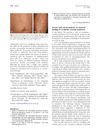
June 2010 in “Journal of The American Academy of Dermatology” A man with Cronkhite-Canada syndrome had all 20 nails detach but improved with treatment.