 63 citations
,
January 2017 in “Annals of Dermatology”
63 citations
,
January 2017 in “Annals of Dermatology” More research is needed to understand alopecia areata severity.
October 2024 in “Indian Journal of Dermatology” Early biopsy is crucial for diagnosing rare skin sarcoidosis, improving treatment.
 January 2025 in “bioRxiv (Cold Spring Harbor Laboratory)”
 Potential therapeutic targets for scarring hair loss are identified.
91 citations
,
March 1994 in “Journal of Investigative Dermatology” January 2025 in “International Journal of Trichology” Increased hair growth after a cast is temporary and harmless.
1 citations
,
December 2018 in “Veterinary dermatology” The hair coat disorder in Schipperkes is similar to Alopecia X and involves increased androstenedione levels and hair cycle arrest.
38 citations
,
September 2004 in “Journal of Autoimmunity” Alopecia areata patients have more activated T cells in their blood, which may help in developing treatments.
July 2019 in “Tumor Biology” Bone marrow-derived cells contribute to skin tumors, suggesting new treatment targets for non-melanoma skin cancers.
July 2025 in “Journal of Oncology Research and Therapy” January 2014 in “Repository KITopen (Karlsruhe Institute of Technology)” Autoimmune diseases need combined therapy of tolerance induction and immunosuppression.
April 2026 in “Almanac of Clinical Medicine” High-dose glucocorticoid therapy clears skin lesions in pemphigus vulgaris but causes side effects like weight gain and muscle weakness.
 1 citations
,
March 2015 in “Journal of the European Academy of Dermatology and Venereology”
1 citations
,
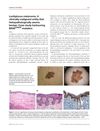
March 2015 in “Journal of the European Academy of Dermatology and Venereology” A clinically suspected melanoma appeared benign under the microscope but was confirmed by specific tests and a rare mutation.
 1 citations
,
April 2023 in “Journal of the Hellenic Veterinary Medical Society”
1 citations
,
April 2023 in “Journal of the Hellenic Veterinary Medical Society” Most dogs with paw inflammation had chronic issues, often due to allergies, and certain breeds were more affected.
1 citations
,
January 2019 in “Dermatology Online Journal” A rare skin condition appeared on a 19-year-old woman's scalp.
 14 citations
,
January 2012 in “International Journal of Trichology”
14 citations
,
January 2012 in “International Journal of Trichology” Hodgkin's lymphoma can show up as hair loss.
 February 2026 in “Dermatology and Therapy”
 Sonidegib is effective and safe for treating advanced basal cell carcinoma, but biopsies are needed to confirm tumor clearance.
 June 2020 in “Annals of the Rheumatic Diseases”
 Patients need better information about the risks of long-term steroid use.
8 citations
,
July 2018 in “The Journal of Dermatology” Current corticosteroid pulse therapy is not very effective for severe rapidly progressive alopecia areata.
Onychomatricoma is a unique nail tumor, not related to other hair-related tumors.
17 citations
,
November 2009 in “Dermato-endocrinology” Medium-dose prednisolone pulse therapy is effective and safe for multifocal alopecia areata but not for more severe forms.
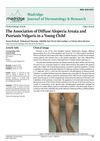 1 citations
,
October 2018 in “Madridge journal of dermatology & research”
1 citations
,
October 2018 in “Madridge journal of dermatology & research” A young child with alopecia areata and psoriasis improved with treatment, suggesting a link between the two conditions.
 19 citations
,
February 2008 in “Archives of Dermatological Research”
19 citations
,
February 2008 in “Archives of Dermatological Research” Mast cells might contribute to hair loss by causing skin thickening.
99 citations
,
January 2004 in “Journal of Biological Chemistry” Methylprednisolone helps skin cells stick together better in pemphigus vulgaris.
 2 citations
,
November 2014 in “The journal of investigative dermatology/Journal of investigative dermatology”
2 citations
,
November 2014 in “The journal of investigative dermatology/Journal of investigative dermatology” Oral tofacitinib can treat both psoriasis and alopecia universalis by normalizing inflammatory pathways.
4 citations
,
October 2020 in “The journal of investigative dermatology. Symposium proceedings/The Journal of investigative dermatology symposium proceedings” IL-4 and IL-13 might play a role in a type of hair loss similar to alopecia areata.
August 2023 in “Journal of the European Academy of Dermatology and Venereology” Onycholemmal horn is a rare nail tumor in elderly women, treated by surgical removal.
5 citations
,
February 2005 in “Journal of the American Academy of Dermatology” Focal palmoplantar callosities may help diagnose non-Herlitz junctional epidermolysis bullosa.
 April 2023 in “Australasian Journal of Dermatology”
 Lentiginous melanoma is most common on the face, especially the nose, cheek, and pre-auricular areas, with men more likely to have it on the scalp, ears, upper back, and trapezius, and women on the cheek and anterior arm. Sun damage is a key factor in its formation.
 January 2020 in “Frontiers in Medical Case Reports”
 A dog developed skin issues from too many steroids, but reducing steroids and using a specific treatment fixed the problems.