 January 1953 in “Nihon Chikusan Gakkaiho”
 Soaking calf skin in lime solution dissolves cells at different rates, with optimal dehairing after 4-7 days.
 January 2026 in “Cosmoderma”
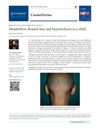
 A 9-year-old girl has a rare hair disorder causing beaded, sparse hair.

The serum with hibiscus and other natural ingredients improves hair growth and quality.
April 2016 in “Journal of Investigative Dermatology” Mutations in the TSPEAR gene cause a new form of ectodermal dysplasia affecting hair and tooth development.
13 citations
,
March 2000 in “Veterinary Dermatology” Dogs have a skin condition like human pseudopelade, causing hair loss that doesn't improve with treatment.
990 citations
,
October 1999 in “Development” Activated LEF/TCF complexes are crucial for hair development and cycling.
93 citations
,
May 1990 in “The EMBO Journal” Mice with extra sheep genes had hair that fell out and regrew in cycles.
 7 citations
,
July 2019 in “International Journal of Molecular Sciences”
7 citations
,
July 2019 in “International Journal of Molecular Sciences” PGA-4HGF may help treat hair loss by activating hair growth pathways and extending the hair growth phase.
 4 citations
,
January 2014 in “Indian dermatology online journal”
4 citations
,
January 2014 in “Indian dermatology online journal” Monilethrix is a genetic hair disorder causing fragile, beaded hair with no effective treatment.
 1 citations
,
August 2021 in “Frontiers in Genetics”
1 citations
,
August 2021 in “Frontiers in Genetics” Certain genes related to sulfur metabolism are more active during the growth phase of Cashmere goat wool, and melatonin might help this process.
 February 2026 in “International Journal of Molecular Sciences”
 PDLLA filler can improve hair thickness and shine by reducing age-related hair decline.
March 2025 in “International Journal of Trichology” Oral minoxidil improved hair thickness in a person with monilethrix.
December 2001 in “中華皮膚科醫學雜誌” An 18-year-old boy had a harmless skin nodule near his nose with hair and oil glands inside.
14 citations
,
April 1995 in “Transplantation” Human hair follicle cells can be used to help heal and replace skin.
January 2004 in “Linchuang pifuke zazhi” Black hairs have more pigment-related genes, while gray hairs have more keratin-related genes.
177 citations
,
April 2008 in “Biomedical Materials” Human hair proteins can be used to create scaffolds that support cell growth for tissue engineering.
 438 citations
,
October 2010 in “Oncogene”
438 citations
,
October 2010 in “Oncogene” Keratins help protect cells, aid in cancer diagnosis, and influence cancer behavior and treatment.
97 citations
,
March 2010 in “The American Journal of Human Genetics” A mutation in the KRT74 gene causes tightly curled hair.
42 citations
,
July 2010 in “European Journal of Cell Biology” Thyroid hormones affect hair follicle stem cells by promoting differentiation and reducing growth.
 1 citations
,
April 2016 in “Journal of Investigative Dermatology”
1 citations
,
April 2016 in “Journal of Investigative Dermatology” Prostaglandin D2 increases testosterone levels in skin cells through reactive oxygen species, not enzymes, which could lead to new hair loss treatments.
 June 2013 in “Expert Review of Dermatology”
 The article concludes that hormonal therapy is an effective long-term acne treatment, even for those without hormonal imbalances.
29 citations
,
August 2011 in “PubMed” Polymeric pretreatments can significantly reduce hair breakage and damage from hot flat irons.
 4 citations
,
December 2020 in “Mammalian genome”
4 citations
,
December 2020 in “Mammalian genome” Harlequin mutant mice have hair loss due to low AIF protein levels and retroviral element activity.
12 citations
,
October 2014 in “Journal of Applied Animal Research” Bakerwali goat skin thickens with age, especially on the neck, and shows strong lipid reactions in the keratin layer.
4 citations
,
February 2023 in “iScience” Korean long-tailed chickens have unique genes valuable for ornamental breeding.
Pangolin scales evolved for protection, hardening with age, due to keratin gene diversification.
5 citations
,
June 2016 in “University of Zagreb University Computing Centre (SRCE)” Most canine follicular tumors in Croatia are benign, but some can be malignant, so testing is important.
20 citations
,
November 2008 Vitamin D is important for regulating calcium, phosphate, and hair health.
10 citations
,
August 2010 in “Hereditas (Beijing)” Hoxc13 is essential for hair growth and follicle development.

Key genes for mink fur have been identified, aiding conservation efforts.