"Coco de mono" seeds cause temporary hair loss due to selenocystathionine.
 December 2013 in “미용예술경영연구”
 Scalp treatments increased hair density and reduced hair loss in Telogen Effluvium patients.
January 2013 in “Wageningen Academic Publishers eBooks” Proteomics helps understand protein changes in wool fiber development.

The document concludes that Loose Anagen Hair Syndrome is a benign condition where hair is thin and easily pulled out, often improving with age.

Newer retinoid drugs are effective for skin conditions but have significant side effects.
January 2005 in “Journal of Zhejiang University(Sciences Edition)” Yuyi hairless mice lose hair after birth, develop thick, loose skin with folds, and show disorganized skin structure as they age.
January 2002 in “Linchuang pifuke zazhi” A young woman had a rare scalp tumor usually found in older women.
December 2001 in “中華皮膚科醫學雜誌” An 18-year-old boy had a harmless skin nodule near his nose with hair and oil glands inside.
January 2001 in “Acta Academiae Medicine Militaris Tertiae” K14 expression in young rats differs from adults.
January 1996 in “대한피부과학회지” High Demodex mite density may be linked to sebaceous hyperplasia.
 January 1995 in “Skin Cancer”
 The outer root sheath in hair follicles changes during growth, with different keratinization processes in its layers.
January 1995 in “Seoul National University Open Repository (Seoul National University)” SSO helps in skin protection and keratinization.
February 1990 in “PubMed” Hair follicle cells and skin cells differ in keratinization and other features.
 January 1990 in “Irish Journal of Medical Science (1971 -)”
 Retinoids are important for treating skin conditions but should be used with caution due to serious side effects and risks during pregnancy.
September 1989 in “PubMed” The method allows detailed observation of hair tissue structures.
Retinoids can help reduce keratin buildup in skin conditions.
 January 1953 in “The Lancet”
 Cortisone may help hair regrow by altering the local environment, with regrowth starting 3-4 weeks after treatment, but its use is not widely recommended.
 April 1906 in “The American Journal of the Medical Sciences”
 Keratosis Pilaris Atrophicans causes skin scarring and might be treated with a new synthetic retinoid.
 33 citations
,
March 2006 in “Seminars in cutaneous medicine and surgery”
33 citations
,
March 2006 in “Seminars in cutaneous medicine and surgery” The document explains how to identify different hair problems using a microscope.
 7 citations
,
July 2019 in “International Journal of Molecular Sciences”
7 citations
,
July 2019 in “International Journal of Molecular Sciences” PGA-4HGF may help treat hair loss by activating hair growth pathways and extending the hair growth phase.
35 citations
,
May 2006 in “Journal of Investigative Dermatology” Monilethrix involves multiple genes affecting hair structure, including DSG4 mutations.
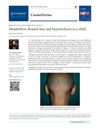 January 2026 in “Cosmoderma”
 A 9-year-old girl has a rare hair disorder causing beaded, sparse hair.
 April 2023 in “The journal of investigative dermatology/Journal of investigative dermatology”
 Tet2 and Tet3 enzymes are important for controlling hair growth and shape by affecting gene activity and DNA structure in hair follicles.
22 citations
,
November 2014 in “Proteins Structure Function and Bioinformatics” Cysteines in wool fibers are accessible and form important disulfide bonds.
88 citations
,
July 2001 in “British journal of dermatology/British journal of dermatology, Supplement” The method effectively measures lipid changes and drug effects on skin follicles.
 55 citations
,
October 1992 in “Archives of Dermatology”
55 citations
,
October 1992 in “Archives of Dermatology” Loose Anagen Hair Syndrome is a hereditary condition causing hair loss in children due to abnormal hair follicles.
52 citations
,
April 2012 in “Journal of Investigative Dermatology” KRTAP2 genes are crucial for hair structure and may impact hair disorders and treatments.
39 citations
,
June 2012 in “Journal of Structural Biology” Disulfide bonds are crucial for hair structure during keratinization.
 34 citations
,
October 2024 in “Clinical Cosmetic and Investigational Dermatology”
34 citations
,
October 2024 in “Clinical Cosmetic and Investigational Dermatology” Azelaic acid is effective for treating rosacea, acne, and melasma.
 19 citations
,
April 2019 in “Journal of the European Academy of Dermatology and Venereology”
19 citations
,
April 2019 in “Journal of the European Academy of Dermatology and Venereology” Acne lesions start with changes in hair follicles and increase in inflammation, suggesting a cycle that could affect treatment strategies.