 10 citations
,
October 2016 in “Journal of Biomolecular NMR”
10 citations
,
October 2016 in “Journal of Biomolecular NMR” Solid-state NMR can effectively study keratin structure and treatment effects in fur.
 6 citations
,
December 2013 in “Journal of Cosmetic Dermatology”
6 citations
,
December 2013 in “Journal of Cosmetic Dermatology” Pigmented concealing powders can improve the look of hair density for people with hair loss but need daily application and may not work well in wet conditions.
 June 2026 in “Zenodo (CERN European Organization for Nuclear Research)”
 The herbal hair serum gel effectively improves scalp health and promotes hair growth.
 June 2026 in “Zenodo (CERN European Organization for Nuclear Research)”
 The herbal hair serum gel improves scalp health, strengthens hair, and promotes growth.

The serum with hibiscus and other natural ingredients improves hair growth and quality.
September 2021 in “CRC Press eBooks” Traumatic alopecia causes hair loss from pulling or rubbing, leading to broken hairs and changes in the scalp.
 May 2026 in “Brazilian Journal of Hair Health”
 Bleaching damages hair the most, while dyes improve combability but still cause protein loss.
 June 2023 in “Hanguk ingeurie hakoeji”
 Eating fermented protein made from black bean powder twice a day for 60 days improved hair density but not scalp condition or hair thickness.
69 citations
,
January 2009 in “Advances in Materials Science and Engineering” Wool keratin is reactive, biocompatible, biodegradable, and can model keratin from other sources.
The hair masks are safe, stable, and effective for hair care.
 3 citations
,
January 1989 in “Journal of Japan Oil Chemists Society”
3 citations
,
January 1989 in “Journal of Japan Oil Chemists Society” AMT is the best surfactant for hair and scalp care.
 4 citations
,
December 2020 in “International journal of research - granthaalayah”
4 citations
,
December 2020 in “International journal of research - granthaalayah” Tetracycline can stick to hair follicles and potentially cause hair loss.
 10 citations
,
May 2020 in “Journal of proteome research”
10 citations
,
May 2020 in “Journal of proteome research” Explosions don't stop hair proteins from being used to identify people.
January 2008 in “Chinese Journal of Aesthetic and Plastic Surgery” Type B material, ground for 8 hours, is the most suitable and compatible for use as a soft tissue filler.
 92 citations
,
September 2019 in “ACS nano”
92 citations
,
September 2019 in “ACS nano” A wearable device using electric stimulation can significantly improve hair growth.
 November 2022 in “The journal of investigative dermatology/Journal of investigative dermatology”
 New imaging technology can show up to 40 different markers in hair loss tissue, helping to understand hair disease better.
46 citations
,
December 2018 in “Biomedical Optics Express” Raman spectroscopy could effectively guide skin cancer surgery by identifying tumor margins.
 December 2022 in “Deleted Journal”
 Sheep wool keratin solution safely and effectively promotes hair growth.
 40 citations
,
May 2016 in “Proceedings of the National Academy of Sciences of the United States of America”
40 citations
,
May 2016 in “Proceedings of the National Academy of Sciences of the United States of America” Changes in keratin make hair follicles stiffer.
 2 citations
,
January 2011 in “Dental Medicine Research”
2 citations
,
January 2011 in “Dental Medicine Research” Keratin 75 might be important in oral cancer progression.
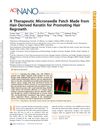 192 citations
,
April 2019 in “ACS nano”
192 citations
,
April 2019 in “ACS nano” A new microneedle patch made from hair proteins helps regrow hair faster and better than current treatments.
 7 citations
,
March 2014 in “ISRN Biomaterials”
7 citations
,
March 2014 in “ISRN Biomaterials” Keratin hydrogel from human hair helps rats recover better from spinal cord injuries.
 3 citations
,
January 2021 in “ScienceAsia”
3 citations
,
January 2021 in “ScienceAsia” Using an enzyme and keratin treatment can significantly repair and strengthen damaged hair.

Keratin hydrogels from human hair show promise for tissue engineering and regenerative medicine.

Human hair keratins can self-assemble and support cell growth, useful for biomedical applications.
 156 citations
,
January 1989 in “Genes & Development”
156 citations
,
January 1989 in “Genes & Development” Keratin expression reflects cell organization and differentiation, not causes it.
 150 citations
,
August 1992 in “Genes & Development”
150 citations
,
August 1992 in “Genes & Development” TNF alpha in skin cells causes weight loss, hair and fat issues, and skin inflammation in mice.
 54 citations
,
November 2015 in “Methods in enzymology on CD-ROM/Methods in enzymology”
54 citations
,
November 2015 in “Methods in enzymology on CD-ROM/Methods in enzymology” Keratins are important for skin cell health and their problems can cause diseases.
 53 citations
,
July 2011 in “Biomaterials”
53 citations
,
July 2011 in “Biomaterials” Human liver cells stick to hair protein materials mainly through the liver's asialoglycoprotein receptor.
 41 citations
,
July 2020 in “Colloids and surfaces. B, Biointerfaces”
41 citations
,
July 2020 in “Colloids and surfaces. B, Biointerfaces” Different hair protein amounts change the strength of keratin/chitosan gels, useful for making predictable tissue engineering materials.