70 citations
,
June 1998 in “Polymer” Permanent waving damages hair by disrupting its keratin structure.
 18 citations
,
October 2018 in “Nutrients”
18 citations
,
October 2018 in “Nutrients” Annurca apple extract promotes hair growth by changing hair follicle metabolism to boost keratin production.
 2 citations
,
January 2011 in “Dental Medicine Research”
2 citations
,
January 2011 in “Dental Medicine Research” Keratin 75 might be important in oral cancer progression.
1 citations
,
November 2012 in “European Journal of Cell Biology” The authors clarified data overlap and corrected a figure error, apologizing for any confusion.
686 citations
,
February 2002 in “Current Opinion in Cell Biology” Keratin filaments are crucial for cell structure and protection, with ongoing discoveries about their genes and functions.
517 citations
,
February 2010 in “Materials” Keratin from hair and wool is used in medical materials for healing and drug delivery.
482 citations
,
June 1979 in “Proceedings of the National Academy of Sciences” Keratins provide structural strength in epithelial cells and help identify cell origins.
441 citations
,
May 1996 in “Journal of Cell Science” Keratin 19 helps identify skin stem cells, with its presence varying by body location, age, and culture stage.
419 citations
,
March 2005 in “Proceedings of the National Academy of Sciences” Hair-follicle stem cells can become neurons.
387 citations
,
November 2003 in “Journal of Investigative Dermatology” The K15 promoter effectively targets stem cells in the hair follicle bulge.
318 citations
,
October 1998 in “The Journal of Cell Biology” Keratin 17 is important for skin development and may help define skin cell types.
309 citations
,
October 2007 in “Biomaterials” Keratin from human hair helps nerves heal faster.
277 citations
,
October 1982 in “The Journal of Cell Biology” Basal-cell epitheliomas and the pilosebaceous tract share a unique keratin, distinguishing them from other skin areas.
238 citations
,
May 1989 in “Journal of Investigative Dermatology” 228 citations
,
January 1997 in “Birkhäuser Basel eBooks” Keratin proteins and their genes are crucial for hair growth and structure.
226 citations
,
January 2006 in “International review of cytology” Keratin-associated proteins are crucial for hair strength and structure.
215 citations
,
November 2000 in “Journal of Investigative Dermatology” The system allows precise control of gene expression in mouse skin, useful for studying skin biology.
 211 citations
,
April 2018 in “Cold Spring Harbor Perspectives in Biology”
211 citations
,
April 2018 in “Cold Spring Harbor Perspectives in Biology” Keratins are crucial for cell structure, growth, and disease risk.
198 citations
,
March 1999 in “Journal of Investigative Dermatology” Keratin 15 helps maintain tissue integrity and is reduced in activated keratinocytes.
198 citations
,
November 1989 in “The Journal of Cell Biology” Keratin K14 expression varies between hair follicles and epidermis, affecting cell differentiation.
 192 citations
,
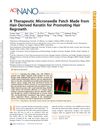
April 2019 in “ACS nano”
192 citations
,
April 2019 in “ACS nano” A new microneedle patch made from hair proteins helps regrow hair faster and better than current treatments.
186 citations
,
December 2012 in “Current opinion in cell biology” Keratin proteins are increasingly recognized as important for cell health and are linked to many diseases.
185 citations
,
December 2010 in “Archives of Biochemistry and Biophysics” Keratin gene mutations cause various skin and hair disorders, but new research offers hope for future treatments.
175 citations
,
September 1998 in “British Journal of Dermatology” Keratin 17 gene mutations cause both steatocystoma multiplex and pachyonychia congenita type 2.
 169 citations
,
May 2006 in “Genes & Development”
169 citations
,
May 2006 in “Genes & Development” Keratin 17 is crucial for normal hair growth by regulating hair cycle transitions with TNFα.
 150 citations
,
August 1992 in “Genes & Development”
150 citations
,
August 1992 in “Genes & Development” TNF alpha in skin cells causes weight loss, hair and fat issues, and skin inflammation in mice.
149 citations
,
July 2000 in “Molecular and Cellular Biology” Keratin 6a is important for quick wound healing from hair follicles.
141 citations
,
February 1988 in “Molecular and Cellular Biology” Only one K16 gene on chromosome 17 makes a functional keratin protein.
128 citations
,
February 1992 in “British Journal of Dermatology” Basal cell carcinomas likely originate from hair follicle cells or stem cells.
126 citations
,
January 1987 in “Current topics in developmental biology/Current Topics in Developmental Biology” Different keratin proteins are expressed in various epithelial cells at different stages, affecting cell structure and function.