 37 citations
,
February 2019 in “Experimental Dermatology”
37 citations
,
February 2019 in “Experimental Dermatology” Spiny mice are better at regenerating hair after injury than laboratory mice and could help us understand how to improve human skin repair.
February 2018 in “bioRxiv (Cold Spring Harbor Laboratory)” Rodent spiny hair traits are due to genetic factors other than the Edar gene.
April 2018 in “Journal of Investigative Dermatology” African spiny mice can regenerate skin and hair after wounds due to specific tissue mechanics.
8 citations
,
July 2004 in “Journal of morphology” Marsupial hair structure and keratin distribution are similar to placental mammals.
11 citations
,
January 1977 in “Archives of dermatological research” Mouse tail skin has different keratinization near hair follicles and scales.
 15 citations
,
July 2004 in “Journal of morphology”
15 citations
,
July 2004 in “Journal of morphology” Monotreme hair structure and protein distribution are similar to other mammals, but their inner root sheath cornifies differently, suggesting a unique evolution from reptile skin.
46 citations
,
August 1977 in “Journal of Morphology” The big-clawed shrew's sinus hair follicles are highly specialized for sensing vibrations.
 June 2026 in “Communications Biology”
 Hoxc13 and hair keratin are needed for forming rough skin on frog mating pads.
14 citations
,
May 1979 in “International Journal of Dermatology” Trichostasis spinulosa mainly affects the nose, with many tiny hairs in one follicle, possibly influenced by hormones and sunlight.
4 citations
,
January 2025 in “Annals of the New York Academy of Sciences” Spiny mice can regenerate tissues instead of forming scars.
2 citations
,
January 2002 in “Zhiwu Yanjiu” Capitate trichomes have more endoplasmic reticulum and vacuoles, while peltate trichomes have more plastids and larger subcuticular spaces.
17 citations
,
May 1969 in “American Journal of Physical Anthropology” The silver marmoset's skin is thin, lacks pigment cells, and has unique features like keratinized spines and specialized glands.
61 citations
,
February 1982 in “Cell and Tissue Research” 10 citations
,
January 1925 in “Archives of Dermatology” Trichostasis spinulosa is a rare skin condition with hair-filled plugs in hair follicles.
20 citations
,
December 2010 in “Journal of Morphology” Lizard claws have hair-like keratins similar to those in mammals.
68 citations
,
April 2014 in “Journal of Investigative Dermatology” Trichohyalin-like proteins are essential for the development of skin structures like hair, nails, and feathers.
72 citations
,
December 2018 in “Journal of Experimental Zoology Part B Molecular and Developmental Evolution” Corneous beta-proteins evolved uniquely in reptiles and birds, forming scales, claws, beaks, and feathers.
 18 citations
,
November 2010 in “Journal of morphology”
18 citations
,
November 2010 in “Journal of morphology” Antler velvet hair and body hair of red deer have different structures that help with protection and insulation.
19 citations
,
March 2013 in “Biology Letters” Early tetrapod keratins evolved into toe pad proteins in amphibians and hair proteins in mammals.
 19 citations
,
December 2006 in “Archives of dermatology”
19 citations
,
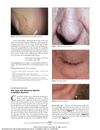
December 2006 in “Archives of dermatology” Hair casts and cutaneous spicules can be signs of multiple myeloma.
 September 2016 in “Journal of dermatological science”
 Transplanted whisker follicles caused hair growth on the spine of mice.
35 citations
,
January 2000 in “Journal of comparative neurology” Rat vibrissae have sensory terminals with specific structures that help detect hair movements.
January 1980 in “中国科学A辑(英文版)” The protein structures in the hair and tendon were preserved, but their molecular arrangements changed.
18 citations
,
January 2018 in “Advances in experimental medicine and biology” Hair keratins evolved from ancient proteins, diversifying through gene changes, crucial for forming claws and later hair in mammals.
5 citations
,
July 1999 in “Journal of Anatomy” Methylene blue staining effectively reveals detailed nerve structures in rat snouts.
4 citations
,
June 2023 in “Journal of developmental biology” The skin systems of jawed vertebrates evolved diverse appendages like hair and scales from a common structure over 420 million years ago.
53 citations
,
September 1999 in “Journal of Synchrotron Radiation” Keratinous tissues have multiple structural layers, including ordered keratin and lipid granules.
 May 2015 in “Journal of The American Academy of Dermatology”
 A woman was injured by a hedgehog falling on her, causing skin lesions but no disease.
8 citations
,
May 2008 in “Applied surface science” Mummy hair from the Taklamakan desert has calcium and phosphorus inside.
10 citations
,
November 2013 in “Biochemistry and Molecular Biology Education” Keratins are crucial proteins for hair and nails, with a structure that helps teach protein principles.