3 citations
,
April 2012 in “Cancer research” Mouse skin cancer progression involves a unique group of cells marked by ABCG2 and MTS24.
 2 citations
,
January 2024 in “Proceedings of the National Academy of Sciences of the United States of America”
2 citations
,
January 2024 in “Proceedings of the National Academy of Sciences of the United States of America” The research created a detailed map of skin cells, showing that certain cells in basal cell carcinoma may come from hair follicles and could help the cancer grow.
16 citations
,
November 2017 in “British Journal of Dermatology” Cells in hair die by breaking down their DNA and mitochondria as they form keratin.

Hair follicle stem cells are crucial for touch sensation and proper nerve structure in mice.
 November 2023 in “npj regenerative medicine”
 Skin spheroids with both outer and inner layers are key for regrowing skin patterns and hair.
 33 citations
,
June 2016 in “Pediatric Dermatology”
33 citations
,
June 2016 in “Pediatric Dermatology” Some congenital hair disorders improve in childhood or with treatments like minoxidil and retinoids, while others like Netherton syndrome and trichothiodystrophy have a poor prognosis.
 140 citations
,
August 2011 in “Biomaterials”
140 citations
,
August 2011 in “Biomaterials” Keratose, derived from human hair, is a non-toxic biomaterial good for tissue regeneration and integrates well with body tissues.
23 citations
,
January 1981 Hair is mostly made of three protein types: helical, high-sulfur, and high-tyrosine.
August 2021 in “Indian dermatology online journal” A young boy with a rare skin and nail condition improved significantly with simple topical treatments.
 March 2024 in “IP Indian journal of clinical and experimental dermatology”
 Giant solitary trichoepithelioma is a rare, usually non-cancerous hair follicle tumor that can sometimes turn into skin cancer.
 8 citations
,
March 2014 in “American Journal of Pathology”
8 citations
,
March 2014 in “American Journal of Pathology” Damaged hair follicles make mice more prone to skin inflammation and skin cancer after UV exposure.
November 2025 in “Journal of the European Academy of Dermatology and Venereology” Different types of hidradenitis suppurativa need specific treatments based on unique skin cell issues.
27 citations
,
May 2004 in “Journal of Investigative Dermatology” 7 citations
,
January 1990 in “Archives of Dermatological Research” Syringomas likely start in the upper dermis and form distinct luminal structures.
11 citations
,
April 2022 in “Biophysical Journal” Disulfide bonds in keratin fibers break more easily under stress, especially when wet, affecting fiber strength.
 September 2016 in “Journal of dermatological science”
 Epidermal stem cells use integrin β1 and α6 as markers and CD271+ cells help maintain skin health and heal wounds.
15 citations
,
January 1988 Hair follicles have unique proteins that vary by species and are influenced by nutrition.
January 2024 in “Revista del Centro Dermatológico Pascua” Avoiding damage and using specific shampoo and supplements improved the hair condition.
 17 citations
,
February 2015 in “Cell Death and Disease”
17 citations
,
February 2015 in “Cell Death and Disease” Inhibiting AP1 in mice skin causes structural changes and weakens the skin barrier.
14 citations
,
January 2021 in “Stem cell research & therapy” Human skin cells with stem-like features can help create new hair follicles and sebaceous glands when combined with other cells.
 3 citations
,
January 2019 in “Journal of Dermatology”
3 citations
,
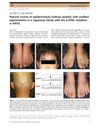
January 2019 in “Journal of Dermatology” The p.P25L mutation in the KRT5 gene causes a rare skin condition that worsens over time and may lead to hair loss starting in young adulthood.
 April 1906 in “The American Journal of the Medical Sciences”
 Keratosis Pilaris Atrophicans causes skin scarring and might be treated with a new synthetic retinoid.
421 citations
,
September 2003 in “Development” Stem cell behavior varies with stimuli, and lineage changes can happen without affecting stem cell division.
 1 citations
,
June 2021 in “bioRxiv (Cold Spring Harbor Laboratory)”
1 citations
,
June 2021 in “bioRxiv (Cold Spring Harbor Laboratory)” Activating β-catenin in mammary cells leads to changes that cause early-stage abnormal growths similar to skin structures.
49 citations
,
September 2004 in “Journal of the European Academy of Dermatology and Venereology” Careful light microscopy is crucial for detecting mild cases of pili annulati, which weakens hair and varies widely in expression.
3 citations
,
December 2013 in “American Journal of Dermatopathology” A rare skin growth in a baby was successfully removed without coming back.
 1 citations
,
October 2017 in “ecancermedicalscience”
1 citations
,
October 2017 in “ecancermedicalscience” Breast cancer alters specific molecular structures in hair, which revert after cancer removal.
 20 citations
,
September 2018 in “Journal of cutaneous pathology”
20 citations
,
September 2018 in “Journal of cutaneous pathology” Different skin diseases show unique patterns of skin cell separation, cell death, and granular layer changes.
 44 citations
,
November 2009 in “Archives of Dermatology”
44 citations
,
November 2009 in “Archives of Dermatology” CYLD mutations cause a variety of skin tumors with symptoms starting around age 16, and treatments are currently limited.
January 2000 in “Acta Academiae Medicine Militaris Tertiae” Different keratins in hair follicles can help identify hair tumor origins.