 January 2013 in “International journal of trichology”
 Vitamin D3 and its receptor are important for hair growth, and understanding receptors could help treat hair graying and skin cancer.
 January 2016 in “SpringerBriefs in bioengineering”
 Genetic defects and UV radiation cause skin damage and aging.
 October 2017 in “Journal of Investigative Dermatology Symposium Proceedings”
 Using lidocaine before keloid injections makes the treatment more comfortable for patients.

The chapter explains that there are many genetic skin disorders affecting skin cell formation, including both common and rare types.
 November 2013 in “John Wiley & Sons, Ltd eBooks”
 Skin symptoms can indicate endocrine disorders and have various treatments.
 254 citations
,
January 2012 in “Nature Reviews Molecular Cell Biology”
254 citations
,
January 2012 in “Nature Reviews Molecular Cell Biology” Stem cell offspring help control their parent stem cells, affecting tissue health, healing, and cancer.
 31 citations
,
February 2019 in “International Journal of Cosmetic Science”
31 citations
,
February 2019 in “International Journal of Cosmetic Science” Caffeine applied to the scalp can protect hair follicles from UV damage.
 17 citations
,
February 2015 in “Cell Death and Disease”
17 citations
,
February 2015 in “Cell Death and Disease” Inhibiting AP1 in mice skin causes structural changes and weakens the skin barrier.
 5 citations
,
June 1994 in “Journal of Cutaneous Pathology”
5 citations
,
June 1994 in “Journal of Cutaneous Pathology” No CD44 in alopecia areata, present in normal and androgenetic alopecia.
 3 citations
,
May 2017 in “British journal of dermatology/British journal of dermatology, Supplement”
3 citations
,
May 2017 in “British journal of dermatology/British journal of dermatology, Supplement” Certain cells around hair follicles help improve skin regeneration for potential use in skin grafts.
 November 2013 in “Elsevier eBooks”
 Skin and hair renewal is maintained by both fast and slow cycling stem cells, with hair regrowth primarily driven by specific stem cells in the hair follicle bulge. These cells can also help heal wounds and potentially treat hair loss.
 67 citations
,
July 2016 in “Reviews in Endocrine and Metabolic Disorders”
67 citations
,
July 2016 in “Reviews in Endocrine and Metabolic Disorders” Stress can worsen skin conditions by affecting hormone levels and immune response.
 155 citations
,
June 2009 in “International Journal of Dermatology”
155 citations
,
June 2009 in “International Journal of Dermatology” Lichen planus is a skin condition that can resolve on its own, is linked to hepatitis C, and increases the risk of skin cancer.
 211 citations
,
April 2013 in “Development”
211 citations
,
April 2013 in “Development” More dermal papilla cells in hair follicles lead to larger, healthier hair, while fewer cells cause hair thinning and loss.
 133 citations
,
September 2013 in “Nature Reviews Molecular Cell Biology”
133 citations
,
September 2013 in “Nature Reviews Molecular Cell Biology” Different types of stem cells and their environments are key to skin repair and maintenance.
 27 citations
,
February 2014 in “Experimental Dermatology”
27 citations
,
February 2014 in “Experimental Dermatology” IGF-1 affects hair loss and could be a potential treatment.
 26 citations
,
February 2012 in “Journal of Investigative Dermatology”
26 citations
,
February 2012 in “Journal of Investigative Dermatology” Human hair follicle cells can be successfully transformed into different types of cells, but not more efficiently than other adult cells.
 15 citations
,
September 2007 in “Cell & tissue research/Cell and tissue research”
15 citations
,
September 2007 in “Cell & tissue research/Cell and tissue research” Embryonic and adult stem cells are valuable for improving skin grafts and cell therapy.
 11 citations
,
February 2022 in “Scientific Reports”
11 citations
,
February 2022 in “Scientific Reports” CD26+ fibroblasts improve skin healing and integration better than CD26− fibroblasts.
 9 citations
,
July 2016 in “The Journal of Dermatology”
9 citations
,
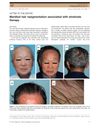
July 2016 in “The Journal of Dermatology” An 82-year-old man's white hair regained color after taking etretinate for psoriasis.
 5 citations
,
January 2019 in “Elsevier eBooks”
5 citations
,
January 2019 in “Elsevier eBooks” Current therapies cannot fully regenerate adult skin without scars; more research is needed for scar-free healing.
 2 citations
,
May 2019 in “Advances in wound care”
2 citations
,
May 2019 in “Advances in wound care” Blood-derived CD34+ cells speed up healing, reduce scarring, and regrow hair in skin wounds.
 1 citations
,
April 2023 in “African Scientific Reports”
1 citations
,
April 2023 in “African Scientific Reports” Natural compounds can lighten skin by reducing melanin.
 1 citations
,
April 2018 in “Journal of Investigative Dermatology”
1 citations
,
April 2018 in “Journal of Investigative Dermatology” Oleoylethanolamide (OEA) safely boosts fat production in skin cells and may help treat dry skin and reduce inflammation.
 1 citations
,
October 2012 in “Elsevier eBooks”
1 citations
,
October 2012 in “Elsevier eBooks” Skin stem cells can help improve skin repair and regeneration.
 January 2026 in “Indian Journal of Plastic Surgery”
 Nonculture epidermal suspension is an effective, simple, and safe treatment for stable vitiligo.

Polarized microscopy helps identify hair irregularities in genetic disorders.

New treatments for hair loss show promise, including plasma, stem cells, and hair-stimulating complexes, but more research is needed to fully understand them.
 June 2018 in “Journal of Dermatological Science”
 UV radiation may cause DNA changes in skin, certain UVB therapy helps psoriasis, a new gene mutation is linked to mild piebaldism, different immune cells affect psoriasis, a drug promotes hair growth, and some cancer drugs could treat skin barrier issues.
 April 2018 in “Journal of Investigative Dermatology”
 Claudin-1 and Claudin-3 are crucial for keeping hair follicle structure and preventing a type of hair loss called telogen effluvium.