 20 citations
,
April 1999 in “British journal of plastic surgery”
20 citations
,
April 1999 in “British journal of plastic surgery” Ruby laser hair removal significantly reduces hair density.
 18 citations
,
November 2010 in “Journal of morphology”
18 citations
,
November 2010 in “Journal of morphology” Antler velvet hair and body hair of red deer have different structures that help with protection and insulation.
 11 citations
,
February 2019 in “Frontiers in Physiology”
11 citations
,
February 2019 in “Frontiers in Physiology” Hair properties are interconnected; a comprehensive, cross-disciplinary approach is essential for understanding hair behavior.
 9 citations
,
July 2019 in “Folia Morphologica”
9 citations
,
July 2019 in “Folia Morphologica” Brandt's hedgehog has thick skin on its back and many glands near its nostrils.
 8 citations
,
July 2013 in “PLoS ONE”
8 citations
,
July 2013 in “PLoS ONE” DNA can be quickly and effectively extracted from hair using laundry powder.
 8 citations
,
January 2000
8 citations
,
January 2000 Terbinafine effectively stops fungal invasion of human keratin.
 1 citations
,
February 2018 in “Australasian journal of dermatology”
1 citations
,
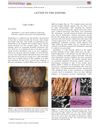
February 2018 in “Australasian journal of dermatology” Advanced imaging techniques are crucial for accurately diagnosing Monilethrix, a rare hair disorder.
 1 citations
,
February 1993 in “Nursing Standard”
1 citations
,
February 1993 in “Nursing Standard” Many drugs, not just chemotherapy, can cause reversible hair loss.
 January 2025 in “Advances in Dermatology and Allergology”
 Micro-needling helps deliver substances deeper into the skin and promotes skin repair.
 December 2022 in “Journal of medical sciences and health”
 Examining nail biopsies is useful for diagnosing nail diseases.
 November 2018 in “International Journal of Research in Dermatology”
 Teaching kids about hygiene can reduce scalp infections.

Biotin boosts wool growth and follicle health in sheep.
 January 2006 in “Carl von Ossiezky University of Oldenburg”
 Unpigmented keratinocytes absorb substances faster, while melanocytes bind more strongly to melanin.
 September 1988 in “Inpharma (Balgowlah)”
 Retinoids are effective for acne but can cause serious side effects.
 January 1988 in “Inpharma (Balgowlah)”
 New retinoids are effective for various skin conditions and are being developed to have fewer side effects.
14 citations
,
October 2001 in “British Journal of Ophthalmology” Corneal issues in pemphigus vulgaris may require surgery if medication is not followed.
 127 citations
,
July 2002 in “EMBO journal”
127 citations
,
July 2002 in “EMBO journal” Normal skin cell renewal doesn't need RAR signaling, but vitamin A-related skin thickening does.
 121 citations
,
June 2010 in “Australasian Journal of Dermatology”
121 citations
,
June 2010 in “Australasian Journal of Dermatology” Most people on isotretinoin had chapped lips, but only a few stopped the medicine due to side effects.
 100 citations
,
November 1996 in “Molecular Medicine Today”
100 citations
,
November 1996 in “Molecular Medicine Today” Growth factors and cytokines are important for hair growth and could potentially treat hair loss, but more research is needed to overcome challenges before they can be used in treatments.
 89 citations
,
September 2010 in “Annual Review of Genomics and Human Genetics”
89 citations
,
September 2010 in “Annual Review of Genomics and Human Genetics” The document concludes that understanding the genes and pathways involved in hair growth is crucial for developing treatments for hair diseases.
 76 citations
,
January 2007 in “American Journal of Clinical Dermatology”
76 citations
,
January 2007 in “American Journal of Clinical Dermatology” Women with PCOS often have skin problems like excessive hair, acne, hair loss, and dark patches, which can be treated with hormonal and non-hormonal therapies.
 74 citations
,
January 2006 in “The journal of investigative dermatology/Journal of investigative dermatology”
74 citations
,
January 2006 in “The journal of investigative dermatology/Journal of investigative dermatology” Mutations in the DSG4 gene can cause a rare hair disorder similar to monilethrix.
 65 citations
,
January 2005 in “American journal of clinical dermatology”
65 citations
,
January 2005 in “American journal of clinical dermatology” Children with scalp fungal infections need proper diagnosis and treatment, usually with antifungal medications, and newer drugs may offer quicker recovery.
 63 citations
,
November 2009 in “British journal of dermatology/British journal of dermatology, Supplement”
63 citations
,
November 2009 in “British journal of dermatology/British journal of dermatology, Supplement” Sub3 is essential for fungus adherence but not for skin invasion.
 59 citations
,
June 2008 in “Journal of The American Academy of Dermatology”
59 citations
,
June 2008 in “Journal of The American Academy of Dermatology” The article explains the genetic causes and symptoms of various hair disorders and highlights the need for more research to find treatments.
 47 citations
,
January 2015 in “Dermatology”
47 citations
,
January 2015 in “Dermatology” The best way to treat acne is to prevent healthy skin glands from turning into acne lesions by controlling the triggers early on.
 47 citations
,
June 1996 in “International Journal of Legal Medicine”
47 citations
,
June 1996 in “International Journal of Legal Medicine” Hair analysis for drugs needs a better understanding of how drugs enter hair, considering factors like hair structure and pigmentation.
 46 citations
,
September 2016 in “Clinical, Cosmetic and Investigational Dermatology”
46 citations
,
September 2016 in “Clinical, Cosmetic and Investigational Dermatology” Hormonal treatments are effective for severe or persistent acne and should be used with other acne therapies, considering potential side effects.
 46 citations
,
April 2008 in “Archives of Dermatological Research”
46 citations
,
April 2008 in “Archives of Dermatological Research” Substance P may worsen acne by increasing inflammation, but corticosteroids might help by reducing this effect.
 45 citations
,
January 1998 in “Dermatology”
45 citations
,
January 1998 in “Dermatology” Some skin conditions look like acne but are caused by drugs, and they usually get better when the drug is stopped.