6 citations
,
May 2000 in “Pediatric Dermatology” KID syndrome should be reclassified as an ectodermal dysplasia.
110 citations
,
August 2004 in “British Journal of Dermatology” The ventral matrix is the main source of the nail plate.
 1 citations
,
March 2004 in “Journal of the American Academy of Dermatology”
1 citations
,
March 2004 in “Journal of the American Academy of Dermatology” ZD1839, a cancer drug, can cause mild skin rashes that are treatable without stopping the medication.
September 2021 in “The journal of investigative dermatology/Journal of investigative dermatology” Three genes linked to the development of trichilemmal cysts were found.
 November 2022 in “The journal of investigative dermatology/Journal of investigative dermatology”
 The study suggests a link between varicella-zoster virus and segmental vitiligo, with evidence of the virus disrupting skin pigment cells.
October 2021 in “Experimental Dermatology” Certain genes and proteins may help diagnose and treat primary cicatricial alopecia.
39 citations
,
March 1997 in “The Lancet” Acquired perforating dermatosis often affects skin in people with kidney issues and diabetes.
Cicatricial alopecia can progress to complete hair loss, making diagnosis and management difficult.
14 citations
,
June 1989 in “Journal of dermatology” Three siblings had both Vohwinkel's disease and congenital alopecia, with no effective treatment.
Keratinocytes can reduce the survival of certain melanoma cells, suggesting new therapy paths.
4 citations
,
April 2012 in “The journal of investigative dermatology/Journal of investigative dermatology” Krt16-deficient mice help understand skin disorders like PC and FNEPPK.
 April 2023 in “Journal of Investigative Dermatology”
 The research shows that skin cancer likely originates from hair follicles and that certain cell populations expand to promote skin cancer growth.
June 2005 in “Journal of Investigative Dermatology” A bull with a gene mutation was asymptomatic, synthetic retinoids cause hair loss, and new therapeutic targets were identified for skin diseases.
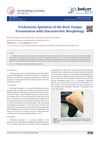 May 2020 in “JOJ Dermatology & Cosmetics”
 A rare skin condition usually on the face was found on a man's heel.
1 citations
,
April 2025 in “Clinical Cosmetic and Investigational Dermatology” A rare skin lesion in a 64-year-old woman was successfully treated with a laser, showing minimal redness and no return after one month.
June 2018 in “Dermatologic Surgery” March 2026 in “Experimental Dermatology” The new model helps understand and develop treatments for genetic skin disorders like AEC.
19 citations
,
July 2022 in “PNAS Nexus” Similar treatments might work for different types of scarring hair loss.

A woman with a rare hair loss condition developed skin cancer in the bald area.
April 1977 in “Pediatric Research” 7 citations
,
January 2013 in “Indian dermatology online journal” A rare skin condition with dark, thick, warty patches and some hair loss was found in a newborn boy.
June 2024 in “Journal of the European Academy of Dermatology and Venereology” Allergens might contribute to CCCA, so avoiding them could help manage the condition.
 2 citations
,
January 2024 in “Proceedings of the National Academy of Sciences of the United States of America”
2 citations
,
January 2024 in “Proceedings of the National Academy of Sciences of the United States of America” The research created a detailed map of skin cells, showing that certain cells in basal cell carcinoma may come from hair follicles and could help the cancer grow.
 November 2023 in “Heliyon”
 A woman got a serious eye infection after a hair loss treatment due to improper procedure.
32 citations
,
May 2023 in “Frontiers in Immunology” Understanding cellular interactions in VCA may lead to better treatments and reduce rejection.
 5 citations
,
July 2022 in “Orphanet journal of rare diseases”
5 citations
,
July 2022 in “Orphanet journal of rare diseases” RSPO1 mutations in certain patients lead to skin cells that don't develop properly and are more likely to become invasive, increasing the risk of skin cancer.
 September 2024 in “Journal of Medical Case Reports”
 People with keratosis pilaris might be more likely to get a rare type of tinea versicolor.
Trichoepithelioma and desmoplastic trichoepithelioma have distinct features that can be identified using reflectance confocal microscopy.
28 citations
,
July 1980 in “British Journal of Dermatology” The hair disorder was caused by abnormal protein formation, making hair easily damaged.
The balance between cell renewal and differentiation controls the growth of cancerous cells in mouse skin.