5 citations
,
March 2013 in “Journal of Cutaneous Pathology” Granulomatous alopecia may be a distinct subtype of alopecia areata.
September 1978 in “PubMed” Chondroitin sulphate is more abundant than hyaluronic acid in skin and hair samples, except in gamma-keratosis.
7 citations
,
January 1992 in “Acta Histochemica” Porcine and human pilosebaceous units are very similar.
277 citations
,
October 1982 in “The Journal of Cell Biology” Basal-cell epitheliomas and the pilosebaceous tract share a unique keratin, distinguishing them from other skin areas.
 1 citations
,
October 2022 in “Dermatology practical & conceptual”
1 citations
,
October 2022 in “Dermatology practical & conceptual” Isolated patchy heterochromia with pili annulati can occur without other health issues.
49 citations
,
July 2007 in “Ophthalmic Plastic and Reconstructive Surgery” Surgical excision is an effective treatment for persistent nodules from poly-L-lactic acid injections.
 5 citations
,
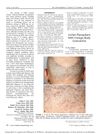
April 2014 in “The American Journal of Dermatopathology”
5 citations
,
April 2014 in “The American Journal of Dermatopathology” Foreign-body granuloma may be a marker for late-stage Lichen Planopilaris and should be considered in diagnosis.
January 2022 in “JAAD case reports” Granulomatous alopecia areata is a rare but real form of hair loss.
26 citations
,
May 2001 in “British Journal of Dermatology” Pilomatrixomas likely originate from the hair matrix due to changes in hair keratin expression.
18 citations
,
April 2002 in “Journal of cutaneous pathology” Tiny infundibular cysts are the main lesions in chloracne, not comedones.
7 citations
,
January 2011 in “Biochemistry Research International” Hard α-keratin has a universal molecular structure with a specific superlattice arrangement.
 7 citations
,
December 2020 in “ACS biomaterials science & engineering”
7 citations
,
December 2020 in “ACS biomaterials science & engineering” Human hair keratins can form stable nanofiber networks that might help in tissue regeneration.
5 citations
,
December 1996 in “Biochemical and Biophysical Research Communications” Mouse hair keratins mHa1 and mHb4 can't form a strong network on their own in cells.
 3 citations
,
September 2005 in “Experimental dermatology”
3 citations
,
September 2005 in “Experimental dermatology” The cornified envelope is crucial for skin's barrier function and involves key proteins and genetic factors.
46 citations
,
June 2013 in “Journal of structural biology” High glycine–tyrosine keratin-associated proteins help make hair strong and maintain its shape.
28 citations
,
September 2013 in “European Journal of Histochemistry” Keratins in Malayan pangolins vary by region, suggesting scales evolved from the tail towards the head.
2 citations
,
June 2003 in “American Journal of Dermatopathology” A unique case of skin cancer showed unusual calcification, possibly linked to calcium-binding proteins.

Keratin hydrogels from human hair show promise for tissue engineering and regenerative medicine.
 211 citations
,
April 2018 in “Cold Spring Harbor Perspectives in Biology”
211 citations
,
April 2018 in “Cold Spring Harbor Perspectives in Biology” Keratins are crucial for cell structure, growth, and disease risk.
103 citations
,
December 1986 in “Journal of Investigative Dermatology” 11 citations
,
June 1974 in “Journal of Cutaneous Pathology” Follicular mucinosis causes significant damage to hair follicle cells.
1 citations
,
August 2016 in “Dermatology - Open Journal” Mitochondria change shape to meet energy needs during cell movement.
37 citations
,
October 2009 in “Veterinary Dermatology” Canine hair follicles contain stem-like cells with high growth potential.
January 2003 in “Jiepouxue zazhi” HHK can help restore skin structure.
 3 citations
,
May 2022 in “The journal of investigative dermatology/Journal of investigative dermatology”
3 citations
,
May 2022 in “The journal of investigative dermatology/Journal of investigative dermatology” Skin lesions in Carney Complex are caused by a gene change in some skin cells that leads to increased pigmentation and may lead to tumors.
November 2013 in “Faculty Opinions – Post-Publication Peer Review of the Biomedical Literature” Keratin 79 cells help form and regenerate hair canals.
12 citations
,
October 2015 in “Journal of bioactive and compatible polymers” Keratin hydrogel from human hair is a promising biocompatible material for soft tissue fillers.
6 citations
,
August 1937 in “Journal of the Society of Chemical Industry”  9 citations
,
August 2014 in “European journal of ophthalmology”
9 citations
,
August 2014 in “European journal of ophthalmology” PGF2α receptors in human eyelids are found in specific parts of hair follicles, explaining eyelash changes with glaucoma treatment.