1 citations
,
May 1983 in “Acta dermato-venereologica” The hairpiece matted due to weathered hair after shampooing.
 6 citations
,
July 2015 in “Journal of Investigative Dermatology”
6 citations
,
July 2015 in “Journal of Investigative Dermatology” Chicken feather gene mutation helps understand human hair disorders.
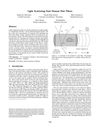
Researchers developed a new model for more realistic computer graphics of hair by considering how light scatters on hair fibers.
 February 2019 in “PubMed”
 The research found that twisting hair fibers can show changes in stiffness and damage, and help tell apart different hair treatments.
 November 2021 in “International journal of research - granthaalayah”
 The document suggests that human hair has electrical charges because of a gap in nerve cell coverage that affects electromagnetic radiation.
22 citations
,
October 1996 in “Dermatologic clinics” Understanding intermediate filaments helps explain hair health and related diseases.
 108 citations
,
March 2011 in “Archives of Dermatology”
108 citations
,
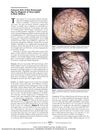
March 2011 in “Archives of Dermatology” Corkscrew hair may be a new sign for quickly diagnosing scalp fungus in black children.
33 citations
,
September 2017 in “Journal of Investigative Dermatology” A mutation in the KRT25 gene causes woolly hair and hair loss.
Hair dysplasias involve various hair disorders causing fragility, breakage, and poor hair adhesion.
 87 citations
,
July 2009 in “The journal of investigative dermatology/Journal of investigative dermatology”
87 citations
,
July 2009 in “The journal of investigative dermatology/Journal of investigative dermatology” Human beard hair medulla contains a unique and complex mix of keratins not found in other human tissues.
8 citations
,
January 2017 in “Environmental monitoring and assessment” Hair from different ethnic groups affects soil nutrient release differently.
 6 citations
,
February 2013 in “Veterinary Dermatology”
6 citations
,
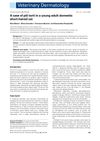
February 2013 in “Veterinary Dermatology” A young cat had a rare hair condition with twisted hair shafts but stayed healthy.
15 citations
,
May 2013 in “International Journal of Cosmetic Science” Different ethnic hair types have unique nanoscopic and molecular features despite having the same basic keratin structure.
85 citations
,
January 1990 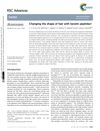 47 citations
,
January 2017 in “RSC Advances”
47 citations
,
January 2017 in “RSC Advances” Keratin peptides can change hair shape gently without harsh chemicals.
2 citations
,
January 1987 in “PubMed” Woolly hair syndrome is a genetic condition causing frizzy, fragile hair.
 1 citations
,
November 2019 in “International Journal of Women's Dermatology”
1 citations
,
November 2019 in “International Journal of Women's Dermatology” Ketoconazole shampoo can cause rare pink hair discoloration.
 September 2025 in “International Journal of Ayurvedic Medicine”
 Hair medulla patterns vary by Prakruti type, affecting hair strength.
 12 citations
,
November 1987 in “Pediatric dermatology”
12 citations
,
November 1987 in “Pediatric dermatology” Four children had unmanageable pale blond hair due to uncombable-hair syndrome.
6 citations
,
February 2013 in “British Journal of Dermatology” Androgens significantly regulate hair keratin K37 expression.
December 1991 in “Annals of the New York Academy of Sciences” 78 citations
,
May 2012 in “Journal of Investigative Dermatology” A specific gene mutation causes woolly hair and hair loss.
12 citations
,
February 2011 in “Zenodo (CERN European Organization for Nuclear Research)” Hair properties vary with age and ethnic origin.
 March 2005 in “International Journal of Cosmetic Science”
 A new method helps understand hair shine and various products improve hair care.
 34 citations
,
October 1982 in “Journal of applied polymer science”
34 citations
,
October 1982 in “Journal of applied polymer science” Moisture content significantly affects how human hair breaks.
51 citations
,
January 2007 in “The journal of investigative dermatology/Journal of investigative dermatology” Scientists discovered a unique hair protein, KAP24.1, with a special structure, found only in the upper part of hair cuticles.
 February 2024 in “Journal of Dermatological Science”
 Curved hair can develop when hair cells merge abnormally during growth.
research Hair
January 2026 in “AAPS introductions in the pharmaceutical sciences”  4 citations
,
January 2015 in “Sen'i Gakkaishi”
4 citations
,
January 2015 in “Sen'i Gakkaishi” Hair and wool strength is affected by the number and type of bonds in their protein structures, with hair having more protein aggregates than wool.