 1 citations
,
January 2023 in “Indian Journal of Animal Research”
1 citations
,
January 2023 in “Indian Journal of Animal Research” A new method effectively stains hair samples for study without losing hair sections.
November 2025 in “International Journal of Biological Macromolecules” This eco-friendly hair dye method improves hair health and color durability.
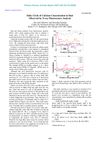
Hair can show daily calcium changes, linked to body calcium levels and influenced by hormones, and can help assess calcium metabolism issues.
The research found that people's hair proteins vary by individual and body part, with some differences between ethnic groups, which could help in forensics.
January 2008 in “Medical Entomology and Zoology” 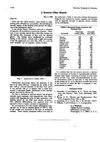 4 citations
,
November 1968 in “Textile research journal”
4 citations
,
November 1968 in “Textile research journal” Hair fibers may have a unique, non-protein sheath not previously identified.
January 2025 in “SSRN Electronic Journal”  January 2025 in “International Journal of Molecular Biology and Biochemistry”
 The Shindai method effectively extracts keratin from human hair, with potential uses in bioplastics and biofertilizers.
November 2021 in “Clinical, cosmetic and investigational dermatology” An elderly woman with cancer improved after treatment for a rare skin condition with coiled hairs.
 March 2024 in “International Research Journal of Modernization in Engineering Technology and Science”
 3D-printed hair is safe, eco-friendly, and better than natural or synthetic hair.
March 2026 in “Journal of the mechanical behavior of biomedical materials/Journal of mechanical behavior of biomedical materials” Bleaching and UV exposure significantly damage hair.
Hair disorders are complex and varied, including hair loss, excessive growth, color, and shaft issues.
 26 citations
,
January 2019 in “Experimental Dermatology”
26 citations
,
January 2019 in “Experimental Dermatology” Researchers created early-stage hair-like structures from skin cells, showing how these cells can self-organize, but more is needed for complete hair growth.
 40 citations
,
June 2013 in “Scientific Reports”
40 citations
,
June 2013 in “Scientific Reports” A gene variant in KRT71 causes the curly fur in Selkirk Rex cats.
25 citations
,
October 1962 in “Journal of Ultrastructure Research” The hair follicle structure is more complex than thought, with new findings on protein formation.
 September 2025 in “Sahel Journal of Life Sciences FUDMA”
 Chemical hair straighteners can severely damage hair and scalp with repeated use.
18 citations
,
August 2009 in “Skin Research and Technology” OCT can identify hair structures, but chemical treatments can damage them.
January 2014 in “프로그램북(구 초록집)” Certain electrical settings can boost hair growth.
 4 citations
,
July 2018 in “International Journal of Research -GRANTHAALAYAH”
4 citations
,
July 2018 in “International Journal of Research -GRANTHAALAYAH” Human hair has a natural biomagnetic field.
 36 citations
,
August 2018 in “Dermatologic Clinics”
36 citations
,
August 2018 in “Dermatologic Clinics” Trichoscopy is a useful tool for diagnosing hair disorders without pulling out hair.
 3 citations
,
April 1990 in “Archives of dermatology”
3 citations
,
April 1990 in “Archives of dermatology” The book reveals diverse patterns of hair growth in different species and advancements in hair and alopecia research.
1 citations
,
October 2009 in “International Journal of Cosmetic Science” A new keratin treatment can strengthen and protect aging hair.
 November 2022 in “International Journal of Trichology”
 Older people often experience changes and problems with their hair.
2 citations
,
November 1992 in “Journal of dermatology” Hair cells grown in a lab showed specific hair proteins.
 September 1998 in “JEADV. Journal of the European Academy of Dermatology and Venereology/Journal of the European Academy of Dermatology and Venereology”
 The document concludes that individualized treatments for hair issues are effective, certain hair changes can indicate neurocutaneous diseases, specific lotions improve skin health, laser hair removal works but needs more study on long-term effects, men's cosmetics are diverse, peeling is effective but can have side effects, and facial pigmentation is often due to overactive skin cells.
 January 2007 in “Sen'i Gakkaishi”
 Mf-rich hair degrades more than Ma-rich hair, especially with Proteinase K.
 June 2020 in “The journal of investigative dermatology/Journal of investigative dermatology”
 The enzymes Tet1, Tet2, and Tet3 are important for the development of hair follicles and determining hair shape by controlling hair keratin genes.
70 citations
,
June 1998 in “Polymer” Permanent waving damages hair by disrupting its keratin structure.
March 2026 in “Zenodo (CERN European Organization for Nuclear Research)”