 January 2025 in “Current Trends in Pharmacy and Pharmaceutical Chemistry”
 New methods for measuring dutasteride are effective and reliable.
 November 2024 in “PubMed”
 Carboxytherapy effectively and safely improves skin aging signs.

Stiffness gradients in alginate gels can guide cancer cell invasion and study cellular behaviors.
 April 2024 in “Frontiers in pharmacology”
 Cynoglossum amabile has medicinal potential but poses safety concerns due to liver toxicity.
 January 2024 in “Biological trace element research”
 Isotretinoin affects trace element levels and requires monitoring of liver and kidney functions.
 November 2023 in “Regenerative Biomaterials”
 The new adhesive seals wounds quickly, works well in wet conditions, and helps with healing.
 November 2023 in “Anticancer Research”
 Using ultrasound may make cisplatin more effective against cervical cancer in mice.
 January 2023 in “Book of Abstracts”
 COVID-19 can cause different types of hair loss, with telogen effluvium being the most common.
 December 2022 in “bioRxiv (Cold Spring Harbor Laboratory)”
 MicroRNA-205 helps hair grow by changing the stiffness and contraction of hair follicle cells.
 May 2022 in “Research Square (Research Square)”
 OBEME effectively enhances wound healing and could be a promising carrier for skin treatments.
 May 2022 in “Pharmacognosy journal”
 Moringa seed oil may help prevent hair loss and promote hair growth.

Human hair keratins can be turned into useful 3D biomedical scaffolds through a freeze-thaw process.
 October 2021 in “Rheumatology Science and Practice”
 TNF-α inhibitors may cause complete hair loss in some patients with ankylosing spondylitis.

PlacMA hydrogels from human placenta are versatile and useful for cell culture and tissue engineering.
 February 2019 in “Neoreviews”
 The infant with a urea cycle disorder improved with treatment and a liver transplant.

Optical Coherence Tomography has potential in diagnosing hair loss and monitoring blood clotting, and could be improved for deeper tissue observation and better hair loss understanding.
 December 2018 in “Neuroradiology”
 MRI helps distinguish between pituitary adenomas and craniopharyngiomas, guides treatment for pediatric CNS tumors, and assesses rhinocerebral mucormycosis with a high mortality rate in transplanted patients.
 September 2017 in “The journal of investigative dermatology/Journal of investigative dermatology”
 The reconstructed skin model from hair follicles functions like human skin in processing chemicals and can be used to test ingredient safety.
 January 1999 in “Current Problems in Pediatrics”
 Swimming in Lake Malawi can lead to schistosomiasis, hepatitis B vaccine might cause temporary hair loss, and certain drinks affect kidney stone risk.
 August 1994 in “Molecular Endocrinology”
 Changing protein kinase levels in pituitary cells affects calcium flow and beta-endorphin release.
 March 1982 in “American pharmacy”
 The document explains how to determine your tax bracket and the effects of income changes on taxes.
 July 2018 in “Nasza Dermatologia Online”
 Frontal fibrosing alopecia and ulerythema ophryogenes may be related and can evolve from one to the other.
 April 2017 in “International journal of research in Ayurveda and pharmacy”
 Ayurvedic methods can help reduce the harmful effects of chemicals in cosmetics.
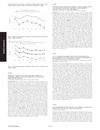 May 2019 in “Gastroenterology”
 Androgen lowering medications don't significantly change HCV-related liver cancer risk in men.
 39 citations
,
December 2018 in “Methods in molecular biology”
39 citations
,
December 2018 in “Methods in molecular biology” The document concludes that computational methods using networks and various data can improve the process of finding new uses for existing drugs.
January 2005 in “Life sciences” Targeting LPA could help treat skin disorders.
 92 citations
,
January 2012 in “International Journal of Biological Sciences”
92 citations
,
January 2012 in “International Journal of Biological Sciences” The document introduced a new naming system for keratin-associated proteins to improve clarity and communication across species.
 April 2026 in “Clinical Dermatology Review”
 Keratosis pilaris significantly affects quality of life and shows specific skin changes.
4 citations
,
August 2024 in “Journal of Cosmetic Dermatology” The non-cross-linked hyaluronic acid compound effectively and safely improves keratosis pilaris.
 68 citations
,
July 2011 in “Journal of Biochemistry/The journal of biochemistry”
68 citations
,
July 2011 in “Journal of Biochemistry/The journal of biochemistry” New LPA receptors (LPA4, LPA5, LPA6) have diverse roles in the body.