August 2024 in “JAAD Case Reports” Upadacitinib successfully regrew hair in a child with alopecia universalis and specific genetic mutations.

Inhibiting AP-1 changes skin tumor types and affects tumor cell identity.
January 2008 in “中山醫學大學醫學研究所學位論文” Danthron from Rhubarb causes melanoma cells to stop growing and die.
March 2026 in “Drug Testing and Analysis” PTeCA is a reliable marker for detecting oxidative hair treatments.
KY19382 helps to regrow hair and create new hair follicles.
 1 citations
,
September 2023
1 citations
,
September 2023 Tridax procumbens and ginger juice together protect the liver from paracetamol damage.
 July 2025 in “Veterinarski arhiv”
 About 32.5% of stray cats in Bogor have a skin infection called Microsporum canis.
 January 1999 in “American Journal of Medical Genetics Part A”
 The report expanded knowledge of MBTPS1-related disorders by identifying new symptoms.

The document is retracted and cannot be summarized.
5 citations
,
February 2025 in “Pediatric Dermatology” Ritlecitinib was generally well tolerated in children with alopecia areata.
February 2023 in “Reactions Weekly” 18 citations
,
January 2015 in “Experimental Dermatology” New mutations in KRT83 and KRT86 are linked to the hair disorder monilethrix.
 1 citations
,
April 2017 in “Journal of Investigative Dermatology”
1 citations
,
April 2017 in “Journal of Investigative Dermatology” Cilostazol may help hair grow and could be a new treatment for hair loss.
March 2025 in “International Journal of Trichology” Janus kinase inhibitors may effectively treat resistant scalp conditions like folliculitis decalvans and dissecting cellulitis.
12 citations
,
April 2023 in “Molecular Pharmaceutics” A new patch can deliver stable antibodies over time for potential HIV treatment.
324 citations
,
May 2002 in “Oncogene”  December 2018 in “Progress in Medical Sciences”
 Low doses of date palm extract improve kidney function, but high doses can harm it.
 November 2019 in “Hair transplant forum international”
 The SketchAndCalc app is a faster and more precise method for measuring hair transplant areas than traditional grid counting.
 December 2023 in “Journal of Ayub Medical College Abbottabad”
 Ritlecitinib effectively treats alopecia areata in patients 12 and older with fewer side effects.
 November 2020 in “Journal of The American Academy of Dermatology”
 The conclusion is that many small genetic variations influence claw disorders in cows, and using genomic selection could help reduce these disorders.
 November 1998 in “Hair transplant forum international”
 The document's conclusion cannot be provided because the content is not accessible.
June 2024 in “Military Medicine” Access to JAK inhibitors for alopecia areata should be improved in the Military Healthcare System.
 1 citations
,
October 2025 in “Iranian journal of pharmaceutical research”
1 citations
,
October 2025 in “Iranian journal of pharmaceutical research” Geranyl acetate can protect skin cells from damage and inflammation caused by para-phenylenediamine.
November 2025 in “SKIN The Journal of Cutaneous Medicine” Ritlecitinib is generally safe for adolescents with alopecia areata over 5 years.
 5 citations
,
September 2014 in “Journal of Pharmaceutical Sciences” 7 citations
,
September 2003 in “Journal of Investigative Dermatology”
5 citations
,
September 2014 in “Journal of Pharmaceutical Sciences” 7 citations
,
September 2003 in “Journal of Investigative Dermatology” PAR-1 may play a role in hair growth regulation in human hair follicles.
January 2026 in “Experimental Dermatology” Skin-resident memory T cells may contribute to chronic alopecia areata and baricitinib could be a potential treatment.
 June 2016 in “American Journal of Cardiology”
 The treatment successfully reopened blood flow in most patients and extended the use of their dialysis access with low risk.
28 citations
,
December 2015 in “Journal of biological chemistry/The Journal of biological chemistry” Prostasin has two roles in skin: one for normal skin development without needing activation, and another for proper hair growth that requires activation.
 March 2026 in “Mendeley Data”
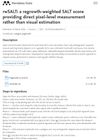
 rwSALT accurately measures hair regrowth in alopecia areata using scalp photos.