125 citations
,
August 2003 in “Development” Mice with human-like EGFR had growth issues, skin defects, heart problems, and unusual bone development.
15 citations
,
May 2014 in “Journal of Biological Chemistry” A chimeric keratin partially improved skin structure in mice lacking keratin 5, but didn't fully restore normal skin.
 January 2024 in “Genetics in Medicine Open”
 Adults with Tatton-Brown-Rahman syndrome may have serious heart problems and need lifelong heart monitoring.
August 2020 in “bioRxiv (Cold Spring Harbor Laboratory)” Normal cells outcompete and remove mutant cells in the pancreas with the help of the EphA2 receptor.
14 citations
,
April 2016 in “PloS one” The KRTAP11-1 gene promoter is crucial for specific expression in sheep wool cortex.
 4 citations
,
October 2021 in “Scientific Reports”
4 citations
,
October 2021 in “Scientific Reports” NKIRAS2 can suppress certain skin tumors but its effect on cancer varies with context and expression level.
 92 citations
,
January 2012 in “International Journal of Biological Sciences”
92 citations
,
January 2012 in “International Journal of Biological Sciences” The document introduced a new naming system for keratin-associated proteins to improve clarity and communication across species.
61 citations
,
September 1994 in “Journal of Medical Genetics” Pachyonychia congenita is linked to a keratin gene on chromosome 17.
84 citations
,
May 2008 in “Biological Chemistry” Human tissue kallikreins help regulate skin barrier functions and affect skin health.
1 citations
,
May 2004 in “Biochemical and Biophysical Research Communications” Two new gene clusters important for hair formation were found on human chromosome 11.
 2 citations
,
September 2020 in “Biomedical materials”
2 citations
,
September 2020 in “Biomedical materials” Recombinant keratin materials may better promote skin cell differentiation than natural keratin.
3 citations
,
December 2014 in “Annals of Laboratory Medicine” A Korean baby with nevus sebaceus syndrome was found to have a KRAS gene mutation.
3 citations
,
July 2022 in “Brain and Behavior” The HtrA1L364P mutation causes brain dysfunction and blood vessel damage.
 July 2022 in “New Zealand journal of agricultural research”
 The KRTAP27-1 gene variations in sheep may affect wool length and weight.
37 citations
,
June 2004 in “Human molecular genetics online/Human molecular genetics” The HCR gene contributes to psoriasis risk.
The trichohyalin gene is located at chromosomal region 1q21 with other skin-related protein genes.
50 citations
,
February 2016 in “Journal of Investigative Dermatology” A mutation in the KRT25 gene causes a rare hair disorder with thin, woolly hair.
3 citations
,
July 2024 in “Frontiers in Medicine” Mutations in the KLHL24 gene cause a skin disorder in some Russian families.
July 2024 in “Journal of Investigative Dermatology” CRISPR/Cas9 and prime editing can potentially fix skin disorder genes safely and effectively.
 19 citations
,
December 2015 in “Journal of Investigative Dermatology”
19 citations
,
December 2015 in “Journal of Investigative Dermatology” The protein p53 directly reduces the production of Keratin 17, a skin and hair protein, in rats with radiation dermatitis.
NCBP3, SDHA, and PTPRA are the best genes for normalizing goat skin experiments.
 April 2017 in “Journal of Investigative Dermatology”
 Triptolide effectively and safely reduces actinic keratosis lesions in mice.
 July 2022 in “Journal of Investigative Dermatology”
 A specific mutation in Kras causes abnormal tissue changes by making a cell signal continuously active, which disrupts normal cell coordination.
 January 1999 in “Journal of the European Academy of Dermatology and Venereology”
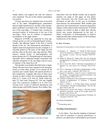
 RAPK is a rare skin disorder with pigmented spots, mainly on hands and feet, starting in youth.
 98 citations
,
June 2001 in “Journal of biological chemistry/The Journal of biological chemistry”
98 citations
,
June 2001 in “Journal of biological chemistry/The Journal of biological chemistry” A cluster of sulfur-rich hair protein genes was found on chromosome 17.
 September 2023 in “HAL (Le Centre pour la Communication Scientifique Directe)”
 Peptide nanoparticles can effectively deliver CRISPR-Cas9 to target KRAS mutations in cancer.
119 citations
,
August 2008 in “BMC Evolutionary Biology” KRTAP genes evolved early in mammals, leading to diverse hair traits.
September 2025 in “Animals” The KRTAP22-2 gene in sheep does not significantly affect wool traits.
37 citations
,
April 2018 in “Journal of Allergy and Clinical Immunology” A mutation in the IKZF1 gene causes immune system overactivity, linked to autoimmune diseases like lupus.
2 citations
,
October 2025 in “Cells” PKM2 is a promising target for heart repair and regeneration.