13 citations
,
June 2017 in “Biochimie open” All five human steroid 5α-reductase enzymes are found in the endoplasmic reticulum.
10 citations
,
December 2015 in “International Journal of Dermatology” CK 15, follistatin, and Bmi-1 can help differentiate basal cell carcinoma from squamous cell carcinoma.
284 citations
,
May 2002 in “Proceedings of the National Academy of Sciences” CRH promotes fat production in skin cells, affecting conditions like acne.
The trichohyalin gene is located at chromosomal region 1q21 with other skin-related protein genes.
1 citations
,
July 2007 in “Journal of Investigative Dermatology” The mutation causes hairless mice due to mislocalized and dysfunctional HR protein.
 40 citations
,
June 2013 in “Scientific Reports”
40 citations
,
June 2013 in “Scientific Reports” A gene variant in KRT71 causes the curly fur in Selkirk Rex cats.
 April 2017 in “Journal of Investigative Dermatology”
 Certain mutations in the KLHL24 gene cause a skin disorder by breaking down an important skin protein.
 52 citations
,
April 2013 in “Developmental Cell”
52 citations
,
April 2013 in “Developmental Cell” Brg1 is crucial for hair growth and skin repair by maintaining stem cells and promoting regeneration.
38 citations
,
October 2001 in “British Journal of Dermatology” Keratin K6irs is a marker for the inner root sheath of hair follicles in mice and humans.
8 citations
,
January 2012 in “General and Comparative Endocrinology” 5α-Reductase helps regulate hormone action in toad testes, especially during breeding season.
 July 2024 in “British journal of dermatology/British journal of dermatology, Supplement”
 A variant in the KRT31 gene causes a rare hereditary hair disorder called monilethrix.
61 citations
,
February 1997 in “Differentiation” Hair differentiation starts earlier than thought, involving multiple type-II keratins.
12 citations
,
January 2001 in “Der Hautarzt” Trichorhinophalangeal syndrome causes hair, facial, and bone issues, with no specific treatment beyond gentle care.
2 citations
,
May 2006 in “Archives of Pathology & Laboratory Medicine” Early recognition of skin lesions in Birt-Hogg-Dubé syndrome is crucial for detecting renal tumors early.
 January 2006 in “Advances in developmental biology”
 The Hairless gene is crucial for healthy skin and hair growth.
93 citations
,
July 2006 in “Journal of Investigative Dermatology” K25, K27, and K28 are found in all inner root sheath layers of hair, while K26 is only in the cuticle.
27 citations
,
November 2007 in “Genomics” Mutations in specific keratin genes cause improper hair structure in mice due to faulty keratin protein assembly.
January 2009 in “ScholarlyCommons (University of Pennsylvania)” The P133R mutation in AKR1D1 enzyme causes harmful bile acid buildup, explaining related health issues.
A new mutation in the TRPS1 gene caused Trichorhinophalangeal syndrome in a 17-year-old, highlighting the need for genetic testing.
The scant hair in snthr-1Bao mice is likely caused by a deletion affecting the Plcd1 gene.
7 citations
,
August 2017 in “Genetic testing and molecular biomarkers” A new mutation in the FLCN gene linked to Birt-Hogg-Dube syndrome was found, suggesting people with certain lung collapse should be tested for this mutation and screened for kidney and colon cancer.
 January 2023 in “Pesquisa Veterinária Brasileira”
 A KRT71 mutation in Hereford cattle in Uruguay causes thin, curly hair and scaly skin.
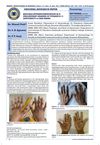 July 2021 in “PARIPEX INDIAN JOURNAL OF RESEARCH”
 Knuckle darkening can be an early sign of vitamin B12 deficiency.
33 citations
,
October 1996 in “Journal of Investigative Dermatology” 33 citations
,
May 2018 in “Stem Cell Reports” Krt15+ cells in the mouse intestine resist radiation and can start tumors.
September 2019 in “The journal of investigative dermatology/Journal of investigative dermatology” New RIPK4 gene mutations were found to cause a type of skin and limb birth defect.
March 2026 in “Tissue Engineering and Regenerative Medicine” 3 citations
,
February 2018 in “Experimental and Molecular Medicine/Experimental and molecular medicine” A protein called PCBP2 controls the production of a hair growth protein by interacting with its genetic message and is linked to hair loss when this control is disrupted.
7 citations
,
September 2013 in “Familial cancer” Birt–Hogg–Dubé syndrome is a rare genetic condition causing skin lesions, lung cysts, and a higher chance of kidney cancer.