 September 2022 in “Research Square (Research Square)”
 Increasing Rps14 helps grow more inner ear cells and repair hearing cells in baby mice.
33 citations
,
June 2007 in “Gene Expression Patterns” CTIP2 may help in skin development and maintenance.
34 citations
,
May 2001 in “Endocrinology” Mrp3 helps in wound healing and hair growth.
 4 citations
,
September 2020 in “PeerJ”
4 citations
,
September 2020 in “PeerJ” Platelet factor 4 slows down hair growth and could make hair loss treatments more effective if removed.
 September 2025 in “Digital Commons - RU (Rockefeller University)”
 Nfib in hair follicle stem cells boosts melanocyte stem cell growth and differentiation.
 123 citations
,
November 2012 in “Stem cells”
123 citations
,
November 2012 in “Stem cells” MicroRNA-302 helps improve the conversion of body cells into stem cells by blocking NR2F2.
10 citations
,
July 2019 in “Advances in Wound Care” Reducing Flightless I protein improves wound healing by activating skin stem cells.
January 2025 in “SSRN Electronic Journal” July 2022 in “Journal of Investigative Dermatology” TRPS1 loss in balding scalp areas contributes to hair loss in androgenic alopecia.
 September 2019 in “Journal of Investigative Dermatology”
 Targeted therapy with Ustekinumab significantly improved a skin condition called ILVEN, which is caused by mutations in the CARD14 gene.
 April 2023 in “Journal of Investigative Dermatology”
 Ganoderma lucidum extract can potentially reduce stress-induced hair loss by slowing down premature hair aging and removing harmful substances.
 3 citations
,
January 2019 in “Journal of Dermatology”
3 citations
,
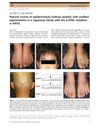
January 2019 in “Journal of Dermatology” The p.P25L mutation in the KRT5 gene causes a rare skin condition that worsens over time and may lead to hair loss starting in young adulthood.
April 2019 in “The journal of investigative dermatology/Journal of investigative dermatology” Disrupting the Tsc2 gene in certain cells leads to thicker skin, larger hair, and changes in hair growth signaling, which can be partly reversed with specific treatment.
372 citations
,
December 2004 in “Nature Genetics”  February 2025 in “Journal of Clinical Investigation”
 RNase L hinders hair growth by altering immune signals.
114 citations
,
January 2016 in “Current topics in developmental biology/Current Topics in Developmental Biology” Frizzled receptors are essential for various body development processes and maintaining certain body functions.
April 2026 in “The FASEB Journal” Exosomal miR-199a-3p from dermal papilla cells helps control hair color by affecting melanocytes.
January 2008 in “HAL (Le Centre pour la Communication Scientifique Directe)” The mutant HR bmh protein affects hair follicle formation by failing to repress vitamin D receptor activity.
 1 citations
,
March 2023 in “bioRxiv (Cold Spring Harbor Laboratory)”
1 citations
,
March 2023 in “bioRxiv (Cold Spring Harbor Laboratory)” Skin cell types develop when specific genes are turned on by removing certain chemical tags from DNA.
1 citations
,
December 2023 in “International journal of molecular sciences” miR-199a-3p controls hair growth and is linked to alopecia areata.
 57 citations
,
January 2013 in “International Journal of Medical Sciences”
57 citations
,
January 2013 in “International Journal of Medical Sciences” Lef1 helps stem cells become hair cells by interacting with specific signaling pathways.
135 citations
,
January 1996 in “Journal of Investigative Dermatology”  84 citations
,
October 2014 in “PLoS Genetics”
84 citations
,
October 2014 in “PLoS Genetics” Wnt signaling is essential for forming the skin's spinous layer through a BMP-FGF pathway.
 28 citations
,
February 2012 in “PLoS ONE”
28 citations
,
February 2012 in “PLoS ONE” A PKP1 gene mutation causes skin fragility and hair loss in Chesapeake Bay retriever puppies.

TLR2 helps control hair growth and regeneration, and its reduction with age or obesity can impair hair growth.
January 2022 in “SSRN Electronic Journal” LncRNA RP11-818024.3 helps hair growth and recovery in hair loss by boosting cell survival and reducing cell death.
6 citations
,
October 2020 in “Frontiers in cell and developmental biology” WWOX deficiency in mice causes skin and fat tissue problems due to disrupted cell survival signals.
April 2019 in “Journal of Investigative Dermatology” FGFR2 signaling controls Merkel cell formation in different skin regions.
 1 citations
,
April 2018 in “Journal of Investigative Dermatology”
1 citations
,
April 2018 in “Journal of Investigative Dermatology” Fzd2 is important for skin and hair development through various signaling ways.
6 citations
,
June 2012 in “PloS one” A new mRNA variant of the SCF gene in sheep skin produces a shorter, different protein.