 December 2023 in “Indian Journal of Canine Practice”
 A dog's MRSA skin infection was cured with linezolid and fungal treatment in 28 days.
September 2017 in “The journal of investigative dermatology. Symposium proceedings/The Journal of investigative dermatology symposium proceedings” CCCA and lichen planopilaris have similar histological features, making them hard to distinguish.
143 citations
,
May 2002 in “PubMed” LGD1069 effectively prevents breast tumors in mice without toxicity.
2 citations
,
June 2004 in “Journal of Molecular Histology” 36 citations
,
January 1994 in “Cell and Tissue Research”  September 2023 in “Russian Journal of Skin and Venereal Diseases”
 A rare scalp condition caused scarring hair loss in a woman, improved slightly with treatment.
 1 citations
,
May 2024 in “Cureus”
1 citations
,
May 2024 in “Cureus” Lichen planopilaris can unusually affect only the face, causing pigmentation and scarring.
 6 citations
,
January 2023 in “Medical Mycology Journal”
6 citations
,
January 2023 in “Medical Mycology Journal” Fosravuconazole effectively treated a woman's scalp infection without side effects.
11 citations
,
October 2024 in “PLoS ONE” Phage-containing hydrogels effectively heal wounds infected with Enterococcus faecalis.
 April 2016 in “Journal of Investigative Dermatology”
 Full thickness wounds on Lanyu pigs' skin resulted in abnormal skin structure and function due to changes in molecular expression patterns.
 October 2021 in “Journal of Investigative Dermatology”
 The COVID-19 pandemic has led to more severe cases of Leprosy due to delayed medical care.
 April 2018 in “The journal of investigative dermatology/Journal of investigative dermatology”
 Li2CO3 improved skin disease in a mouse model of Focal Dermal Hypoplasia without toxicity.
4 citations
,
November 2022 in “Nutrients” Cow placenta extract has strong antioxidant effects and can delay skin aging in mice.
March 2018 in “The journal of applied laboratory medicine” The rash on the infant indicated a serious underlying condition.
1 citations
,
January 2012 The CRABP I gene in cashmere goats is highly conserved but has unique features at specific amino sites.
88 citations
,
January 1981 in “British Journal of Dermatology” A new method helps grow human hair cells using a cow eye lens.
 February 2024 in “Bangladesh pharmaceutical journal”
 The conclusion is that the tested yogurts from Bangladesh are rich in vitamins thiamine and riboflavin, and the testing method is reliable.
 102 citations
,
July 2007 in “Genes & Development”
102 citations
,
July 2007 in “Genes & Development” A mother's PPARγ is crucial for preventing harmful milk that can cause inflammation and growth problems in babies.
 June 2022 in “Journal of Experimental Biology and Agricultural Sciences”
 Most E. coli in broiler chickens are resistant to multiple antibiotics.
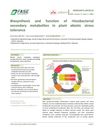 November 2025 in “Frontiers of Agricultural Science and Engineering”
 Rhizobacterial strain RT3 helps lettuce survive drought by producing protective substances like proline.
22 citations
,
October 2004 in “Journal of Investigative Dermatology” The gene causing hair loss and heart issues in rough coat mice is still unknown.
7 citations
,
April 2021 in “Journal of Lower Genital Tract Disease” Erosive lichen sclerosus is a distinct subtype with specific skin features, and treatment led to complete resolution in half of the cases.
62 citations
,
July 2022 in “Science Immunology” TREM2 macrophages and unsaturated lipids contribute to acne inflammation.
 May 2024 in “Indian Dermatology Online Journal”
 A rare bacterial infection of pubic hair can cause strong genital odor, but trimming hair and using clindamycin can quickly fix it.
January 2015 in “Dépôt Institutionnel de lUniversité de Tlemcen” Citrullus colocynthis seed oil is suitable for edible use and has antimicrobial potential.
Glycogen helps E. coli cells divide unevenly and organize their contents.
November 2019 in “BMC veterinary research” The hair loss in Belgian Blue crossbred calves was caused by a diet issue, not by disease or infection.
 January 2021 in “Journal of Entomology and Zoology Studies”
 The piglets fully recovered from psoroptic mange after treatment.
 December 2022 in “Exploratory animal and medical research”
 The study concluded that Acral lick dermatitis is most common in young male Labrador retrievers, often caused by psychological factors, and leads to skin inflammation and stress-related blood changes.