28 citations
,
November 2018 in “American Journal of Medical Genetics Part A” ODC1 gene mutations cause a neurodevelopmental disorder with large head size, hair loss, and facial abnormalities.
 9 citations
,
July 2010 in “British Journal of Dermatology”
9 citations
,
July 2010 in “British Journal of Dermatology” The document suggests a rare skin condition might be caused by a genetic phenomenon.
 1 citations
,
January 2019 in “International Journal of Medical Reviews and Case Reports”
1 citations
,
January 2019 in “International Journal of Medical Reviews and Case Reports” Treatment with moisturizers improved the skin condition of a girl with a rare genetic skin disorder.
 April 2018 in “The journal of investigative dermatology/Journal of investigative dermatology”
 Li2CO3 improved skin disease in a mouse model of Focal Dermal Hypoplasia without toxicity.
 May 2024 in “Animal genetics”
 A cat's poor wound healing was linked to a genetic deletion in the COL5A1 gene.
September 2023 in “International journal of molecular sciences” Targeting lipid metabolism can help treat advanced, resistant cancers.
36 citations
,
July 1996 in “The journal of investigative dermatology/Journal of investigative dermatology” Mice with the 'lanceolate hair' mutation have abnormal hair and skin similar to human Netherton's syndrome.
Suppressing ODC activity reduces tumor growth in hair follicles.
September 2023 in “Journal of the American Academy of Dermatology”  1 citations
,
March 2025 in “Journal of Investigative Dermatology”
1 citations
,
March 2025 in “Journal of Investigative Dermatology” Metabolic issues may trigger lymphocytic cicatricial alopecia, and treatments targeting these issues could help.
 November 2022 in “bioRxiv (Cold Spring Harbor Laboratory)”
 MOF controls skin development by regulating genes for mitochondria and cilia.
 4 citations
,
September 2013 in “Journal of Plastic Surgery and Hand Surgery”
4 citations
,
September 2013 in “Journal of Plastic Surgery and Hand Surgery” A girl with a rare syndrome had successful hair loss treatment with no relapse after 4 years.
 1 citations
,
June 2023 in “The FASEB journal”
1 citations
,
June 2023 in “The FASEB journal” LSD1 and HSP90 help heal skin wounds by changing hair follicle stem cells' metabolism.
4 citations
,
March 2018 in “Animal biotechnology” The LAMTOR3 gene is involved in cashmere goat hair growth and is affected by certain treatments and other genes.
37 citations
,
June 2000 in “Experimental dermatology” The Lanceolate hair-J mutation in mice mimics human hair disorders like Netherton's syndrome.
7 citations
,
February 2011 in “Journal of dermatology” The 736T>A mutation in the LIPH gene is common in Japanese people with autosomal recessive woolly hair.
44 citations
,
May 2023 in “MedComm” PROTAC technology shows promise for cancer treatment but needs more effective E3 ligase recruiters.
 5 citations
,
January 2024 in “The International Journal of Developmental Biology”
5 citations
,
January 2024 in “The International Journal of Developmental Biology” Mouse models help target specific genes in lymphatic cells for research.
4 citations
,
January 2006 in “International Journal of Cosmetic Science” The method shows how hair lipids form specific patterns and their roles in hair structure.
18 citations
,
May 2011 in “Journal of Investigative Dermatology” Wnt signaling affects the development and growth of Langerhans cells in mice.
 1 citations
,
April 2006 in “International Journal of Oncology”
1 citations
,
April 2006 in “International Journal of Oncology” Lysocellin helps stop cell damage from etoposide and may prevent hair loss.
7 citations
,
May 1993 in “Journal of the European Academy of Dermatology and Venereology” Cell adhesion molecules are important in the development of certain skin diseases.
61 citations
,
June 2019 in “BMC Genomics” lncRNAs significantly influence koi carp skin color.
 4 citations
,
January 1987 in “Journal of The American Academy of Dermatology”
4 citations
,
January 1987 in “Journal of The American Academy of Dermatology” A man with both skin lesions and lung cancer improved quickly with chemotherapy, suggesting the skin condition might be a reaction to immune system injury.
August 2017 in “Academic Commons (Stony Brook University)” Acer1 is essential for skin health and affects hair growth and skin cancer risk.
 36 citations
,
January 2019 in “Nature communications”
36 citations
,
January 2019 in “Nature communications” High lactate dehydrogenase activity is not necessary for the growth of squamous cell carcinoma.
 7 citations
,
March 2018 in “Asian-Australasian journal of animal sciences”
7 citations
,
March 2018 in “Asian-Australasian journal of animal sciences” OCIAD2 and DCN genes affect hair growth in goats by having opposite effects on a growth signaling pathway and inhibiting each other.
7 citations
,
May 2022 in “Cancers” UC.145 may be a new biomarker for predicting gastric cancer.
 October 2011 in “Journal of dermatology”
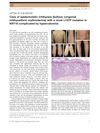
 A man with a rare skin condition and a new gene mutation developed high calcium levels due to his treatment.