 April 2016 in “Journal of Investigative Dermatology”
 Wnt ligands, produced by dermal papilla cells, are essential for adult hair growth and regeneration.
 42 citations
,
February 2017 in “Scientific Reports”
42 citations
,
February 2017 in “Scientific Reports” Researchers found a way to create cells from stem cells that act like human cells important for hair growth and could be used for hair regeneration treatments.
 192 citations
,
March 2017 in “Cell host & microbe”
192 citations
,
March 2017 in “Cell host & microbe” Hair follicle development and microbes help regulatory T cells gather in newborn skin.
 April 2017 in “Journal of Dermatological Science”
 B cells can both help and hinder the body's defense against melanoma.
27 citations
,
February 2003 in “Cell and Tissue Research” FM dyes effectively stain Merkel cells for long-term observation.
13 citations
,
April 2010 in “Journal of dermatological science” Chemotherapy-induced hair loss is partly due to decreased laminin-511 and increased laminin-332.
1 citations
,
April 2016 in “Journal of lipid research” Lipin-1 is important for skin cell differentiation and skin barrier function.
717 citations
,
June 2010 in “Nature” Alopecia areata involves both innate and adaptive immunity, with specific genes linked to the disease.
November 2025 in “Journal of Investigative Dermatology” PCFCL may have unrecognized subtypes and needs more research.
1 citations
,
October 2024 in “Indian Dermatology Online Journal” PRP injections for hair loss may cause scalp nodules that can persist but often regress on their own.
 38 citations
,
July 1998 in “Journal of surgical oncology”
38 citations
,
July 1998 in “Journal of surgical oncology” A woman with breast cancer developed a rare condition causing excessive fine hair growth on her face and body.
July 2017 in “D-Scholarship@Pitt (University of Pittsburgh)” Notch signaling stops Merkel cell development, and hair follicles help maintain them after skin injury.
 25 citations
,
November 2017 in “Molecular Medicine Reports”
25 citations
,
November 2017 in “Molecular Medicine Reports” PlncRNA-1 helps hair follicle stem cells grow and develop by controlling a specific cell signaling pathway.
40 citations
,
December 2023 in “Acta Pharmacologica Sinica” 181 citations
,
January 2019 in “Cell” Innate lymphoid cells help control skin bacteria by regulating sebaceous glands.
24 citations
,
July 2015 in “Molecular Medicine Reports” Lysophosphatidic acid boosts stem cell growth and movement by creating reactive oxygen species.
May 2024 in “Regenerative Therapy” Dendrobium officinale polysaccharide helps hair growth by activating the WNT signaling pathway.
November 2025 in “Journal of Investigative Dermatology” TEDAR is crucial for skin cell differentiation and barrier formation.
42 citations
,
September 2002 in “The Journal of Comparative Neurology” Glycine likely affects dendrites connected to hair follicle terminals in rats.
3 citations
,
October 2021 in “Neuroscience Letters”  April 2023 in “Journal of Investigative Dermatology”
 Higher PD-1 levels are linked to fewer immune cells in hair follicles in alopecia areata.
 November 2022 in “The journal of investigative dermatology/Journal of investigative dermatology”
 Linalool in personal care products may contribute to hair loss by damaging hair follicle stem cells and triggering harmful immune responses.
 5 citations
,
January 2012 in “PubMed”
5 citations
,
January 2012 in “PubMed” Anti-MND antibodies are present in various diseases, not just PBC, and their levels don't correlate with disease activity or skin symptoms.
 April 2016 in “Journal of Investigative Dermatology”
 Lithocholic acid helps hair growth and regeneration in alopecia by activating vitamin D receptors.
79 citations
,
November 2010 in “Journal of Neuroscience” Hair clipping can trigger axon growth and changes in the skin.
April 2023 in “Journal of Investigative Dermatology” IL-17 plays a key role in severe hair loss in chronic alopecia areata.
 12 citations
,
March 2004 in “International Journal of Dermatology”
12 citations
,
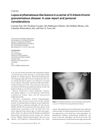
March 2004 in “International Journal of Dermatology” A woman with X-linked chronic granulomatous disease developed lupus-like skin lesions, improved with treatment, suggesting a unique skin condition in carriers.
 August 2016 in “Journal of Investigative Dermatology”
 Researchers found a new genetic mutation linked to a hair condition in a Japanese boy.
105 citations
,
October 2018 in “Nature” A small group of slow-growing cells causes basal cell carcinoma to return after treatment.
18 citations
,
January 2021 in “Theranostics” The targeted nanohybrids effectively reduced psoriasis symptoms and improved skin health.