November 2025 in “Journal of Investigative Dermatology” Certain CD8+ T cells attack hair follicles in alopecia areata, suggesting they could be targeted for treatment.
 April 2018 in “Journal of Investigative Dermatology”
 The conclusion is that the cornea has two types of stem cells, with Lrig1+ cells being key for renewal in aging corneas, independent of CD44.
June 2026 in “American Journal of Dermatopathology” Regulatory T cells play a key role in different types of hair loss.
 17 citations
,
June 2019 in “BMC genomics”
17 citations
,
June 2019 in “BMC genomics” Non-coding RNAs help control hair growth in cashmere goats.
 October 2022 in “Dermatology practical & conceptual”
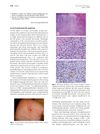
 Scalp skin condition LEDS has similar features to Zoon's balanitis, a mucosal skin disorder.
April 2017 in “Journal of Investigative Dermatology” Dermal lymphatic vessels help hair growth by affecting hair cycle phases.
 6 citations
,
February 2010 in “Journal of The American Academy of Dermatology”
6 citations
,
February 2010 in “Journal of The American Academy of Dermatology” A woman had a rare skin condition with recurring painful nodules that heal in 6 weeks, often without needing treatment.
19 citations
,
May 2018 in “Molecular Medicine Reports” miR‑339‑5p can slow down hair follicle stem cell differentiation by targeting DLX5.
2 citations
,
January 2014 in “Journal of Cytology & Histology” Rapamycin and anti-EGFR antibody reduce LAM/TSC cell migration and blood vessel growth in the uterus.
 15 citations
,
July 2016 in “Biochemical Journal”
15 citations
,
July 2016 in “Biochemical Journal” Wnt proteins from certain skin cells are crucial for normal hair growth and renewal.
68 citations
,
December 1983 in “British Journal of Dermatology” Major histocompatibility antigens are found in specific skin cells and structures, but not in sweat glands.
Alopecia areata patients have higher levels of certain immune receptors, suggesting new treatment possibilities.
 18 citations
,
April 2014 in “Stem cells”
18 citations
,
April 2014 in “Stem cells” The study found stem cells in minor salivary glands that can differentiate and are involved in tumor formation when exposed to tobacco.
9 citations
,
February 2025 in “Journal of Nanobiotechnology” Biomimetic nanovesicles can speed up diabetic wound healing by regulating immune cell behavior and metabolism.
2 citations
,
February 2025 Merkel cell polyomavirus can infect and persist in skin cells, evading the immune system, but certain treatments can control it.
 April 2024 in “Cellular signalling”
 Activating TRPMLs helps human cells important for hair growth and increases hair growth in mice.
 22 citations
,
July 2019 in “PLOS ONE”
22 citations
,
July 2019 in “PLOS ONE” Skin lymphatic vessels are essential for hair growth.
July 2025 in “Journal of Investigative Dermatology” Discoid lupus erythematosus involves immune activation and fibrosis around hair follicles, with shared pathways across humans, dogs, and mice, suggesting potential treatments for both humans and animals.
July 2013 in “University of Southern California Digital Library” New stem cells in nails and sweat glands can regenerate skin and hair.
 6 citations
,
April 2010 in “Journal of Dermatological Science”
6 citations
,
April 2010 in “Journal of Dermatological Science” Laminin-511 may help promote hair growth, while laminin-332 does not affect hair loss.
13 citations
,
February 1995 in “Archives of Dermatological Research” Gamma/delta T cells help defend skin against heavy metals.
20 citations
,
January 2015 in “Biochimica and biophysica acta. Molecular and cell biology of lipids” Lysophosphatidic acid affects sensory neurons and may cause neuropathic pain and itch.
89 citations
,
October 2003 in “Biology of the Cell” Galectin-1 helps in RNA processing in cell nuclei.
27 citations
,
August 2021 in “Journal of Autoimmunity” Human dermal γδT-cells respond to stress in hair follicles, contributing to hair loss.
41 citations
,
April 2019 in “PLOS genetics” CD34+ and CD34- melanocyte stem cells have different regenerative abilities.
 35 citations
,
January 2013 in “The Journal of experimental medicine/The journal of experimental medicine”
35 citations
,
January 2013 in “The Journal of experimental medicine/The journal of experimental medicine” CD98hc's role in skin health decreases with age.
 August 2025 in “International Journal of Contemporary Pediatrics”
 HLD10 can include increased body hair and Mongolian spots.
 April 2018 in “Journal of Investigative Dermatology”
 Macrophages are more involved in Lichen planopilaris than in Frontal fibrosing alopecia.
8 citations
,
July 2016 in “Oncotarget” Lgr5+ stem cells do not cause skin tumors.
660 citations
,
December 2011 in “Cell” Different hair follicles in the skin are innervated by unique combinations of mechanosensory neurons, crucial for touch sensation.