124 citations
,
January 1995 in “The journal of allergy and clinical immunology/Journal of allergy and clinical immunology/The journal of allergy and clinical immunology” Netherton's syndrome is linked to high IgE levels and unique skin and hair symptoms, and may improve with ammonium lactate lotion and allergy management.
 August 2025 in “International Journal of Contemporary Pediatrics”
 HLD10 can include increased body hair and Mongolian spots.
 October 2023 in “JOJ dermatology & cosmetics”
 Thiocyanate helps hair growth and can be supplemented in diet or applied topically.
20 citations
,
December 2017 in “Cardiovascular diabetology” Linagliptin slows down premature aging in certain mice.
 December 2024 in “Animals”
 Tithonia diversifolia extract improved digestion but didn't enhance lamb growth.
 8 citations
,
October 2020 in “Pharmaceutics”
8 citations
,
October 2020 in “Pharmaceutics” Dutasteride-loaded nanoparticles coated with Lauric Acid-Chitosan show promise for treating hair loss due to their controlled release, low toxicity, and potential to stimulate hair growth.
February 2018 in “Zenodo (CERN European Organization for Nuclear Research)” High doses of Lagenaria siceraria fruit powder lower FSH and LH hormone levels in male rats.
 3 citations
,
December 2022 in “Nutrients”
3 citations
,
December 2022 in “Nutrients” Limonin from young citrus fruits may help with hair growth by affecting cell growth and hair cycle pathways.
 6 citations
,
April 2010 in “Journal of Dermatological Science”
6 citations
,
April 2010 in “Journal of Dermatological Science” Laminin-511 may help promote hair growth, while laminin-332 does not affect hair loss.
38 citations
,
April 2020 in “IntechOpen eBooks” Phenylalanine may help with depression but can cause issues if not properly processed.
A new treatment using conjugated linoleic acid in nanovesicles can rejuvenate hair follicles and improve hair growth in androgenic alopecia.
 February 2019 in “Neoreviews”
 The infant with a urea cycle disorder improved with treatment and a liver transplant.
28 citations
,
November 2009 in “European Journal of Neuroscience” Progesterone and allopregnanolone increase glycine release in rat brain cells.
3 citations
,
January 2021 in “Veterinary dermatology” A litter of cats had a hair condition similar to a mouse mutation, leading to hair loss and abnormal hair and skin.
 3 citations
,
November 2020 in “Phyton-international Journal of Experimental Botany”
3 citations
,
November 2020 in “Phyton-international Journal of Experimental Botany” Wedelolactone may help treat chronic diseases by acting as an antioxidant and affecting important proteins.
 18 citations
,
October 1984 in “International Journal of Dermatology”
18 citations
,
October 1984 in “International Journal of Dermatology” Lithium therapy may cause temporary hair loss, with possible regrowth if treatment is stopped or continued.
2 citations
,
September 2022 in “Drug Delivery” The microneedle system effectively promotes hair growth for treating androgenic alopecia.
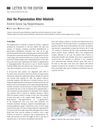 April 2025 in “Turkish Journal of Hematology”
 Nilotinib may cause gray hair to return to its original color.
 74 citations
,
January 2006 in “The journal of investigative dermatology/Journal of investigative dermatology”
74 citations
,
January 2006 in “The journal of investigative dermatology/Journal of investigative dermatology” Mutations in the DSG4 gene can cause a rare hair disorder similar to monilethrix.
 7 citations
,
October 1985 in “Genetics Research”
7 citations
,
October 1985 in “Genetics Research” Beige and leaden pigment genes act within melanocytes, affecting pigment patterns.
 May 2014 in “Clinical and Experimental Dermatology”
 A 70-year-old woman with a rare skin condition improved after treatment with topical steroids and acitretin.
 September 2024 in “Egyptian Journal of Dermatology and Venerology”
 Combining TRA and latanoprost is most effective for treating localized alopecia areata.
October 2010 in “eCommons (Cornell University)” Cutaneous epitheliotropic lymphoma in dogs is often misdiagnosed but can be treated with chemotherapy and alternative therapies.
8 citations
,
June 2004 in “Journal of Investigative Dermatology” Certain peptides can prevent hair loss in young rats caused by a cancer drug.
1 citations
,
January 1980 in “Acta Dermato Venereologica” Oral tetracycline reduces fat breakdown in hair lipids.
1 citations
,
January 1996 Cysteine and arginine are essential for hair growth and thickness.
305 citations
,
March 2008 in “AJP Endocrinology and Metabolism” SSAT is a key enzyme affecting cell growth and metabolism, with potential but risky use in disease treatment.
32 citations
,
December 1965 in “The Lancet” Argininosuccinic aciduria can cause hair loss.
 38 citations
,
July 1998 in “Journal of surgical oncology”
38 citations
,
July 1998 in “Journal of surgical oncology” A woman with breast cancer developed a rare condition causing excessive fine hair growth on her face and body.
 2 citations
,
June 2011 in “Journal of clinical and experimental investigations”
2 citations
,
June 2011 in “Journal of clinical and experimental investigations” Oral zinc sulphate is an effective and safe treatment for thallium poisoning, especially for skin and hair symptoms.