 109 citations
,
October 2007 in “Journal of pineal research”
109 citations
,
October 2007 in “Journal of pineal research” Melatonin helps regulate hair growth and protects the hair follicle from stress.
 December 2012 in “Journal of dermatological science”
 Langerhans cells and melanocytes migrate to the skin and hair follicles during early human development.
March 2026 in “Journal of Investigative Dermatology” Folliculin slows hair growth, and blocking it might help treat hair loss.
 October 2023 in “Journal of Cosmetic Dermatology”
 A synthetic octapeptide may help promote hair growth and counteract hair loss.
1 citations
,
April 2007 in “PubMed” Tacrolimus helps mice grow hair by activating hair follicles.
 19 citations
,
January 2013 in “International journal of medical sciences”
19 citations
,
January 2013 in “International journal of medical sciences” Increasing Wnt5a in mice skin delays hair growth but doesn't stop it.
 October 2018 in “InTech eBooks”
 The gene Foxn1 is important for hair growth, and understanding it may lead to new alopecia treatments.
 12 citations
,
July 2016 in “British journal of dermatology/British journal of dermatology, Supplement”
12 citations
,
July 2016 in “British journal of dermatology/British journal of dermatology, Supplement” Different hair fiber development might explain why hair loss severity varies in patients with a specific genetic mutation, and treatments that thicken hair could help.
 May 2024 in “Cell proliferation”
 Melatonin helps hair grow by activating a specific signaling pathway.
 2 citations
,
August 2020 in “Natural Product Communications”
2 citations
,
August 2020 in “Natural Product Communications” A mix of Platycladus orientalis leaf extract and alpha-terpineol helps mice grow hair by increasing growth factors and cell growth.
 April 2016 in “Journal of Investigative Dermatology”
 Blocking Oncostatin M's role in the JAK-STAT pathway can stimulate hair growth in mice.
January 2000 in “Chinese Journal of Dermatology” Ligustrum lucidum may boost hair growth by maintaining key growth factors.
Understanding hair follicle communication can help treat hair loss.
 2 citations
,
July 2020 in “Giornale italiano di dermatologia e venereologia”
2 citations
,
July 2020 in “Giornale italiano di dermatologia e venereologia” A woman with frontal fibrosing alopecia experienced unusual hair growth after using a specific topical lotion.
December 2015 in “European Journal of Pediatric Dermatology” Newborns can experience temporary hair loss in bands, unrelated to sleeping position.
September 2016 in “Journal of dermatological science” The conclusion is that the variation in hair thinness in patients is mostly due to the amount of underdeveloped hairs, and treatments that thicken fine hairs might work for those with mild to severe conditions.
98 citations
,
November 1999 in “Dermatology Online Journal” IGF-1 can boost hair growth by promoting cell growth and preventing cell death.
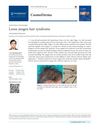 February 2023 in “Cosmoderma”
 Loose anagen hair syndrome causes easily shed hair but usually improves with time.
13 citations
,
January 2002 in “Clinics in dermatology” A mushroom extract might reduce hair loss and liver damage caused by certain chemotherapy drugs in animals.
45 citations
,
January 2010 in “Forensic science international” Neonatal hair can help determine drug exposure during pregnancy.
20 citations
,
February 2012 in “Archives of dermatology” Leg hair transplants can create a natural-looking hairline and show successful growth over several years.
 1 citations
,
April 2016 in “Journal of The American Academy of Dermatology”
1 citations
,
April 2016 in “Journal of The American Academy of Dermatology” The study concludes that Loose Anagen Hair Syndrome is a benign condition that usually improves with age but can be hard to diagnose and stressful for the family.
November 2024 in “Journal of Investigative Dermatology” Stimulating OR10J1 can promote hair growth and may help treat hair loss.
38 citations
,
August 1973 in “Journal of Investigative Dermatology” January 2022 in “SSRN Electronic Journal” Mouse hair follicles age, causing more white hairs due to fewer pigment stem cells.
1 citations
,
April 2023 in “Animals” Wnt and BMP pathways stimulate hair growth in Min pigs, with Wnt being more effective.
June 2001 in “European Journal of Dermatology” A 54-year-old woman experienced progressive hair loss starting in adolescence, leading to sparse scalp hair and almost no eyebrows or eyelashes.
 231 citations
,
October 1999 in “Journal of Clinical Investigation”
231 citations
,
October 1999 in “Journal of Clinical Investigation” Activating the Sonic hedgehog gene in mice can start the hair growth phase.
194 citations
,
November 2006 in “Science” A genetic mutation in the LIPH gene causes hair loss and growth defects.
14 citations
,
January 1988