 January 2024 in “Current research in toxicology”
 Thallium is highly toxic, causing severe health issues, and Prussian blue is the best antidote.
18 citations
,
December 2010 in “Journal of analytical atomic spectrometry” A new method accurately measures lead levels in hair to assess exposure.
 June 2017 in “Journal of The American Academy of Dermatology”
 Women in Australia report different signs of facial aging compared to women in the US, UK, and Canada; men with Lichen planopilaris often have hormonal abnormalities and thyroid disease.
 1 citations
,
February 2025 in “Notulae Scientia Biologicae”
1 citations
,
February 2025 in “Notulae Scientia Biologicae” Optimized emulgels with Levofloxacin effectively treat eye infections with prolonged drug release and safety.
 December 2023 in “bioRxiv (Cold Spring Harbor Laboratory)”
 The research suggests Dutasteride and Solifenacin may be effective against the bacterium causing listeriosis.
August 2026 in “Canadian Journal of Health Technologies” Litfulo is recommended for treating severe alopecia areata in people 12 and older, as it helps hair regrowth.
 3 citations
,
February 2024 in “Journal of the American Academy of Dermatology”
3 citations
,
February 2024 in “Journal of the American Academy of Dermatology” Topical tofacitinib cream may help treat certain hair loss conditions with fewer risks.
January 2024 in “Pharmacokinetics and Pharmacodynamics” Human placenta extracts may help treat various diseases.
41 citations
,
January 1981 in “Journal of Clinical Medicine” October 2023 in “Open Repository of the University of Porto (University of Porto)”  October 2025 in “Italian Journal of Dermatology and Venereology”
 Lichen planopilaris is rare, mostly affects older women, and is often linked to autoimmune diseases like lupus.
 May 2022 in “Journal of pharmacognosy and phytochemistry”
 The evaluation of Creeping Daisy leaves found important characteristics and compounds that support its use in medicine.
19 citations
,
May 2009 in “Pediatric Dermatology” A 5-year-old girl's scalp scarring and hair loss from lupus improved with specific medications.
 April 2017 in “Journal of Investigative Dermatology”
 The PON1 192R gene variant is linked to a higher risk of psoriasis and heart disease in Western Mexico.
 8 citations
,
February 2005 in “British Journal of Haematology”
8 citations
,
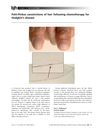
February 2005 in “British Journal of Haematology” Chemotherapy caused the patient's hair to have alternating thick and thin segments.
 9 citations
,
June 2020 in “Actas Dermo-Sifiliográficas”
9 citations
,
June 2020 in “Actas Dermo-Sifiliográficas” Spironolactone is effective for acne, hidradenitis suppurativa, female hair loss, and hirsutism but is underused in dermatology.
54 citations
,
January 2018 in “Journal of Plant Studies” Tridax procumbens may be a safe, affordable treatment for some health issues.
16 citations
,
March 1986 in “Biochemical Pharmacology” 4 citations
,
November 2001 in “Journal of Neuropsychiatry” Divalproex sodium can sometimes worsen behavior in some patients.
June 2022 in “Pham Ngoc Thach Journal of Medicine and Pharmacy” Tongue fern contains important compounds like polyphenols and flavonoids, best extracted with 80% methanol at 60°C.
 October 2024 in “Iraqi postgraduate medical journal”
 Ciprofloxacin is slightly more effective than Clindamycin for reducing acne.
 17 citations
,
March 2018 in “Pediatric dermatology”
17 citations
,
March 2018 in “Pediatric dermatology” Hydroxychloroquine may help treat alopecia areata in children.
 2 citations
,
February 2016 in “British Journal of Dermatology”
2 citations
,
February 2016 in “British Journal of Dermatology” Bimatoprost solution 0.03% is effective for treating sparse eyelashes.
 March 2025 in “Pain Physician”
 Cooling the skin before injections reduces pain for patients with hair loss.
39 citations
,
August 2022 in “Pharmaceutics” Combining letrozole and quercetin in spanlastics may improve breast cancer treatment.
 September 2022 in “The American Journal of Dermatopathology”
 Blocking IL-17 might help treat the hair loss condition Lichen planopilaris.
Diphenyl cresyl phosphate has low toxicity but can harm the liver, kidneys, adrenal glands, and testicles at high doses.
 January 2025 in “Exploratory Animal and Medical Research”
 Lithium carbonate and lead acetate together harm the heart more than individually.
 1 citations
,
February 1977 in “Archives of Dermatology”
1 citations
,
February 1977 in “Archives of Dermatology” Fresh plasma transfusions did not help treat Leiner disease in an infant.
October 2019 in “Zenodo (CERN European Organization for Nuclear Research)” Capilcep effectively promotes hair growth and is safe, but long-term effects need more research.