 1 citations
,
January 2017 in “Elsevier eBooks”
1 citations
,
January 2017 in “Elsevier eBooks” The document concludes that new treatments for hair loss may involve a combination of cosmetics, clinical methods, and genetic approaches.
 1 citations
,
January 2013 in “Archives of Aesthetic Plastic Surgery”
1 citations
,
January 2013 in “Archives of Aesthetic Plastic Surgery” Combining liposuction with laser ablation effectively reduces underarm odor with minimal side effects.
 June 2026 in “Lasers in Medical Science”
 Diode laser is more effective but more painful than intense pulsed light for hair removal.
July 2025 in “Carolina Digital Repository (University of North Carolina at Chapel Hill)” Low-level laser therapy is the most supported non-drug treatment for hair loss, but combining it with other methods may be promising.
 July 2025 in “Lasers in Surgery and Medicine”
 Non-ablative fractional laser treatment safely improves hair growth and scalp appearance.
 April 2016 in “Proceedings of SPIE”
 UV-induced autofluorescence is effective for identifying different types of alopecia.
 July 1998 in “Dermatologic Surgery”
 Various techniques and tools for hair restoration were presented in 1998, including a mathematical model for donor area, use of lasers in surgery, methods for controlling grafted hair direction, and ways to increase graft yield. Satisfaction rates were around 39%, and studies showed trauma and dehydration can damage hair follicles.
 88 citations
,
December 2018 in “Advanced Healthcare Materials”
88 citations
,
December 2018 in “Advanced Healthcare Materials” Layer-by-Layer self-assembly is promising for biomedical uses like tissue engineering and cell therapy, but challenges remain in material safety and process optimization.
27 citations
,
November 2010 in “JDDG Journal der Deutschen Dermatologischen Gesellschaft” New laser therapies are effective for skin damage, hair removal, and fat reduction.
11 citations
,
January 2014 in “Mass spectrometry” Silver oxide nanoparticles help detect small molecules effectively.
 9 citations
,
January 2016 in “Journal of cosmetology & trichology”
9 citations
,
January 2016 in “Journal of cosmetology & trichology” Fractional laser treatment helped hair regrowth in patients with alopecia areata.
 3 citations
,
August 1995 in “Journal of Clinical Laser Medicine & Surgery”
3 citations
,
August 1995 in “Journal of Clinical Laser Medicine & Surgery” Using a CO₂ laser for hair transplants improves the surgery and may become important in future hair restoration.
1 citations
,
January 2009 in “Elsevier eBooks” Using Eflornithine cream with laser treatments improves facial hair removal.
October 2024 in “Zagazig University Medical Journal” Transdermal delivery using a fractional CO2 laser is more effective for treating alopecia areata than injections.
January 2014 in “Belarusian State Pedagogical University repository (Belarusian State Pedagogical University)” Laser treatment can improve the delivery of hair loss drugs into the skin and hair follicles.
 20 citations
,
December 2003 in “Journal of Cosmetic and Laser Therapy”
20 citations
,
December 2003 in “Journal of Cosmetic and Laser Therapy” An 800nm diode laser safely and effectively reduces hair for about 8 months, with most patients satisfied and few side effects.
 16 citations
,
April 2011 in “Recent Patents on Inflammation & Allergy Drug Discovery”
16 citations
,
April 2011 in “Recent Patents on Inflammation & Allergy Drug Discovery” Alopecia Areata is an autoimmune disease causing hair loss in patches, often starting before age 20, and while some cases recover on their own, treatments include topical corticosteroids, minoxidil, and promising new methods like IL-31 antibodies and 308-nm Excimer laser therapy.
6 citations
,
April 2000 in “European journal of plastic surgery” Ruby laser hair removal effectively reduces hair density and is preferred by most patients.
 2 citations
,
July 2004 in “Proceedings of SPIE, the International Society for Optical Engineering/Proceedings of SPIE”
2 citations
,
July 2004 in “Proceedings of SPIE, the International Society for Optical Engineering/Proceedings of SPIE” Near-infrared laser therapy with Indocyanine Green dye improves acne by reducing inflammation without side effects.
 1 citations
,
November 2016 in “Hanbang an'i'bi'in'hu pibu'gwa haghoeji”
1 citations
,
November 2016 in “Hanbang an'i'bi'in'hu pibu'gwa haghoeji” Low level laser therapy and acupuncture significantly improved hair growth in a patient with alopecia.
 July 2025 in “The Egyptian Journal of Hospital Medicine”
 Preparing scars with PRP or CO₂ laser improves hair transplant success.
 June 2025 in “Medical alphabet”
 Fractional lasers, combined with topical therapy, are a promising and safe treatment for hair loss.
January 2019 in “Dermatologic Surgery” Pulsed Dye Laser effectively treats skin lesions in Rosai–Dorfman Disease.
October 2022 in “Dermatology practical & conceptual” Both treatments help hair regrowth, with PRP being slightly better.
11 citations
,
June 2010 in “Dermatologic surgery” The dual-wavelength laser system effectively reduces EFFC symptoms with minimal side effects.
 8 citations
,
January 1989 in “Journal of The American Academy of Dermatology”
8 citations
,
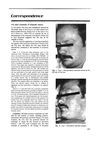
January 1989 in “Journal of The American Academy of Dermatology” CO2 laser treatment successfully removed traumatic tattoos with minimal scarring.
5 citations
,
November 2005 Confocal Laser Scanning Microscopy is effective for tracking compounds in the skin.
1 citations
,
June 2022 in “Zenodo (CERN European Organization for Nuclear Research)” Low-level laser therapy can effectively regrow hair in alopecia areata.
April 2024 in “Al-Azhar International Medical Journal /Al-Azhar International Medical Journal” Combining either fractional CO2 laser or microneedling with 5-FU is more effective for treating vitiligo.
Ablative CO2 laser resurfacing tightens skin by destroying and regenerating skin layers.