Search
for
Sort by
Research
180-210 / 1000+ results
research Versatile Use of Submental Tissue for Reconstruction of Perioral Soft Tissue Defects
Submental tissue is good for repairing mouth area skin with minimal scarring and good cosmetic results.
research Deep Plane Fixation in Integumental Surgery
Deep Plane Fixation in scalp surgeries allows for more tissue removal with less tension and minimal scarring.
research A review of surgical methods (excluding hair transplantation) and their role in hair loss management today
Surgical methods for hair loss are less common than hair transplants but still useful, especially for scarring hair loss.
research WISP-1 induced by mechanical stress contributes to fibrosis and hypertrophy of the ligamentum flavum through Hedgehog-Gli1 signaling
Targeting Hedgehog signaling may help treat ligamentum flavum fibrosis.
research Simplifying Lip Reconstruction: An Algorithmic Approach
An algorithm was created to simplify lip reconstruction after surgery.
research Micro-autologous Fat Transplantation (MAFT) for Forehead Volumizing and Contouring
MAFT is a reliable method for forehead contouring with high patient satisfaction and long-term results.
research Deep Plane Fixation in Integumental Surgery
Deep Plane Fixation in scalp surgeries allows for more tissue removal with less tension, leading to better healing and less scarring.
research Scalp Repair Using Tissue Expanders
Tissue expanders effectively repair large scalp defects and restore a natural-looking scalp.
research Combination therapy profoundly improved skin flap survival by modulating KATP channels and nitric oxide
The combination of azelaic acid, minoxidil, and caffeine significantly increased the survival of skin flaps by affecting certain body channels and nitric oxide levels.
research Incisional Slit Grafting
Incisional slit grafting for hair transplantation gives natural-looking results and has a high success rate.
research A study of donor area in follicular unit hair transplantation
Narrower donor strips and special closure techniques in hair transplants lead to smaller scars and happier patients.

research Three‐dimensional adipofascial and dermal structures involved in forehead crease formation
Forehead creases are formed by a tight connection between the skin and muscle through dense fibers, with changes in skin thickness and fewer skin appendages near the creases.
research Abstract: Real Time Ultrasound Assisted Gluteal Fat Grafting: Increasing Safety in Gluteal Fat Augmentation
Using real-time ultrasound during gluteal fat grafting is safe and reduces complication risks.

research Single-Layer vs. Double-Layer Donor Scalp Wound Closure in Strip Harvest.
Double-layer scalp wound closure is better than single-layer closure after strip hair transplant surgery.
research Rapid angiogenic hydrogel nanofiber scaffold promotes random flap regeneration and modulates inflammation
The hydrogel scaffold improved skin flap healing and reduced inflammation.
research Hair Restoration: Micrografts and Flaps
The book is a useful, illustrated guide for beginners in hair transplantation, but may be too basic for experienced surgeons.
research Eyelash Transplantation Using Leg Hair by Follicular Unit Extraction
Leg hair can be used for eyelash transplants, resulting in fuller lashes with less maintenance.
research The Association Between Scalp Laxity, Elasticity, and Glidability and Donor Strip Scar Width in Hair Transplantation—A New Elasticity Measuring Method
Scalp laxity, elasticity, and glidability are important in hair transplants and can predict scar width at the donor site.
research Rejuvenation of the Lower Eyelid Complex
The article concluded that choosing the right surgical method based on a patient's specific needs can make the lower eyelid look younger.
research 25 Endoscopic Forehead and Brow Lift
EFBL offers hidden incisions, faster recovery, and fewer risks, but may raise hairline and cost more.
research A volar skin excisional wound model for in situ evaluation of multiple-appendage regeneration and innervation
The study concluded that the new wound model can be used to evaluate skin regeneration and nerve growth.
research Split skin graft “from scalp to scalp” for repairing large surgical defects
Scalp-to-scalp skin grafts quickly heal and hide well under regrown hair, making them good for repairing large scalp defects.
research Endoscopic-Assisted Facelifting
Endoscopic-assisted facelifting is safe and effective with minimal complications and excellent long-term results.
research Cutaneous Ultrastructural Features of the Flaky Skin (fsn) Mouse Mutation
The flaky skin mouse mutation is a natural model for studying human psoriasis.
research Anchor Scalp Reduction
Both ASR I and ASR II are effective scalp reduction techniques, with ASR I creating finer scars and ASR II removing more bald area and reducing stretch-back.
research Nevus lipomatosus cutaneous superficialis with folliculosebaceous cystic hamartoma
A rare skin growth was successfully removed without recurrence after one year.
research Lipedematous scalp with heterochromia of scalp hair in a boy
A boy had a rare scalp condition with thickened skin and different-colored hair.
research Leave the Fat, Skip the Bolster: Thinking outside the Box in Lower Third Nasal Reconstruction
Nasolabial skin-fat grafts are good for nasal reconstruction with minimal scarring and no need for bolsters, but smoking may affect graft survival.
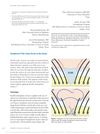
research Treatment of Thin Linear Scars on the Scalp
Double trichophytic closure effectively treats thin scalp scars and reduces patient costs.