 3 citations
,
November 2020 in “Phyton-international Journal of Experimental Botany”
3 citations
,
November 2020 in “Phyton-international Journal of Experimental Botany” Wedelolactone may help treat chronic diseases by acting as an antioxidant and affecting important proteins.
 January 2025 in “Revista Vitae”
 A new method reliably detects minoxidil in hair products, revealing some non-compliance with regulations.
 July 2025 in “International Journal of Ayurveda and Pharma Research”
 Ayurvedic treatment improved hair condition and density safely in a woman with hair loss.
 2 citations
,
June 2018 in “Sudan journal of medical sciences”
2 citations
,
June 2018 in “Sudan journal of medical sciences” Low vitamin D levels can cause hair loss and supplements may improve it.
2 citations
,
January 2022 in “Actas Dermo-Sifiliográficas” Dermoscopy can effectively identify Malassezia folliculitis.
 July 2023 in “AYUSHDHARA”
 Aging is a natural process causing physical and mental decline.
August 2025 in “BMC Pharmacology and Toxicology” The LTF gene may help predict and manage nonspecific orbital inflammation.
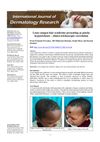 January 2026 in “International Journal of Dermatology Research”
 Early recognition of loose anagen hair syndrome is important to prevent misdiagnosis and unnecessary treatments.
 17 citations
,
January 2021 in “Dermatology and Therapy”
17 citations
,
January 2021 in “Dermatology and Therapy” Laser-assisted drug delivery has shown improved treatment outcomes for skin conditions and has potential to reduce side effects and treatment time.
July 2024 in “Journal of Investigative Dermatology” 2 citations
,
June 2013 in “Clinical and Experimental Dermatology” Thorough evaluation is crucial for understanding diffuse scalp hair loss.
9 citations
,
May 1996 in “Pediatric Dermatology” Alopecia areata and lichen planus can occur together in children, which is important for diagnosis and treatment.
January 2020 in “Publications of the UdS (Saarland University)” People with Alopecia areata often have lower Vitamin D levels.
 10 citations
,
January 2013 in “Faṣlnāmah-i bīmārīhā-yi pūst”
10 citations
,
January 2013 in “Faṣlnāmah-i bīmārīhā-yi pūst” Vitamin D levels are not linked to alopecia areata.
 April 2016 in “Journal of Investigative Dermatology”
  December 2023 in “Clinical, cosmetic and investigational dermatology”
 The new method combining dermoscopy and Reflectance Confocal Microscopy is more effective for evaluating vitiligo.
 7 citations
,
August 2023 in “Therapeutic Innovation & Regulatory Science”
7 citations
,
August 2023 in “Therapeutic Innovation & Regulatory Science” A new method uses expert reviews of home videos to objectively assess children's developmental milestones in single-arm trials.
 25 citations
,
August 2014 in “Endocrinology”
25 citations
,
August 2014 in “Endocrinology” Researchers created a mouse model of a type of rickets that does not cause hair loss.
A 21-year-old with lichen planopilaris was successfully treated, stopping disease progression and preventing crusts.
 1 citations
,
August 2021 in “International Journal of Dermatology”
1 citations
,
August 2021 in “International Journal of Dermatology” The LGBT-focused curriculum improved dermatology residents' confidence in treating LGBT patients.
 August 2022 in “Indonesian Journal of Medical Chemistry and Bioinformatics”
 Certain herbal compounds might help prevent hair loss in menopausal women by activating Vitamin D receptors.
114 citations
,
October 2017 in “American journal of clinical dermatology” Adequate vitamin D is crucial for skin health and should be considered in dermatology.
 April 2023 in “Journal of Investigative Dermatology”
 The improved EczemaNet more reliably and clearly identifies and assesses the severity of atopic dermatitis from photos.
1 citations
,
November 2004 in “The journal of investigative dermatology/Journal of investigative dermatology” Preserving and accessing historical research is crucial for ongoing scientific progress.
 November 2022 in “Journal of Drug Delivery and Therapeutics”
 Unani medicine links diffuse hair loss to poor skin pore function and body dryness, leading to thinning hair.
12 citations
,
September 2014 in “Bone” A vitamin D receptor mutation causes rickets and affects immune responses.
42 citations
,
August 1972 in “Archives of Disease in Childhood” Fetal exposure to diazoxide can cause hair loss and abnormal hair growth in infants.
 August 2024 in “International Journal For Multidisciplinary Research”
 Ayurvedic treatment reduced hair loss and improved scalp health effectively.
 September 1997 in “Journal of the European Academy of Dermatology and Venereology”
 People with acne have more CD4+ immune cells in their skin than healthy people.
1 citations
,
April 2025 in “Skin Health and Disease” Abrocitinib is being evaluated for safety and effectiveness in treating moderate to severe atopic dermatitis.