 August 2013 in “Nature Reviews Drug Discovery”
 New treatments may restore cancer-blocking proteins, slow prostate cancer, identify drug targets, and potentially regrow hair.
 August 2013 in “Nature Reviews Drug Discovery”
 New treatments for cancer and skin disorders show promise in disrupting harmful cell interactions and promoting hair growth.
 August 2013 in “Nature Reviews Drug Discovery”
 New cancer treatments show promise in reducing tumor growth and improving skin regeneration in mice.
 August 2013 in “Nature Reviews Drug Discovery”
 A protein called FGF9 helps regenerate hair follicles in mice after skin damage, and increasing FGF9 could potentially help human hair growth.
 15 citations
,
April 2007 in “Journal of child neurology”
15 citations
,
April 2007 in “Journal of child neurology” An 11-month-old boy with Menkes disease had severe brain shrinkage and abnormal blood vessels, and didn't respond well to treatment.
March 2018 in “The journal of applied laboratory medicine” The rash on the infant indicated a serious underlying condition.
The woman's skin and health issues were due to a severe zinc deficiency.
2 citations
,
December 2013 in “Journal of dermatology” A specific gene mutation causes a rare hair loss condition in a Chinese patient.
December 2023 in “Journal of clinical medicine” Some leukemia treatments can cause skin reactions similar to keratosis pilaris.
83 citations
,
October 1998 in “The American Journal of Human Genetics” A specific gene mutation causes complete hair loss in an Irish Traveller family.
 5 citations
,
May 1983 in “Australian journal of biological sciences”
5 citations
,
May 1983 in “Australian journal of biological sciences” Certain amino acid analogues can inhibit wool and hair growth and affect fiber strength.
1 citations
,
September 2023 in “Frontiers in Genetics” A heterozygous mutation in HTRA1 can cause severe CARASIL symptoms.
1 citations
,
October 2010 in “2010 3rd International Conference on Biomedical Engineering and Informatics” The LEF-1 gene in cashmere goats was successfully cloned and analyzed, showing potential for improving cashmere production.
May 2025 in “Dermatology Reports” A genetic mutation in the LIPH gene causes a rare hair disorder with sparse, curly hair.
16 citations
,
January 2019 in “Aging” Lack of functional CYLD in mice leads to early aging and cancer.
June 2025 in “OPAL (Open@LaTrobe) (La Trobe University)” Anti-Ku-positive patients often have muscle weakness and autophagy plays a key role in their condition.
2 citations
,
February 2022 in “bioRxiv (Cold Spring Harbor Laboratory)” Impaired LEF1 activation speeds up skin cell development in Hutchinson-Gilford Progeria Syndrome.
 September 2024 in “Journal of Medicine and Life”
 A specific gene mutation causes a severe skin disorder in a family.
 October 2011 in “Journal of dermatology”
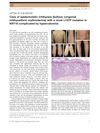
 A man with a rare skin condition and a new gene mutation developed high calcium levels due to his treatment.
A TNFAIP3 gene mutation can cause unusual and varied symptoms of lupus and Sjogren's syndrome.
2 citations
,
October 2016 in “OPAL (Open@LaTrobe) (La Trobe University)” The Swedish neonatal screening program effectively detects PKU, galactosaemia, and biotinidase deficiency with low false positives.
58 citations
,
November 1969 in “British Journal of Dermatology” Netherton's disease causes multiple hair defects.
1 citations
,
September 2020 in “Journal of dermatology” Researchers found a new mutation in the LIPH gene of a woman with a rare hair condition.
October 2025 in “Clinical and Experimental Pediatrics” A novel CLDN1 mutation in a 2-month-old with NISCH showed improvement with symptom management.
 July 2022 in “Journal of Investigative Dermatology”
 Lef1 is essential for normal skin, hair growth, and healing wounds in mice.

Lysine carboxymethyl cysteinate (LCC) protects skin from UVB damage by activating autophagy.
 3 citations
,
December 2021 in “Frontiers in endocrinology”
3 citations
,
December 2021 in “Frontiers in endocrinology” A new mutation in the DCAF17 gene was found in a Chinese family, causing Woodhouse-Sakati syndrome and diabetes.
194 citations
,
November 2006 in “Science” A genetic mutation in the LIPH gene causes hair loss and growth defects.
 2 citations
,
October 2018 in “The journal of pediatrics/The Journal of pediatrics”
2 citations
,
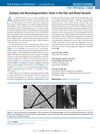
October 2018 in “The journal of pediatrics/The Journal of pediatrics” The document concludes that specific hair and blood vessel abnormalities in infants with seizures and developmental issues may indicate Menkes disease, which lacks a cure and is often fatal by age 3.
 11 citations
,
January 2013 in “Revista Brasileira De Terapia Intensiva”
11 citations
,
January 2013 in “Revista Brasileira De Terapia Intensiva” Eating pacu-manteiga fish can cause Haff disease, leading to severe muscle damage.