2 citations
,
September 2021 in “JAAD case reports” A man with a weakened immune system was diagnosed with a rare skin condition called trichodysplasia spinulosa using skin examination techniques.
Lichen planus commonly affects middle-aged adults, often involves limbs and mucosal areas, and can be linked to immune diseases.
 27 citations
,
August 2010 in “Clinics in Dermatology”
27 citations
,
August 2010 in “Clinics in Dermatology” Hepatitis C virus can cause skin diseases and dermatologists play a crucial role in identifying these conditions.
1 citations
,
January 2022 in “Journal of veterinary diagnostic investigation” A British Bulldog had a unique viral plaque caused by Canine papillomavirus 18, different from typical tumors.
 5 citations
,
January 2018 in “Acta Dermatovenerologica Alpina Pannonica et Adriatica”
5 citations
,
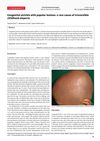
January 2018 in “Acta Dermatovenerologica Alpina Pannonica et Adriatica” Congenital atrichia with papular lesions causes permanent hair loss in children.
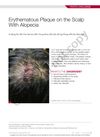
The woman has a scalp condition causing hair loss.
June 2021 in “The Journal of Family Practice” A 69-year-old woman has a fast-growing hand lesion that didn't improve with salicylic acid.
 October 2021 in “The Egyptian Journal of Hospital Medicine”
 Platelet-rich plasma is a safe and effective treatment for oral lichen planus.
 July 2002 in “Dermatologic Surgery”
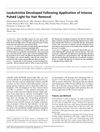
 Some people's hair turned white or gray after using intense pulsed light for hair removal, and for some, it was permanent.
 April 2024 in “Oral Surgery Oral Medicine Oral Pathology and Oral Radiology”
 The patient was diagnosed with oral lichen sclerosus and needs long-term monitoring.
52 citations
,
September 2012 in “Oncogene” 2 citations
,
July 2016 in “Veterinary dermatology” Hyperaesthetic leucotrichia in horses causes painful, recurring skin lesions and hair color changes, especially in Arabian and American paint horses.
Hair transplantation showed the most promise for repigmenting white hair, especially for eyebrows and eyelashes.
July 1979 in “Archives of Dermatology” A 68-year-old woman with benign mucous membrane pemphigoid has eye, mouth, and skin issues, including thick plaques and nail changes.
 December 2023 in “Journal of General Procedural Dermatology and Venereology Indonesia”
 A 61-year-old Filipino man had a skin condition that looked like another disease, making diagnosis difficult.
1 citations
,
March 2013 in “Journal of Dermatological Case Reports” A rare skin condition affected only the facial hair of a 46-year-old man.
17 citations
,
January 2014 in “Journal of Oral and Maxillofacial Pathology” Seborrheic keratosis is a common, harmless skin growth that can look like cancer, so it may need a biopsy.
October 2021 in “European journal of cancer” Repeated biopsies are crucial for managing lupus panniculitis when initial treatments fail.
17 citations
,
December 2013 in “Dermatologic Surgery” The treatment improved hair color in most vitiligo patients without major side effects.
 June 2023 in “British journal of dermatology/British journal of dermatology, Supplement”
 A 13-year-old boy had both lichen planus and vitiligo, suggesting a possible link between the two conditions.
 6 citations
,
February 2010 in “Journal of The American Academy of Dermatology”
6 citations
,
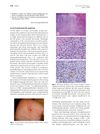
February 2010 in “Journal of The American Academy of Dermatology” A woman had a rare skin condition with recurring painful nodules that heal in 6 weeks, often without needing treatment.
February 2022 in “Authorea (Authorea)” PAON shows skin patterns due to genetic mosaicism.
 April 2023 in “The journal of investigative dermatology/Journal of investigative dermatology”
 HPV8 causes hair follicle stem cells to grow, leading to skin lesions.
12 citations
,
March 2018 in “F1000Research” Dermoscopy can help diagnose oral lichen planus by identifying specific patterns.
3 citations
,
January 2016 in “Dermatology online journal” Some people with lichen planus pigmentosus might later develop frontal fibrosing alopecia.
 December 2022 in “Curēus”
 Genetic testing confirmed a young girl has Atrichia with Papular Lesions due to mutations in the hairless gene.
2 citations
,
June 2016 in “Oral Surgery Oral Medicine Oral Pathology and Oral Radiology” Oral lichen planus can appear before lichen planopilaris.
January 2018 in “JAMA dermatology” Facial papules can occur with lichen planopilaris.

Surgical repigmentation can permanently restore color to white hair in vitiligo patients.
 January 2025 in “Dermatology Review”
 Giant keratoacanthoma can look like squamous cell carcinoma, requiring careful diagnosis and surgical removal.