19 citations
,
May 2018 in “Molecular Medicine Reports” miR‑339‑5p can slow down hair follicle stem cell differentiation by targeting DLX5.
December 2010 in “OhioLink ETD Center (Ohio Library and Information Network)” Sry may regulate fatty acid metabolism and shows different expression levels in rat tissues.
14 citations
,
September 1999 in “Mammalian genome” The scraggly mutation causes hair loss and skin defects in mice.
 May 2025 in “Frontiers in Genetics”
 A new genetic variant in the LIPH gene causes hair growth issues in a Chinese patient.
 56 citations
,
May 2017 in “Nature Cell Biology”
56 citations
,
May 2017 in “Nature Cell Biology” Hair can regrow after certain stem cells are lost because other stem cells can take over their role.
7 citations
,
February 2011 in “Journal of dermatology” The 736T>A mutation in the LIPH gene is common in Japanese people with autosomal recessive woolly hair.
September 2025 in “PeerJ” FCER1A and RGS1 may help diagnose and treat systemic lupus erythematosus.
 1 citations
,
January 2023 in “Journal of Drugs in Dermatology”
1 citations
,
January 2023 in “Journal of Drugs in Dermatology” Early detection of Graham-Little-Piccardi-Lasseur syndrome is key for better management.
 October 2023 in “Cell & bioscience”
 A special gene region controls the re-emergence of a primitive wool type in Merino sheep, improving their wool yield and adaptability.
 6 citations
,
January 2020 in “International journal of biological sciences”
6 citations
,
January 2020 in “International journal of biological sciences” Removing the ROBO4 gene in mice reduces skin inflammation and hair loss by affecting certain inflammation pathways and gene expression.
 5 citations
,
May 2011 in “European Journal of Medical Genetics”
5 citations
,
May 2011 in “European Journal of Medical Genetics” A genetic duplication on chromosome 5 was linked to a woman's unique combination of medical conditions.
1 citations
,
November 2024 in “Genes” miR-144 affects hair growth by interacting with Lhx2.
 April 2023 in “The journal of investigative dermatology/Journal of investigative dermatology”
 KLF4 is important for keeping hair follicle stem cells inactive.
 34 citations
,
April 2018 in “EMBO journal”
34 citations
,
April 2018 in “EMBO journal” The protein SLC1A3 is important for activating skin stem cells and is necessary for normal hair and skin growth in mice.
3 citations
,
May 2016 in “Dermatopathology” Lrig1 could be a marker for advanced sebaceous carcinoma.
January 2025 in “Repository of Digital Objects for Teaching Research and Culture (University of Valencia)” Non-coding RNAs may be key in diagnosing and treating rare skin disorders.
 January 2022 in “bioRxiv (Cold Spring Harbor Laboratory)”
 The gp130 receptor helps in tissue regeneration and disease progression, and manipulating it could improve healing and prevent disease.
 74 citations
,
January 2006 in “The journal of investigative dermatology/Journal of investigative dermatology”
74 citations
,
January 2006 in “The journal of investigative dermatology/Journal of investigative dermatology” Mutations in the DSG4 gene can cause a rare hair disorder similar to monilethrix.
Editing the FGF5 gene in sheep increases fine wool growth.
 7 citations
,
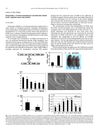
December 2008 in “Journal of Dermatological Science”
7 citations
,
December 2008 in “Journal of Dermatological Science” Progranulin overexpression leads to shorter, thinner hair and increased cell death in mouse hair follicles.
August 2022 in “International Journal of Molecular Sciences” DNA methylation controls lncRNA2919, which negatively affects hair growth.
 February 2025 in “Archives animal breeding/Archiv für Tierzucht”
 Certain gene combinations improve cashmere quality and production in Liaoning goats.
November 2005 in “PubMed” The hairless gene in Kunming mice is important for hair and skin, and shows genetic variations.
 13 citations
,
March 2020 in “Genes”
13 citations
,
March 2020 in “Genes” Disrupting the FGF5 gene in rabbits leads to longer hair by extending the hair growth phase.
January 2011 in “Xibei nongye xuebao” The K14 promoter is more active in skin cells than the K5 promoter.
58 citations
,
July 2005 in “Molecular and Cellular Biology” A specific gene segment can make mouse skin cells glow, helping study hair growth and gene effects.
 31 citations
,
October 2010 in “Progress in lipid research”
31 citations
,
October 2010 in “Progress in lipid research” LPA3 is crucial for embryo implantation and links LPA to prostaglandin signaling.
 23 citations
,
December 2017 in “Scientific Reports”
23 citations
,
December 2017 in “Scientific Reports” ARL15 is important for fat cell development and the release of the hormone adiponectin.
6 citations
,
March 2007 in “BioTechniques” PCR genotyping in cre-loxP mice can be inaccurate due to unintended gene deletions in non-target tissues.
 178 citations
,
October 2001 in “Genes & Development”
178 citations
,
October 2001 in “Genes & Development” The mutated hairless gene causes hair loss by acting as a new type of corepressor affecting thyroid hormone receptors.