10 citations
,
June 2019 in “Journal of the European Academy of Dermatology and Venereology” The document emphasizes standardized, comprehensive training for dermatology and venereology specialists across Europe.
 1 citations
,
January 2021 in “Journal of the Dermatology Nurses’ Association”
1 citations
,
January 2021 in “Journal of the Dermatology Nurses’ Association” The convention discussed various skin conditions and treatments, and highlighted the importance of vaccinations for patients on immune-altering medications.
October 2024 in “Frontiers in Immunology” Pertussis toxin may contribute to hair loss in alopecia areata.
January 2020 in “JAAD case reports” Systemic mastocytosis may cause a type of hair loss called cicatricial alopecia.
39 citations
,
May 2019 in “Journal of the American Academy of Dermatology” Hair loss in lupus patients indicates higher disease activity.
220 citations
,
June 2013 in “The Journal of Pathology” Lichen planopilaris may be an autoimmune disease causing hair loss due to immune system issues in hair follicles.
 126 citations
,
April 2006 in “International Journal of Dermatology”
126 citations
,
April 2006 in “International Journal of Dermatology” The conclusion is that FFA and LPP have similar scalp biopsy features, making them hard to distinguish histologically, and FFA may be a specific kind of scarring hair loss.
 117 citations
,
March 2013 in “Journal of the European Academy of Dermatology and Venereology”
117 citations
,
March 2013 in “Journal of the European Academy of Dermatology and Venereology” No effective treatment for frontal fibrosing alopecia was found, but oral 5-alpha-reductase inhibitors had the best response; for lichen planopilaris, topical corticosteroids were commonly used but had a high relapse rate.
113 citations
,
May 2007 in “Journal of the American Academy of Dermatology” The study found that steroids and tetracycline helped treat active Lichen planopilaris, and hair transplants were good for later stages.
 105 citations
,
December 2009 in “Archives of dermatology”
105 citations
,
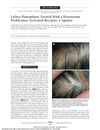
December 2009 in “Archives of dermatology” A specific drug can help treat Lichen Planopilaris, a condition causing permanent hair loss.
 94 citations
,
October 2017 in “International Journal of Dermatology”
94 citations
,
October 2017 in “International Journal of Dermatology” Lichen planus pigmentosus causes dark skin patches and is treated by avoiding triggers and using anti-inflammatory medications.
 90 citations
,
July 2008 in “Dermatologic therapy”
90 citations
,
July 2008 in “Dermatologic therapy” Lichen planopilaris is a chronic, scarring hair loss condition with no definitive cure, requiring accurate diagnosis and treatment to manage symptoms.
 86 citations
,
July 2012 in “British journal of dermatology/British journal of dermatology, Supplement”
86 citations
,
July 2012 in “British journal of dermatology/British journal of dermatology, Supplement” There may be a connection between Frontal Fibrosing Alopecia and Lichen Planus Pigmentosus, and more research is needed to confirm this.
 80 citations
,
April 2018 in “Trends in Molecular Medicine”
80 citations
,
April 2018 in “Trends in Molecular Medicine” Lichen Planopilaris and Frontal Fibrosing Alopecia may help us understand hair follicle stem cell disorders and suggest new treatments.
 79 citations
,
September 2018 in “Dermatologic therapy”
79 citations
,
September 2018 in “Dermatologic therapy” Oral tofacitinib can significantly improve recalcitrant lichen planopilaris.
71 citations
,
October 2017 in “Journal of Investigative Dermatology” PPAR-γ agonists like pioglitazone may help manage lichen planopilaris but don't fully reverse scarring.
58 citations
,
January 2015 in “Journal of the American Academy of Dermatology” Pioglitazone may help treat lichen planopilaris, but more research is needed.
48 citations
,
November 2018 in “Journal of dermatological treatment” Women are more likely to have Lichen planopilaris, and treatments with cyclosporine and methotrexate are most effective but less safe than mycophenolate mofetil.
44 citations
,
February 2017 in “Journal of the American Academy of Dermatology” Lichen planopilaris (LPP) is linked to androgen excess, while frontal fibrosing alopecia (FFA) is linked to androgen deficiency.
43 citations
,
March 2009 in “Archives of dermatology” No treatment showed clear superiority for lichen planopilaris.
39 citations
,
November 2017 in “PubMed” Low-dose naltrexone helps reduce symptoms and slow down lichen planopilaris without side effects.
39 citations
,
March 2008 in “British Journal of Dermatology” Etanercept may cause lichen planopilaris, so doctors should be cautious.
 37 citations
,
October 2015 in “Anais Brasileiros de Dermatologia”
37 citations
,
October 2015 in “Anais Brasileiros de Dermatologia” Lichen planopilaris mostly affects women with fair skin and can look different on each person, needing early treatment to prevent hair loss.
37 citations
,
December 2001 in “Journal of the American Academy of Dermatology” Thalidomide significantly improved hair regrowth in a woman with lichen planopilaris.
35 citations
,
January 2020 in “Journal of the American Academy of Dermatology” Avoiding certain allergens in personal care products may improve symptoms for some patients with lichen planopilaris or frontal fibrosing alopecia.
35 citations
,
November 2019 in “Journal of the American Academy of Dermatology” A new variant of lichen planopilaris causing diffuse hair thinning was identified.
 34 citations
,
April 2008 in “Journal of the European Academy of Dermatology and Venereology”
34 citations
,
April 2008 in “Journal of the European Academy of Dermatology and Venereology” Skin problems like itching, dry skin, and hair loss are more common in hepatitis C patients after interferon treatment, but lichen planus is not linked to the infection.
33 citations
,
December 2014 in “Journal of the European Academy of Dermatology and Venereology” Lichen planus is linked to several autoimmune diseases.
 33 citations
,
October 2013 in “Journal of The American Academy of Dermatology”
33 citations
,
October 2013 in “Journal of The American Academy of Dermatology” Pioglitazone usually doesn't effectively treat or cure lichen planopilaris.
29 citations
,
March 2016 in “Dermatologic therapy” Platelet-rich plasma may successfully treat lichen planopillaris, as shown by one patient's symptom regression.