8 citations
,
February 2022 in “Frontiers in Medicine” COVID-19 may trigger severe skin flare-ups in people with autoimmune conditions like lupus.
 November 2020 in “DOAJ (DOAJ: Directory of Open Access Journals)”
 Inflammation plays a key role in male and female pattern hair loss, and focusing on this could help develop better treatments.
 1 citations
,
October 2023 in “Journal of the Pakistan Medical Association”
1 citations
,
October 2023 in “Journal of the Pakistan Medical Association” Folliculotropic mycosis fungoides can occur in children and is diagnosed with specific tests, but often stays in early stages with treatment.
 3 citations
,
January 2019 in “Indian Journal of Dermatology”
3 citations
,
January 2019 in “Indian Journal of Dermatology” Transverse scalp biopsy sections help diagnose different alopecias by showing hair follicle details and inflammation patterns.
45 citations
,
March 1998 in “Journal of the American Academy of Dermatology” Majocchi's granuloma can occur in kidney transplant patients on tacrolimus and can be treated with antifungal medication.
8 citations
,
March 2001 in “PubMed” A man developed recurring scalp inflammation and hair loss after a head injury.
March 2022 in “JAAD case reports” Accurate diagnosis is crucial for effective treatment of hair loss.
13 citations
,
March 2008 in “Journal of the European Academy of Dermatology and Venereology” Triamcinolone acetonide therapy for hair loss may cause a skin condition called linear lichen planus.
 4 citations
,
February 1996 in “Postgraduate Medical Journal”
4 citations
,
February 1996 in “Postgraduate Medical Journal” Finasteride linked to skin inflammation.
May 2026 in “Skin Appendage Disorders” Trichoscopy and histopathology can help identify post-COVID-19 hair loss.
December 2018 in “European Journal of Pediatric Dermatology/PD. European journal of pediatric dermatology” Segmental vitiligo affects hair follicle melanocytes, causing small, uniform depigmented spots.
5 citations
,
March 2013 in “Journal of Cutaneous Pathology” Granulomatous alopecia may be a distinct subtype of alopecia areata.
 April 2023 in “Journal of Investigative Dermatology”
 Higher PD-1 levels are linked to fewer immune cells in hair follicles in alopecia areata.
 22 citations
,
April 1998 in “Dermatologic Clinics”
22 citations
,
April 1998 in “Dermatologic Clinics” Interferons are effective for some skin conditions and cancers, but can have side effects and need more research for optimal use.
 4 citations
,
January 2014 in “Dermatology”
4 citations
,
January 2014 in “Dermatology” A woman with acne and baldness was found to have a rare ovarian condition but successfully had a child through fertility treatment.
7 citations
,
August 1971 in “JAMA” Tinea faciale can be mistaken for lupus due to similar symptoms.
49 citations
,
July 2007 in “Ophthalmic Plastic and Reconstructive Surgery” Surgical excision is an effective treatment for persistent nodules from poly-L-lactic acid injections.
 3 citations
,
April 2002 in “The Lancet”
3 citations
,
April 2002 in “The Lancet” Painful hair loss in an elderly woman was caused by giant cell arteritis, not just aging.
 April 2023 in “Journal of Investigative Dermatology”
 The study created special nanoparticles that effectively deliver an anti-inflammatory drug to treat skin inflammation in psoriasis.
 1 citations
,
January 2014 in “Rinsho Shinkeigaku”
1 citations
,
January 2014 in “Rinsho Shinkeigaku” Immunological treatment improved both neuropathy and alopecia.
 April 2024 in “Oral Surgery Oral Medicine Oral Pathology and Oral Radiology”
 The patient was diagnosed with oral lichen sclerosus and needs long-term monitoring.
5 citations
,
January 2016 in “Skin appendage disorders” Frontal fibrosing alopecia might be linked to autoimmune diseases.
4 citations
,
July 2014 in “The Journal of Dermatology” Plaque-type herpetic folliculitis affects eccrine glands.
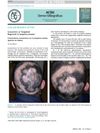 April 2016 in “Actas Dermo-Sifiliográficas”
 The document concludes that a unique target-like hair regrowth pattern in alopecia areata may be more common than thought and should be properly identified.
August 2021 in “BMJ Case Reports” A woman with lupus had blood cell destruction, treated successfully with medication.
1 citations
,
May 2024 in “Dermatology Online Journal” Scalp pemphigus vulgaris can be effectively treated with low-dose prednisone and triamcinolone.
26 citations
,
April 2007 in “Journal of clinical oncology” 
Innate lymphoid cells type 1 may contribute to alopecia areata by damaging hair follicles.
 10 citations
,
October 2010 in “Hepatology”
10 citations
,
October 2010 in “Hepatology” Certain liver diseases respond well to specific treatments and have varying risks for liver cancer.
 1 citations
,
July 2012 in “Nasza Dermatologia Online”
1 citations
,
July 2012 in “Nasza Dermatologia Online” CCCA may be caused by both hair traction and an immune response.